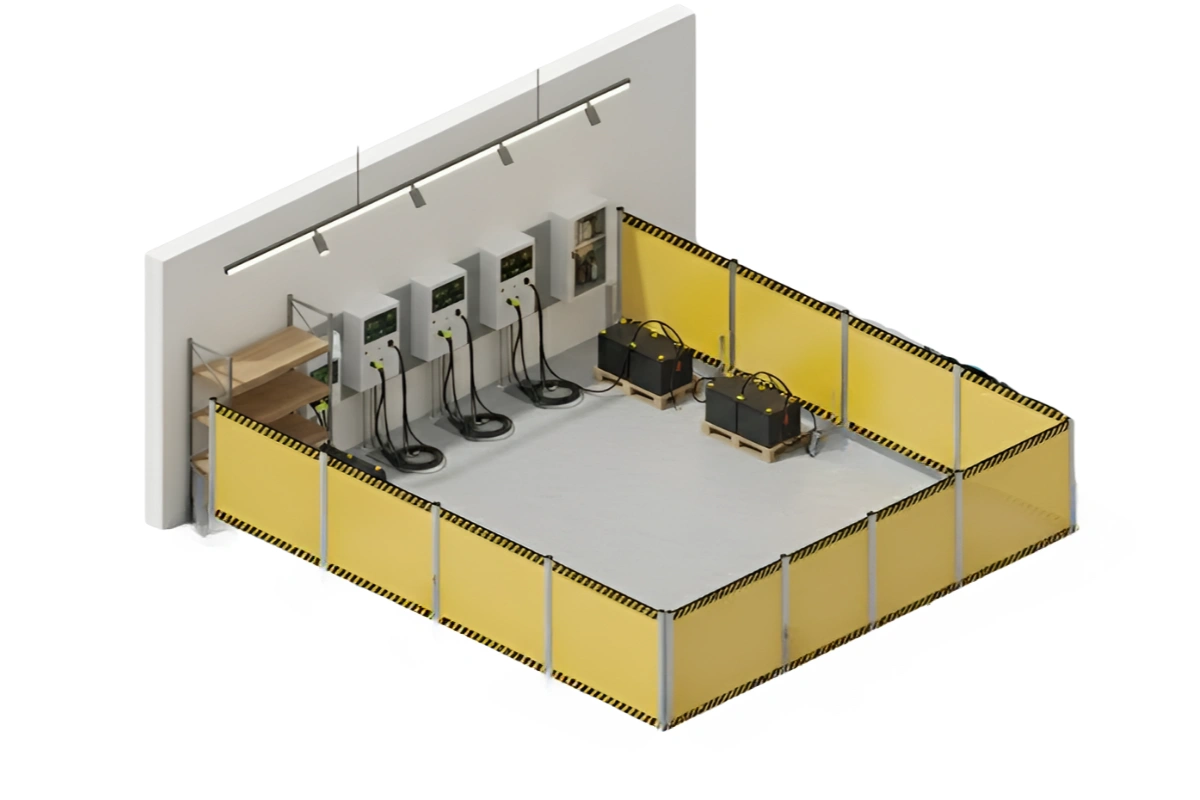
Battery Charging Station Retractable Barriers
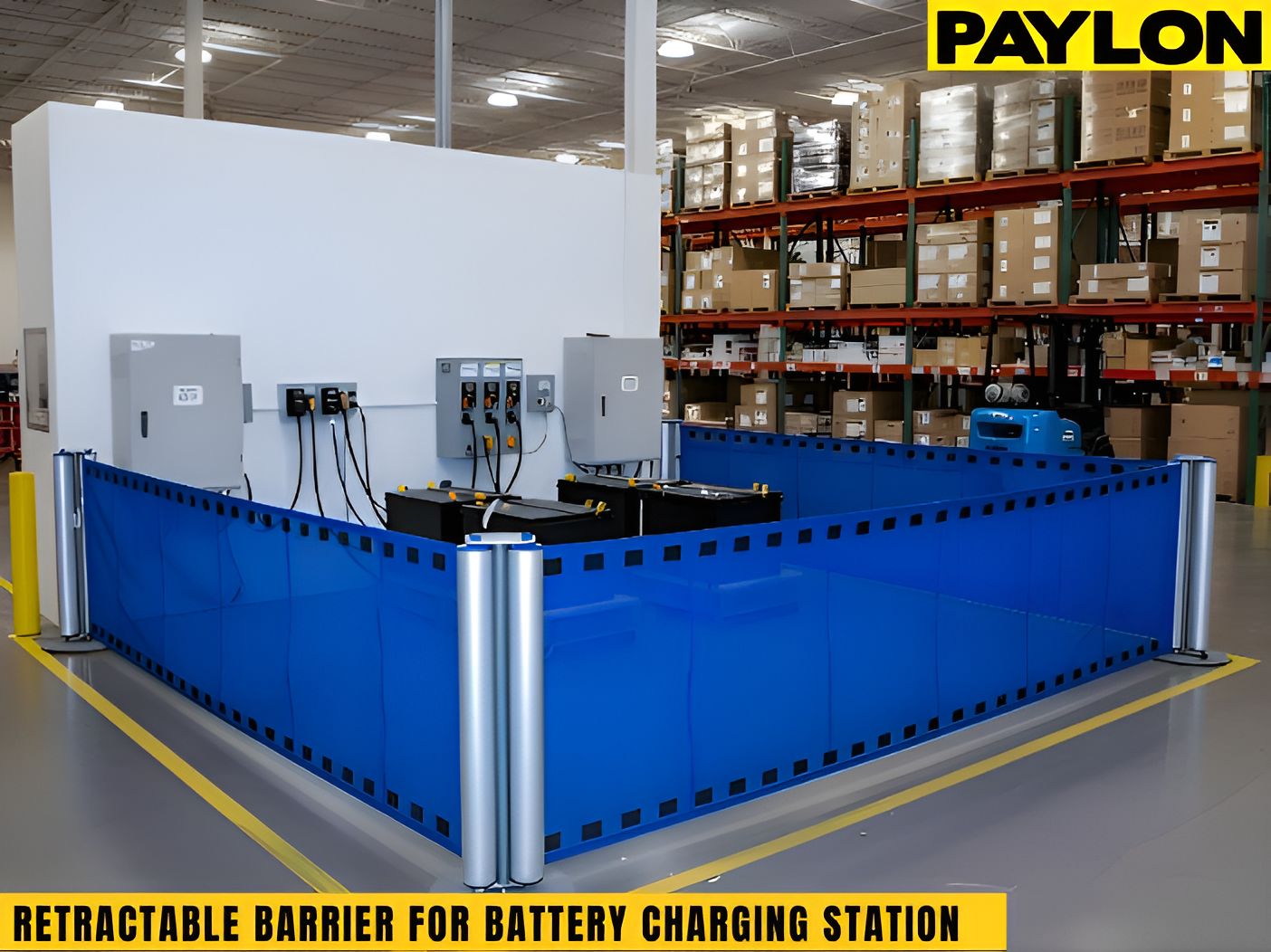
Battery charging stations in warehouses require clearly defined keep-out zones to help control access and reduce risk. Industrial retractable barriers provide a visible, flexible way to restrict entry without permanent installation. This article covers charging station risks, the benefits of retractable barriers, barrier comparisons, recommended solutions, and answers common questions.
Why Battery Charging Stations in Warehouses Need Defined Keep-Out Zones
When a battery charging station is in use, it creates a work area that requires more control than surrounding warehouse space. Equipment is powered, batteries are connected, and normal movement nearby can create risk if access is not clearly managed. Without defined keep-out zones, routine warehouse activity can interfere with charging operations and increase the chance of safety incidents.
Electrical, Chemical, and Equipment-Related Risks
Active battery chargers create electrical exposure that requires controlled movement around the station. Batteries may also leak or release corrosive substances during handling or charging.
Cables and connectors often extend beyond the charging area, and without clear boundaries, workers may enter these spaces unintentionally, increasing the risk of trips, equipment interference, or accidental contact. These risks are more likely when charging areas blend into surrounding work zones.
Pedestrian and Forklift Traffic Conflicts
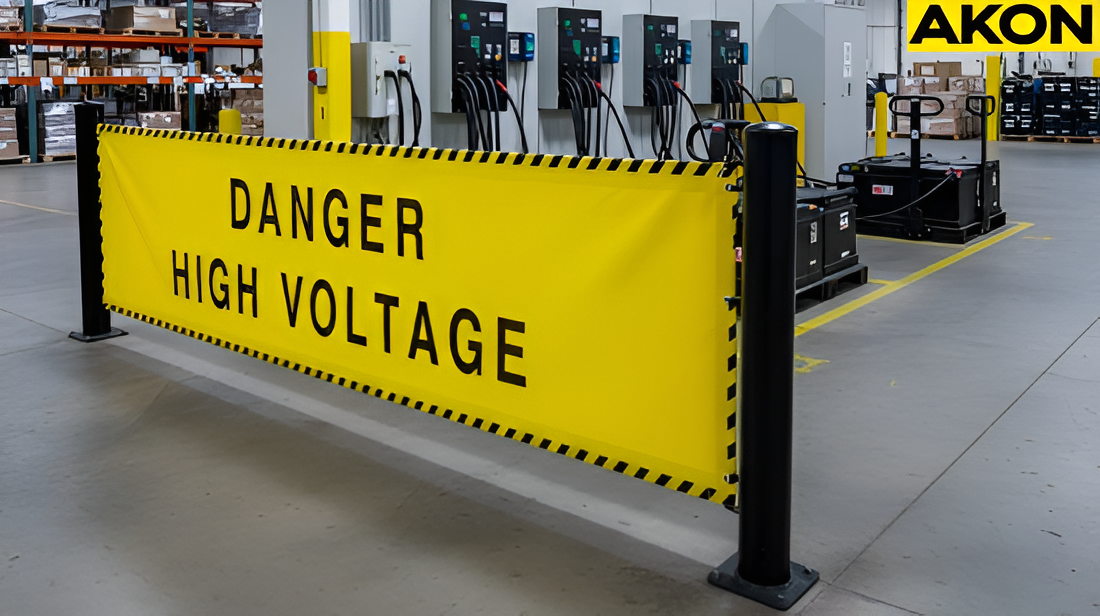
Charging stations are often located near shared paths used by pedestrians and forklifts. When these areas are not clearly separated, foot traffic and vehicles can pass through active charging zones, increasing the chance of near misses or disruptions.
Sudden stops or unexpected movement around chargers can quickly create unsafe situations. Defined keep-out zones help separate charging activity from daily warehouse movement and reduce risk.

Benefits of Using Industrial Retractable Barriers at Charging Stations
Once the risks around battery charging stations are understood, the next step is managing access in a way that supports safety without slowing daily operations. Industrial retractable barriers are designed to do exactly that by creating clear boundaries only when needed, while allowing warehouses to remain flexible and efficient.
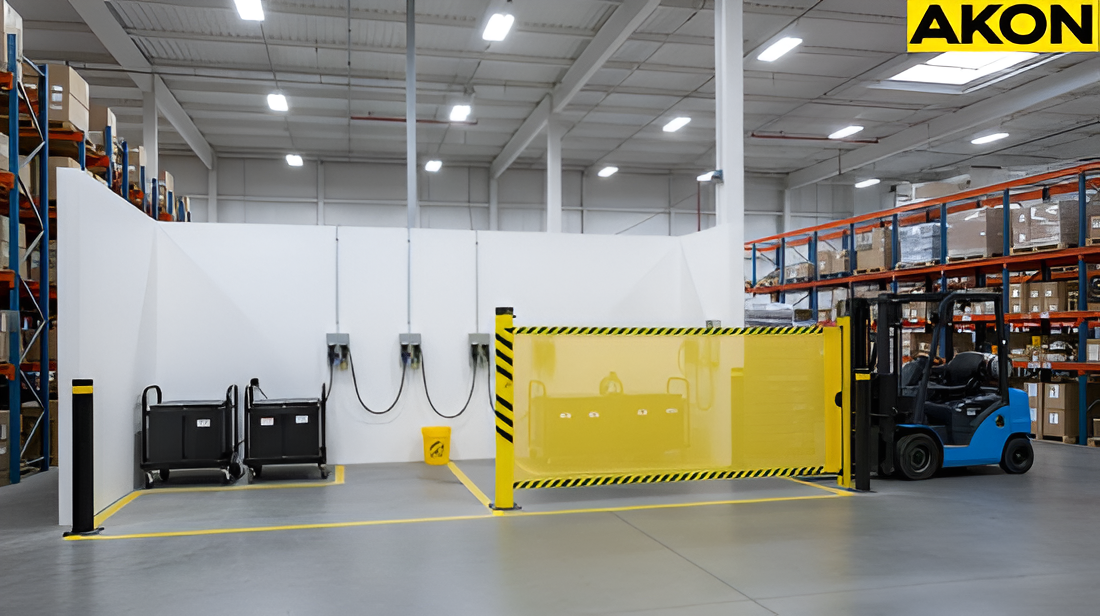
• Faster response to changing conditions. Charging activity can start or stop at different times throughout the day. Retractable barriers allow teams to adjust access immediately rather than relying on temporary workarounds.
• More consistent safety practices. Clearly defined barriers reduce dependence on verbal warnings or informal rules. This helps create predictable, repeatable safety behavior across shifts and teams.
• Better alignment with daily operations. Safety controls work alongside productivity instead of interrupting it. Barriers support charging activity without forcing permanent changes to traffic flow or space usage.
Visibility and Awareness
Highly visible retractable barriers clearly mark charging areas, helping workers recognize restricted zones and avoid accidental entry near active equipment.
Flexibility and Workflow
Retractable barriers can be extended during battery charging and retracted afterward, keeping safety controls in place without interfering with normal movement.
Space and Installation Efficiency
These barriers create physical separation without anchors or structural changes, making them suitable for facilities with changing layouts.
Comparing Barrier Options for Warehouse Charging Areas
After knowing how retractable barriers support safer access control, it helps to look at how they compare with other common ways warehouses block off battery charging zones. Different facilities rely on different methods depending on how often charging areas change and how much separation is needed during daily operations.
| Barrier Type | General Purpose | Typical Use Case |
|---|---|---|
| Portable Retractable Barriers (SB4000) | Visual, movable separation | Temporary charging station keep-out zones that change as activity shifts |
| Fixed Guards or Barriers | Permanent physical separation | Areas that require constant restriction and do not change location |
| Cones and Tape | Basic visual indication | Short-term or low-risk situations with minimal access control |
| Other Retractable Barrier Styles | Adjustable separation options | Areas needing flexible boundaries using different materials or spans |
Each option serves a different role. Fixed barriers work best where access never changes, while cones and tape offer only basic guidance for short-term needs. Portable retractable barriers sit between these extremes, providing clear separation when charging is active while remaining easy to move or reposition as warehouse layouts and workflows change.
Recommended Retractable Barrier Solutions for Charging Stations
After comparing common barrier approaches, the following retractable barrier products are well suited for defining keep-out zones around warehouse battery charging stations. Each option supports controlled access while allowing facilities to adapt as charging activity and layouts change.

Industrial Roll Up Barricade – SB2000
The SB2000 is a roll-up barricade designed to create a clear boundary around restricted areas during active operations. It fits environments where charging zones must be defined without permanent construction.
• Rolls out from a fixed post to form a clear access boundary.
• Helps restrict entry around charging stations during active use.
• Allows barrier length to be adjusted to fit the space.
• Commonly used where operational needs change throughout the day.
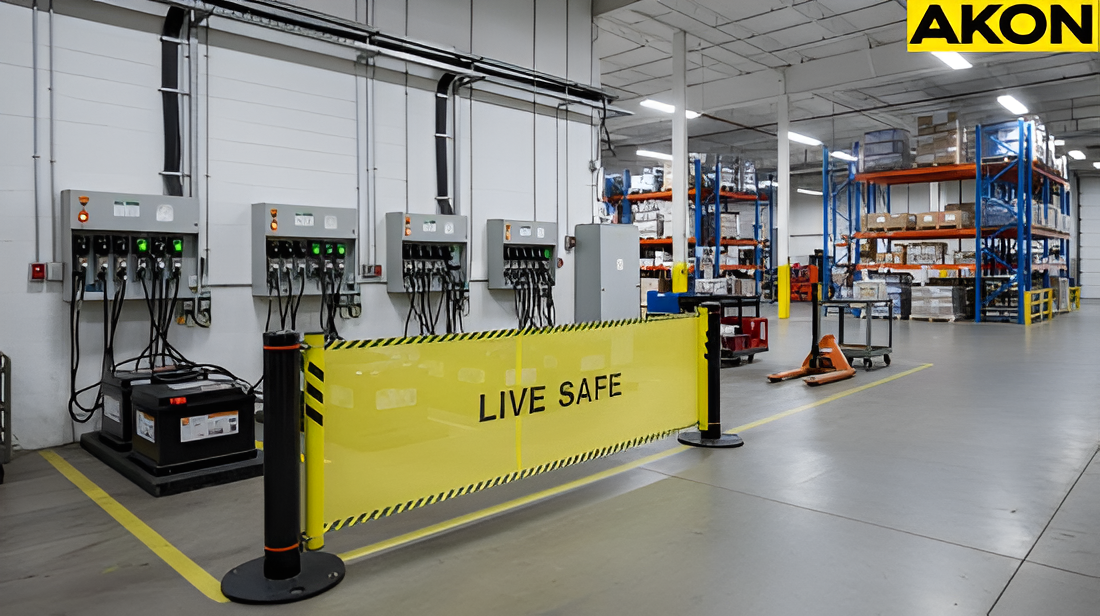
Industrial Retractable Barrier – SB3000
The SB-3000 is a manually operated retractable barrier used to separate hazardous or restricted areas from surrounding traffic. It works well where access control must remain flexible during normal warehouse activity.
• Manually operated barrier for separating active charging zones.
• Supports controlled access near areas with frequent movement.
• Helps guide foot traffic away from charging activity.
• Can be repositioned as layouts or workflows change.

Portable Barrier – SB4000
The SB4000 is a portable roll-up barrier designed for quick placement wherever temporary access control is needed. It is especially useful for charging stations that activate at different times or move between locations.
• Portable design allows easy relocation between charging areas.
• Well suited for temporary charging station keep-out zones.
• Can be deployed and removed quickly as charging starts or stops.
• Useful in warehouses with multiple charging or staging locations.
Frequently Asked Questions
FAQs About Retractable Barriers for Battery Charging Stations
Do battery charging stations in warehouses need physical barriers?
Yes. Physical barriers help control access around active charging stations where powered equipment and charging components are in use.
What type of barrier is commonly used around warehouse charging stations?
Retractable safety barriers and industrial roll up barricades are commonly used to define temporary keep-out zones during charging activity.
Are retractable barriers considered permanent installations?
No. Retractable barriers are designed for flexible use and do not create permanent structures.
Can retractable barriers be moved to different charging areas?
Yes. Portable roll up barriers are often moved or reused when charging locations change.
How do retractable barriers compare to cones or tape for charging areas?
Retractable barriers provide clearer visual separation and a stronger physical boundary than cones or tape.
Are retractable barriers suitable for indoor warehouse environments?
Yes. Industrial retractable barriers are commonly used indoors to manage access around equipment and charging zones.
Can retractable barriers be used only during active charging periods?
Yes. They can be deployed when charging is active and retracted once the area is clear.
Do retractable barriers block all access completely?
They restrict general access while still allowing controlled entry when authorized personnel need access.
Are retractable barriers easy for warehouse staff to operate?
Most retractable safety barriers are designed for simple manual operation without specialized tools.
Can retractable barriers help reduce accidental entry into charging zones?
Yes. Their visibility and placement help signal restricted areas more clearly during normal warehouse activity.
Do retractable barriers take up floor space when not in use?
When retracted, they typically occupy minimal space compared to fixed guards.
Can retractable barriers be used in shared pedestrian and forklift areas?
Yes. They are often used in shared traffic zones to guide movement away from active charging areas.
Are retractable barriers reusable for other warehouse applications?
Yes. They can also be used for maintenance zones, temporary work areas, or other restricted spaces.
Do retractable barriers require changes to existing warehouse structures?
Most designs avoid the need for structural modifications, making them easier to integrate.
Are industrial roll up barricades visible from a distance?
They are designed to create a clear visual boundary that can be seen during routine warehouse operations.
Can retractable barriers support changing warehouse layouts?
Yes. They work well in facilities where charging stations or traffic patterns change over time.
Are retractable barriers intended to replace all other safety measures?
No. They are typically used alongside signage, floor markings, and safety procedures.
Can portable roll up barriers be used for temporary charging setups?
Yes. Portable barriers are well suited for temporary or mobile charging station arrangements.
Can retractable barriers be included in safety plans or facility documentation?
Yes. They are often specified in safety plans, operational guidelines, and facility layouts.
How do warehouses choose the right retractable barrier for a charging station?
The choice depends on layout, how often access changes, and whether a portable or fixed roll up barrier is needed.
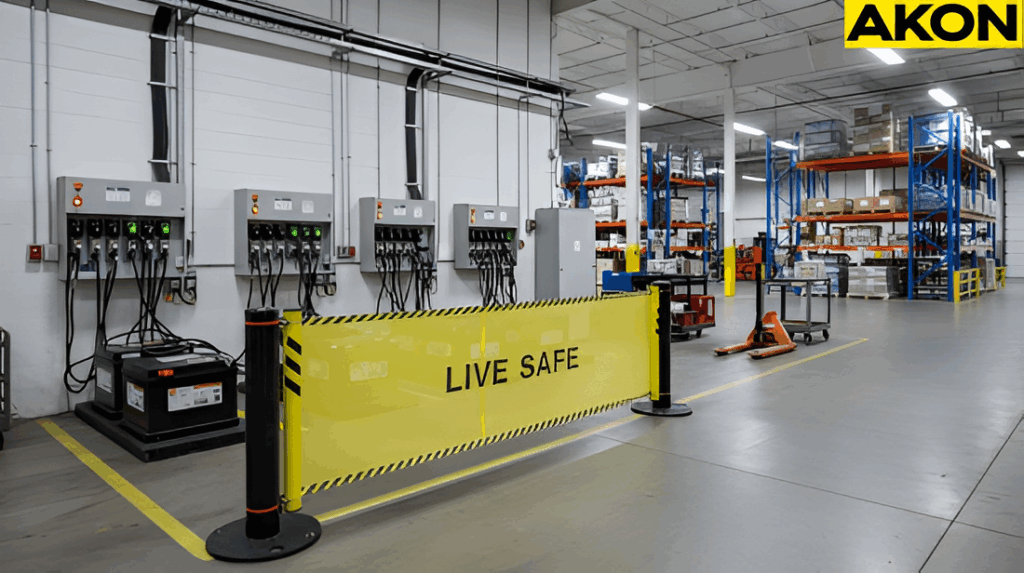
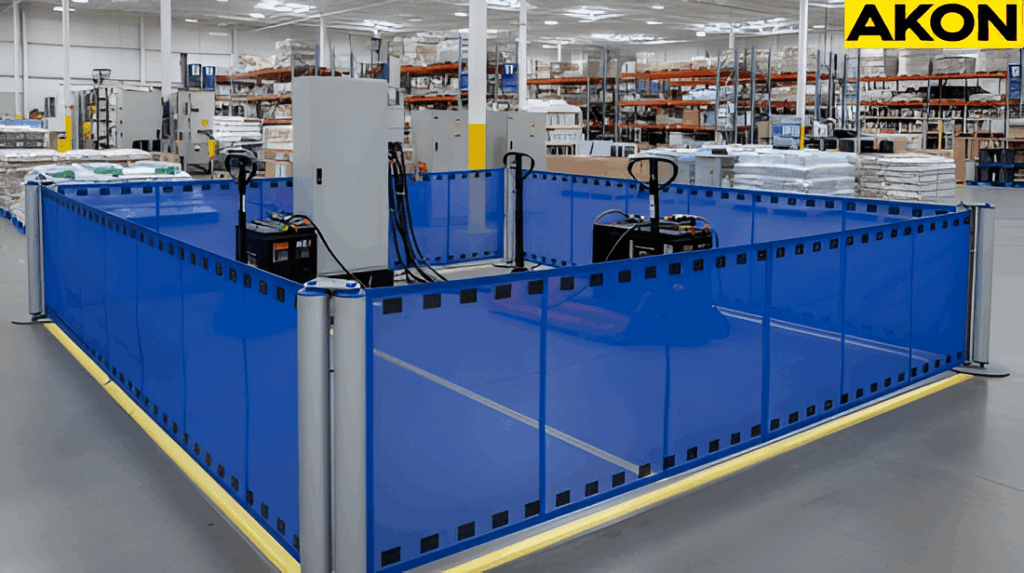
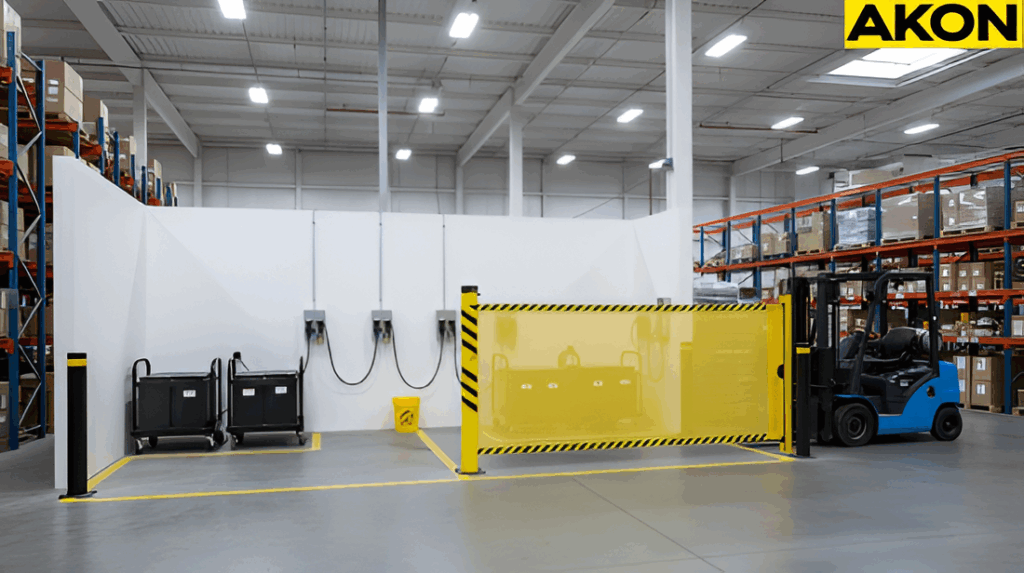
Photo Gallery
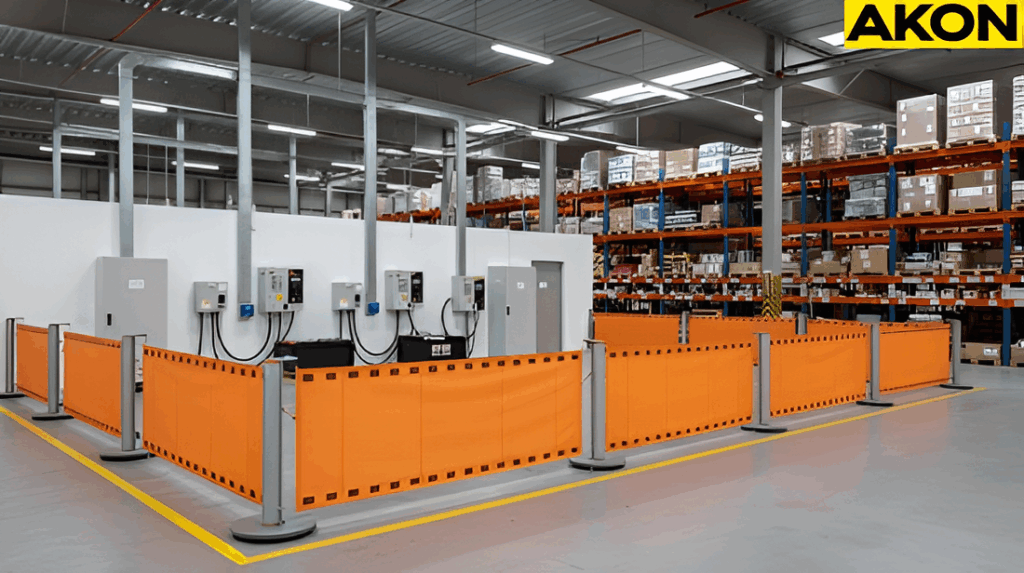
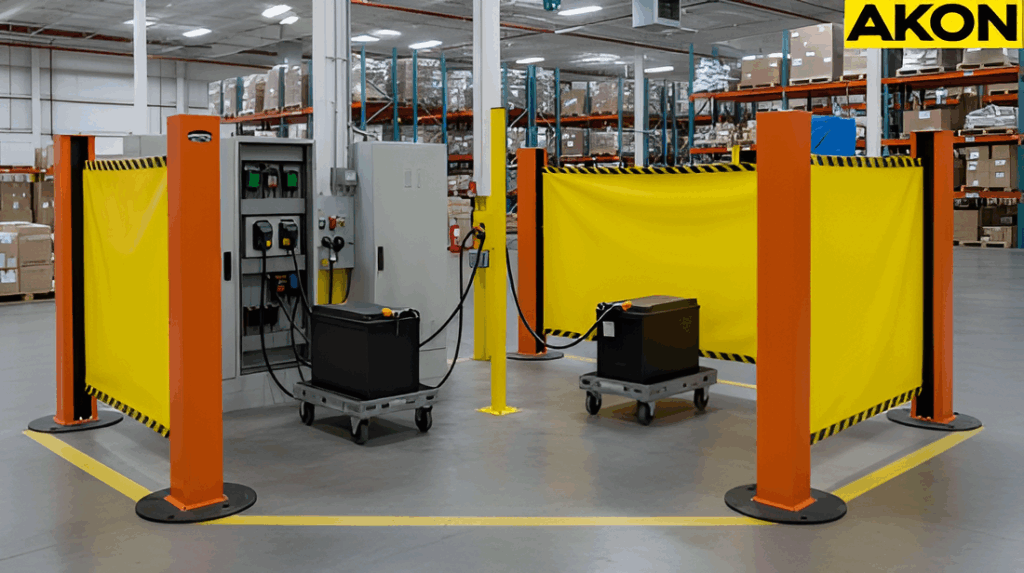
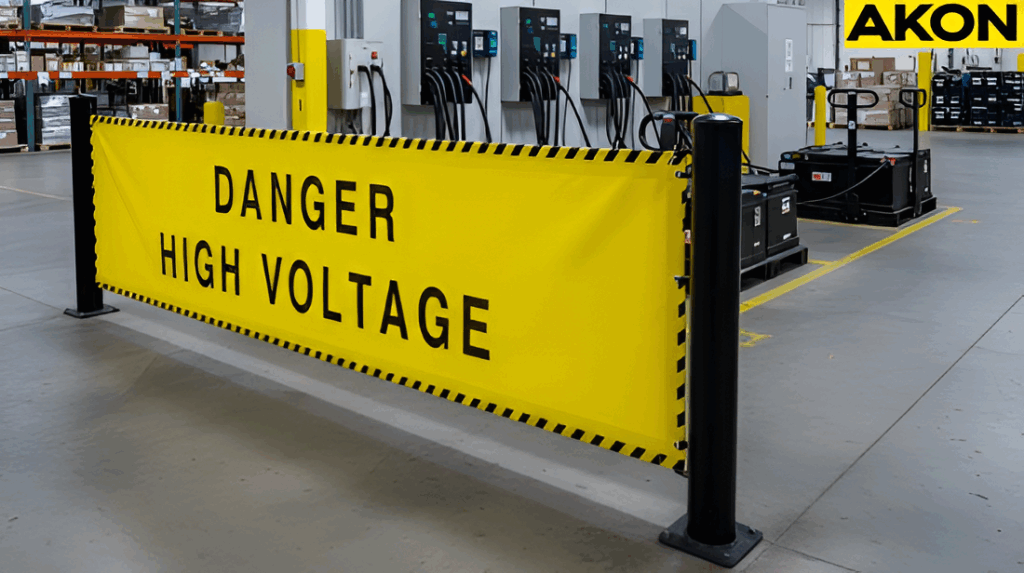
Creating Safer Charging Areas Without Disrupting Operations
Clearly defined keep-out zones are essential for keeping battery charging stations safe and organized in warehouse environments. When access is properly managed, charging activity can occur without disrupting nearby workflows or increasing risk. Industrial retractable barriers support this by providing visible separation only when needed, allowing facilities to control access during active charging while maintaining operational flexibility. Reviewing how current charging stations are set up can help identify areas where retractable barrier solutions may improve both safety and day-to-day efficiency.
Charging Station Keep-Out Zones