Key Takeaways (TL;DR)
- Roll up machine guards protect operators from pinch points, flying debris, and point-of-operation hazards while occupying a fraction of the footprint of traditional bellows guards.
- Three duty tiers — Standard (10,000 cycles), Heavy Duty (500,000 cycles), and Super Duty (1,000,000 cycles) — cover everything from low-cycle equipment to non-stop robotic work cells.
- For OEMs and plant engineers seeking OSHA 1910.212-compliant roll up machine guards, retractable roller systems deliver reliable point-of-operation guarding with minimal maintenance.
- Shade materials range from standard 18 oz vinyl (rated to 150°F) through to aluminized Kevlar rated at 1,200°F for extreme heat environments.
Updated: March 2026
Machine guarding is not optional. Under OSHA 29 CFR 1910.212, any machine part, function, or process that could cause injury must be safeguarded — and that includes point-of-operation zones, ingoing nip points, and areas where flying chips or sparks present a hazard. We supply roll up machine guards that meet these requirements with a compact, retractable design that traditional bellows and fixed barriers simply cannot match.
Across our work with US manufacturing plants, OEMs, and automation integrators, we consistently see operations switching from bulky bellows guards to retractable roller systems. The reasons are practical: smaller footprint, longer service life, and faster installation on both new builds and retrofit applications.
How Do Roll Up Machine Guards Protect Operators?
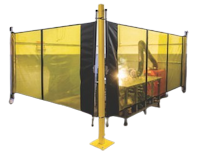
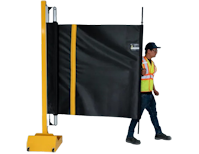
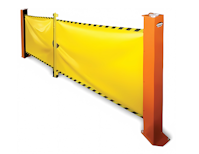
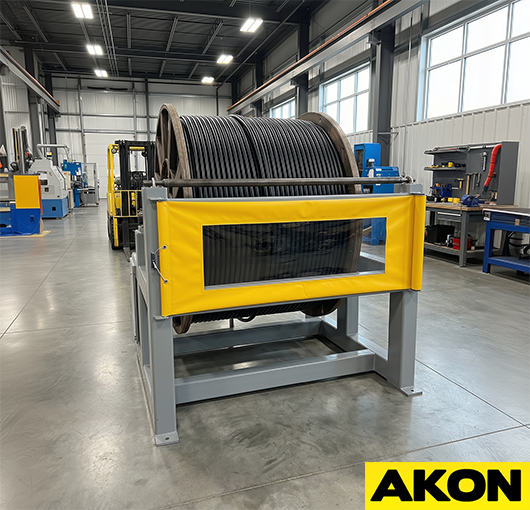
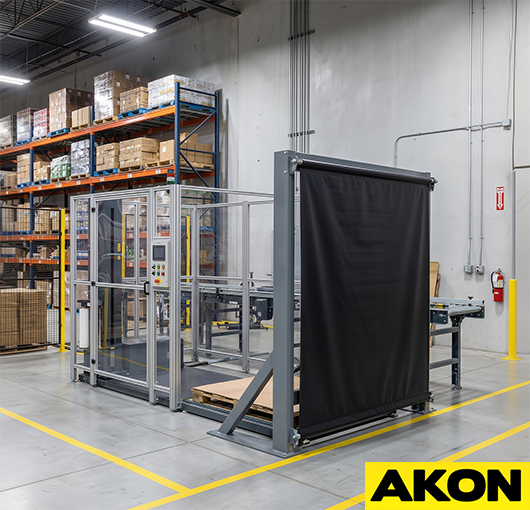
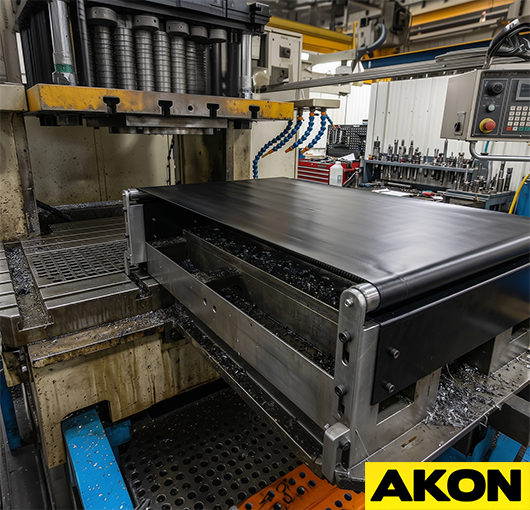
Roll up machine guards prevent operators from reaching into hazardous zones by deploying a continuous barrier that unrolls as the machine extends and retracts as it returns — maintaining full coverage through every cycle.
The guard material stays tensioned against the roller spring throughout the entire stroke. This means there is no slack, no gap, and no opportunity for hands, fingers, or loose clothing to enter the danger zone. The same mechanism also contains flying debris, coolant spray, and hot chips that could injure nearby personnel.
Unlike rigid fixed guards, roll up systems provide full access to the machine when it is at rest and full protection when it is in motion. This eliminates the productivity loss that comes from removing and reinstalling fixed guards for setup, adjustment, and maintenance tasks.
Every roll up guard we supply is custom-made to the application. We take into consideration the environment, duty cycle, and intended use to specify the correct roller assembly, shade material, and mounting configuration. This is not a one-size-fits-all product — each unit is engineered for the specific machine it protects.
Compliance with OSHA 29 CFR 1910.212 requires that guards be affixed to the machine where possible and must not create additional hazards. Our retractable roller guards mount directly to the equipment with removable legs and bolt-in flat bar pockets, satisfying both requirements.
"We replaced bellows guards on six hydraulic presses with heavy-duty roll up guards two years ago. The bellows were tearing every three to four months and costing us $1,800 per replacement. The roller guards have run over 400,000 cycles on each press with zero failures and zero maintenance."
— Carlos Medina, Maintenance Supervisor, Granite Falls Manufacturing Inc.
What Duty Cycle Rating Does Your Application Require?
Roll up machine guards are available in three duty tiers — Standard (10,000 cycles), Heavy Duty (500,000 cycles), and Super Duty (1,000,000 cycles) — each engineered with progressively stronger spring assemblies and roller mechanisms.
The Standard Duty roller suits slower-moving components and intermittent-use equipment. It features 1.75" and 2.375" OD tubes with a minimum width of 25" and maximum extension of 72". The Heavy Duty model is the most commonly installed guard we supply — rated for at least 500,000 cycles with tube diameters from 1" to 3" OD and extensions up to 180".
For non-stop automated and robotic work cells, the Super Duty roller handles at least 1,000,000 cycles at slow, moderate, or very fast speeds. This tier uses 2" to 3" OD tubes with the same 180" maximum extension. Our estimating team will match the correct tier to your application based on cycle rate, speed, and travel distance.
Standard vs Heavy Duty vs Super Duty: Side-by-Side Comparison
| Specification | Standard Duty | Heavy Duty | Super Duty |
|---|---|---|---|
| Duty Cycle | 10,000+ cycles | 500,000+ cycles | 1,000,000+ cycles |
| Extending Speed | Slow, moderate | Slow, moderate, fast | Slow, moderate, very fast |
| Tube Diameter | 1.75", 2.375" OD | 1", 1.5", 2", 2.5", 3" OD | 2", 2.5", 3" OD |
| Min. Width | 25" | 6" | 6" |
| Max. Extension | 72" | 180" | 180" |
| Mounting Legs | ✓ Included | ✓ Included | ✓ Included |
| Steel Case Option | ✗ | ✓ | ✓ |
| Price Tier | $ | $$ | $$$ |
OSHA-Compliant Machine Guarding for Every Application
Why Choose Roll Up Guards Over Traditional Bellows?
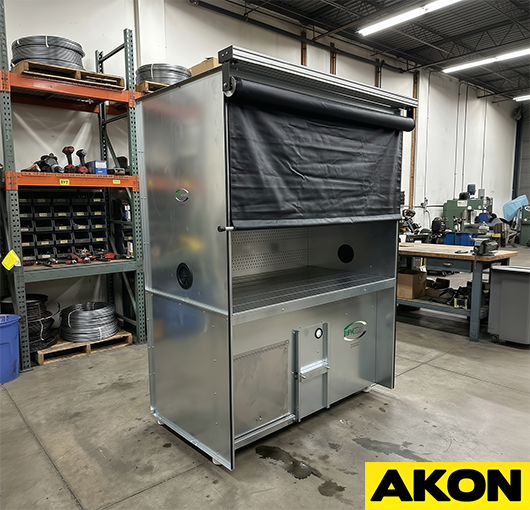
Roll up guards occupy a fraction of the footprint of traditional bellows, last significantly longer in high-cycle applications, and install faster on both new machines and retrofit projects.
A bellows guard that covers a 60" stroke needs substantial compressed stack space when the machine is at its shortest position. A roll up guard covering the same stroke wraps around a tube that is typically 1" to 3" in diameter — freeing up critical space in tight machine envelopes. For applications where a traditional bellows fold would simply be too large, CNC roll up way covers are often the only viable solution.
Service life is the other decisive advantage. Bellows guards fail at fold points after repeated cycling. Roller guards distribute stress across the entire shade surface, delivering 500,000 to 1,000,000+ cycles before spring replacement is even a consideration. When springs do eventually need replacement, they are field-serviceable without replacing the entire unit.
Materials for Every Operating Environment
Standard 18 oz vinyl handles most general-purpose applications, but six additional material families cover CNC coolant exposure, chemical contact, and temperatures up to 1,200°F.
For CNC machining environments, neoprene-coated nylon in 16 oz to 60 oz weights provides excellent resistance to coolants, chips, and hot chip ejection. Weights of 33 oz and above are recommended for moderate to heavy chip loads. For extreme heat applications near furnaces, forging presses, or welding operations, materials including silicone-coated fiberglass (500°F), Teflon-impregnated fiberglass (550°F), and aluminized Kevlar (1,200°F) are available.
The standard 18 oz vinyl shade ships in yellow, black, blue, red, and green. Clear shade material is also available for applications requiring line-of-sight visibility into the machine during operation. Custom view port windows can be added to opaque shades as an alternative.
Optional Features That Extend Guard Capability
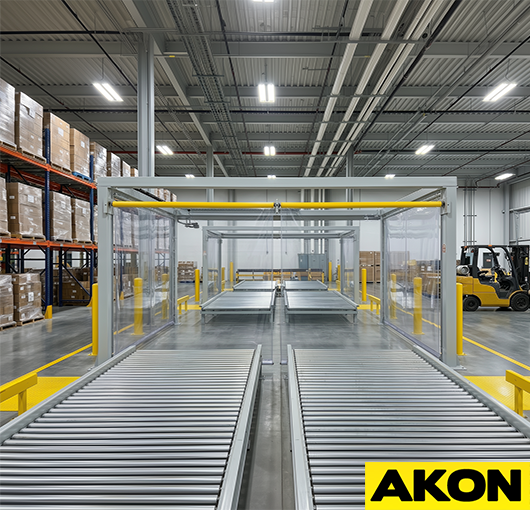
Steel enclosure cases, offset shade placement, custom end-of-shade mounts, and stiffening flats transform the base roller guard into a solution for specialized and demanding applications.
A steel enclosure case surrounds the roller tube and protects the spring mechanism from debris, accidental contact, and contamination. This option is recommended for foundry, forging, and heavy stamping environments. Optional brush wipers can be integrated into the case to clean the shade as it retracts.
For long-extension applications where shade sag is a concern, stiffening flats can be sewn into the material at intervals to add rigidity. When the shade runs in a horizontal orientation beyond approximately 80", stiffening flats or a customer-supplied guide frame prevents gravity-induced droop. Vertical installations do not require stiffening.
Frequently Asked Questions about Roll Up Machine Guards for Industrial Applications
What is a roll up machine guard used for?
Roll up machine guards prevent operators from reaching into point-of-operation zones, pinch points, and nip points on industrial machinery. They also contain flying debris, coolant spray, and hot chips that could injure nearby personnel.
What duty cycle ratings are available?
Three tiers: Standard Duty at 10,000+ cycles, Heavy Duty at 500,000+ cycles, and Super Duty at 1,000,000+ cycles. The correct tier depends on your machine's cycle rate, speed, and operating frequency.
Can roll up guards handle high-temperature environments?
Yes. Shade materials range from standard 18 oz vinyl (rated to 150°F) through neoprene-coated nylon (212°F), silicone-coated fiberglass (500°F), and aluminized Kevlar (1,200°F) for extreme heat applications.
What is the maximum extension for a roll up guard?
Standard Duty rollers extend up to 72 inches. Heavy Duty and Super Duty models extend up to 180 inches. Shade width can be as narrow as 6 inches on heavy and super duty models.
Can the guards be used in both vertical and horizontal orientations?
Yes. Roll up guards operate in both vertical and horizontal positions. For horizontal installations exceeding approximately 80 inches, stiffening flats or guide frames are recommended to prevent shade sag.
Are roll up machine guards OSHA compliant?
Yes. Roll up guards satisfy OSHA 29 CFR 1910.212 requirements for machine guarding, which mandates that point-of-operation zones, nip points, and areas producing flying debris must be safeguarded.
Can the internal springs be replaced in the field?
Yes. Internal springs are field-replaceable if they eventually wear from extended use. We supply replacement springs based on your original order specifications. We do not repair other manufacturers' rollers.
How do roll up guards compare to bellows guards?
Roll up guards have a significantly smaller compressed footprint, last longer in high-cycle applications (500,000+ vs typical bellows lifespan), and distribute stress evenly rather than concentrating it at fold points.
Roll Up Machine Guard Specifications at a Glance
Key Specifications
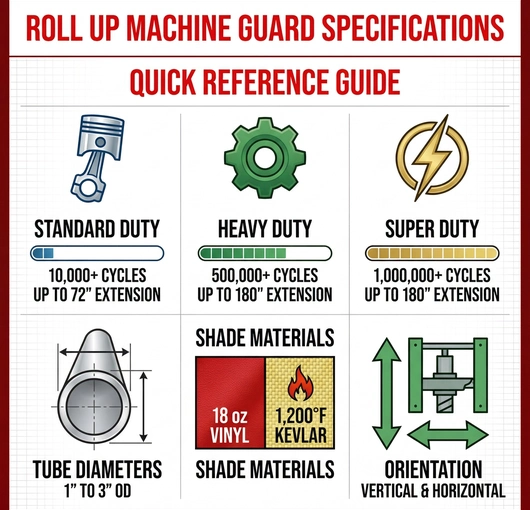
- Standard Duty: 10,000+ cycles, up to 72" extension
- Heavy Duty: 500,000+ cycles, up to 180" extension
- Super Duty: 1,000,000+ cycles, up to 180" extension
- Tube diameters: 1" to 3" OD
- Shade materials: 18 oz vinyl to 1,200°F Kevlar
- Orientation: vertical and horizontal
Why Engineers Specify Roll Up Machine Guards
Up to 1M Cycles
Super Duty rollers rated for 1,000,000+ cycles for non-stop robotic and automated work cell operations.
Compact Footprint
Roller tube diameter of 1" to 3" replaces bulky bellows guards that consume valuable machine envelope space.
Pinch Point Protection
Prevent operator contact with hazardous point-of-operation zones, nip points, and moving machine components.
OSHA Compliant
Satisfies OSHA 29 CFR 1910.212 machine guarding requirements for barrier guards on industrial equipment.
High Temp Options
Shade materials rated from 150°F vinyl up to 1,200°F aluminized Kevlar for extreme heat environments.
Conclusion
OSHA 29 CFR 1910.212 is clear: any machine part or process that could cause injury must be guarded. Roll up machine guards meet that requirement with a compact, retractable design that delivers reliable point-of-operation protection across duty cycles from 10,000 to over 1,000,000 cycles — all within a footprint that traditional bellows cannot match.
The combination of custom-engineered roller assemblies, application-matched shade materials, and field-serviceable spring mechanisms makes retractable roller guards the practical choice for OEMs, plant engineers, and automation integrators across the United States. If your operation needs machine guarding that performs without compromise, our systems are designed to your exact specifications.
Need Roll Up Machine Guards for Your Equipment?
We design and supply custom roll up machine guards for OEMs, manufacturing plants, and automation integrators across the United States. Call us for a free application review.
Get Your Custom QuoteContains: BlogPosting + FAQPage + Organization JSON-LD.
Visible in editor only. Do not duplicate or edit manually.
About the Author
Tom Brennan is an independent Industrial Machine Safety Specialist and contributing writer for AKON Skirting. With over 18 years of experience in machine guarding design, OSHA compliance consulting, and industrial safety system engineering, Tom Brennan specializes in retractable guard systems, point-of-operation safeguarding, and bellows replacement solutions. He has consulted on more than 700 machine guarding projects across the United States.
Related Products