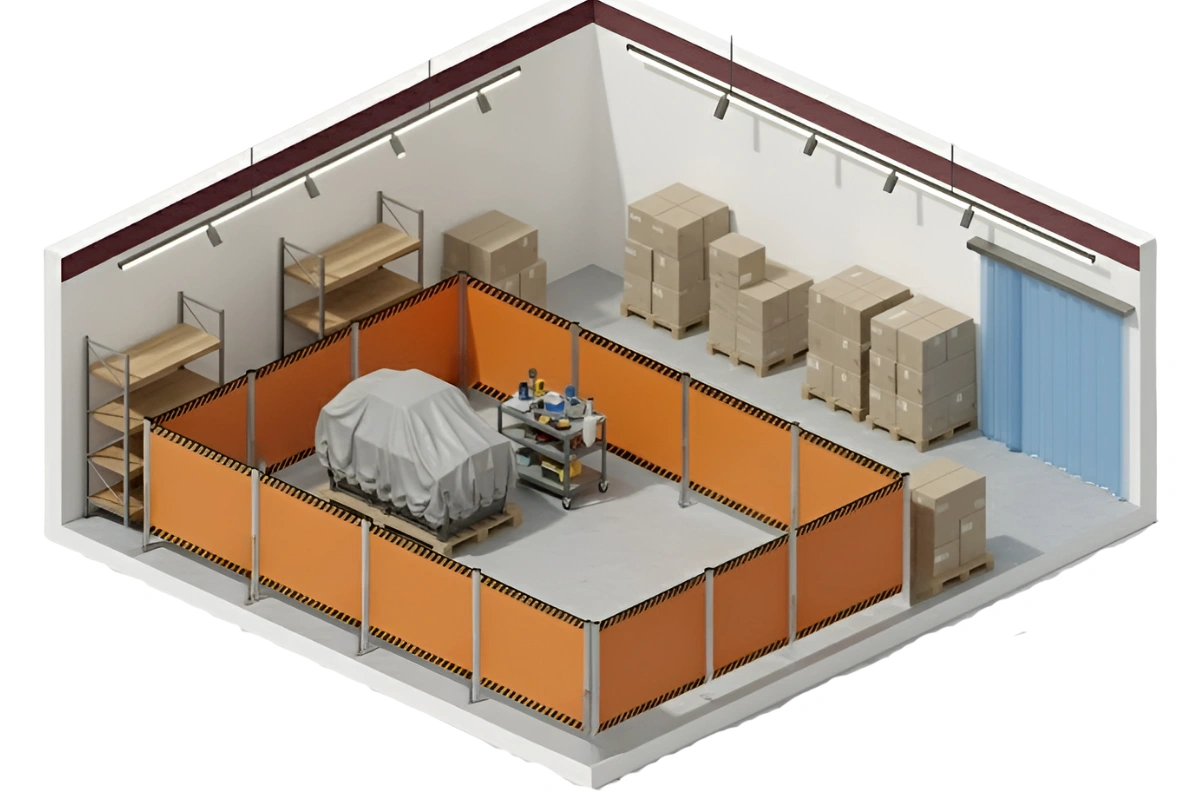
Warehouse Industrial Retractable Barriers
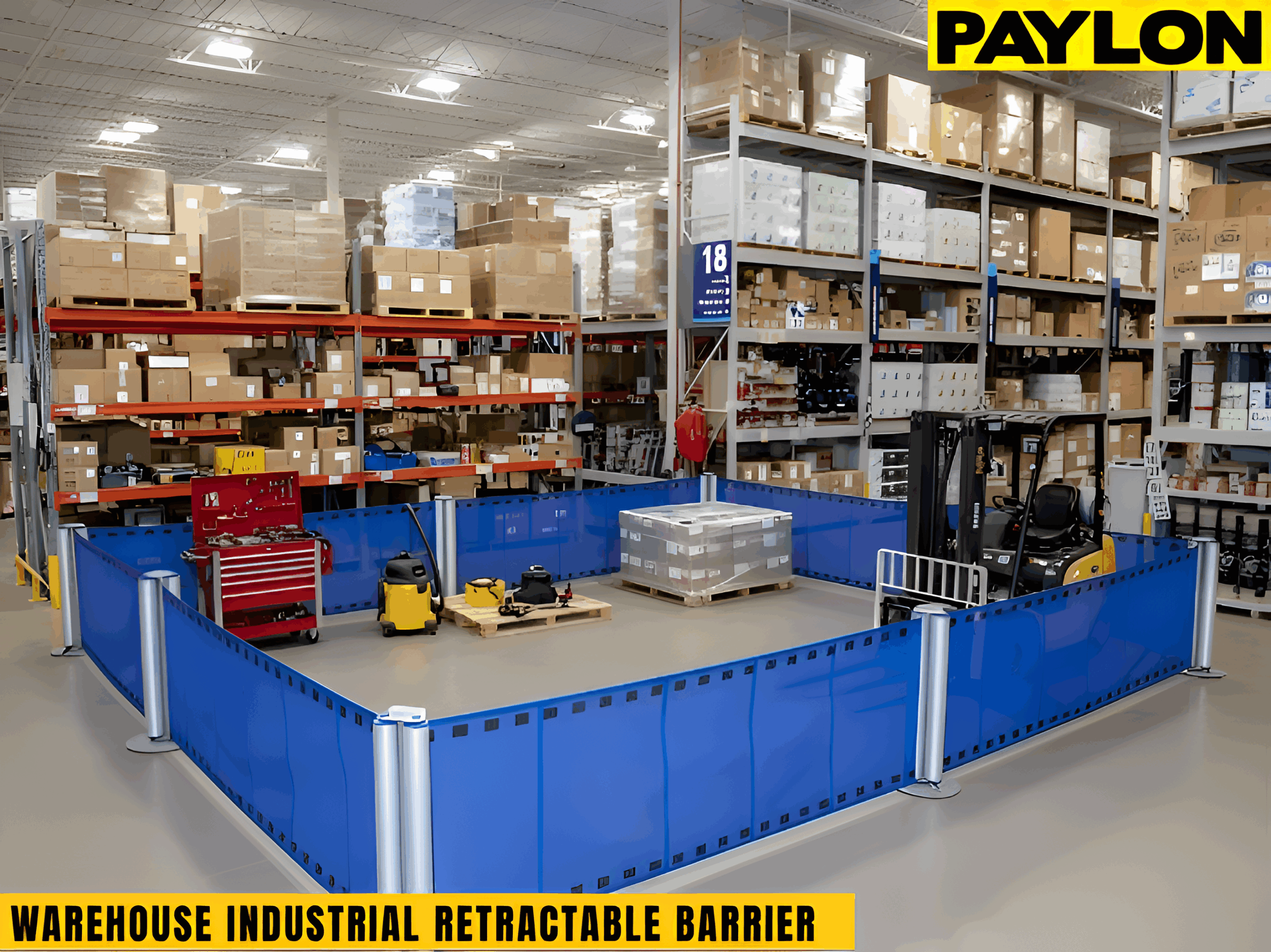
How many industrial retractable barriers does a warehouse need? There is no single number that fits every facility. This article explains why warehouses use retractable barriers, the benefits they provide, and practical rules of thumb for estimating barrier counts based on traffic, risk zones, and daily operations.
Why Warehouses Rely on Industrial Retractable Barriers
Warehouses depend on safety solutions that can keep up with daily operations. With people, equipment, and materials moving through shared spaces, safety controls must adapt quickly as conditions change.
Operational Challenges in Active Warehouse Environments
Warehouses are constantly in motion. Forklifts, pallet jacks, and pedestrians often share the same aisles while loading, staging, and maintenance tasks occur throughout the day. These overlapping activities cause risk areas to shift frequently, making fixed or rigid safety measures difficult to rely on.
As a result, safety controls must adjust without interrupting workflow. What is safe in the morning may become a hazard later in the shift. This constant change increases the need for safety solutions that can adapt in real time.
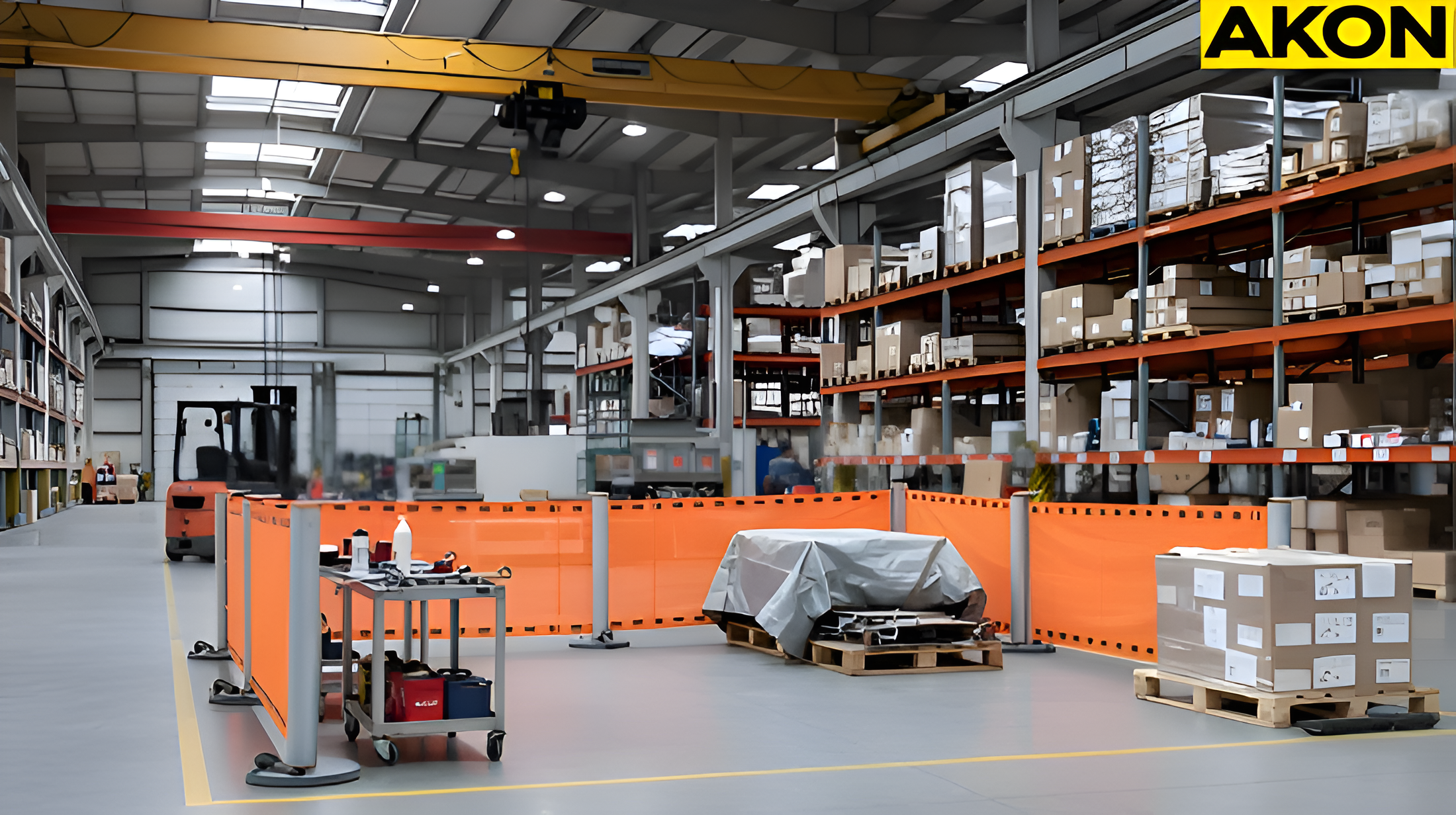
How Retractable Barriers Control Access and Reduce Risk
Industrial retractable barriers help manage these challenges by clearly controlling access when needed. They create visible boundaries that guide movement and discourage accidental entry into active zones. Compared to cones and tape, retractable barriers are more noticeable, more reliable, and easy to adjust as layouts or hazards change.
This allows teams to respond quickly as conditions evolve. Barriers can be opened or closed only when access is required. This level of control supports safety without slowing daily operations.
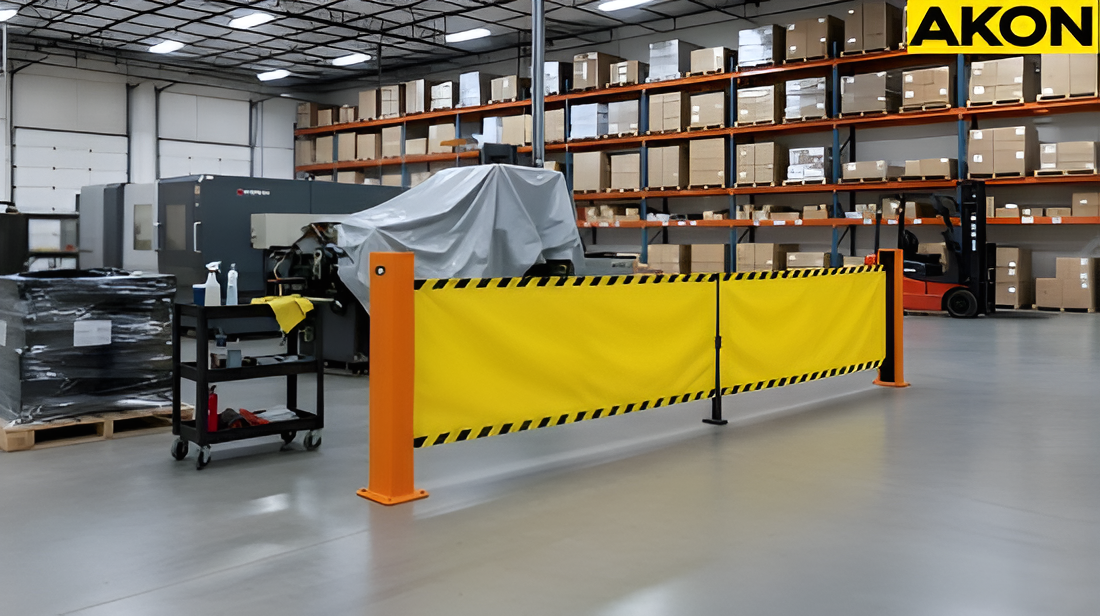
Key Benefits of Industrial Retractable Barriers
Building on the need for adaptable safety controls, industrial retractable barriers offer clear advantages that support how warehouses operate each day. These benefits focus on outcomes that improve safety, efficiency, and control without slowing work.
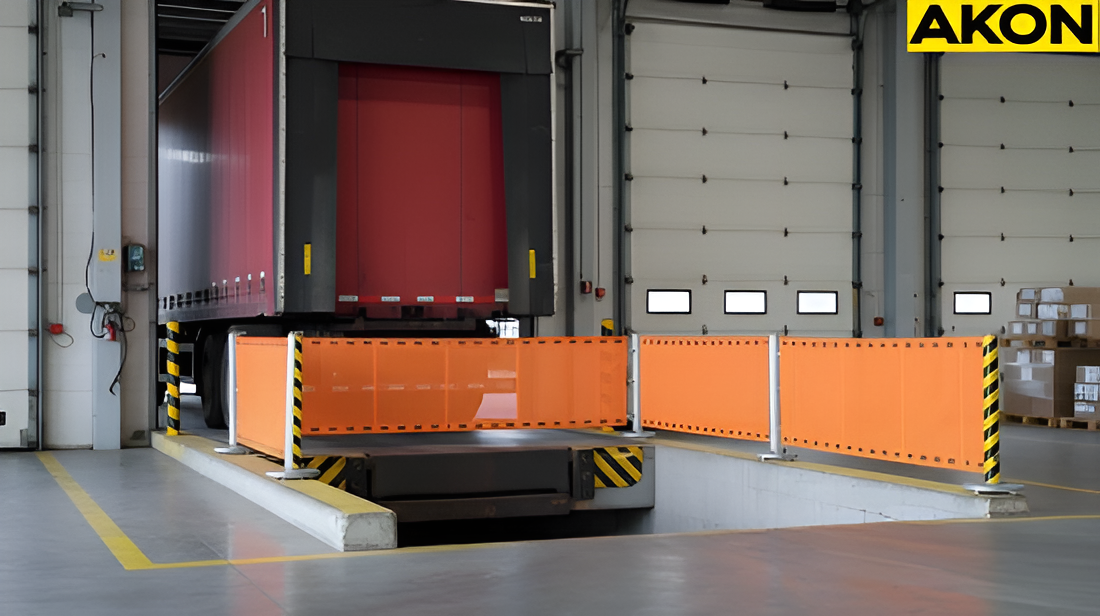
• Clear communication across the floor. Barriers visually signal restricted areas without relying on verbal instructions or extra signage. This helps ensure consistent understanding across shifts and teams.
• More consistent safety enforcement. Retractable barriers help standardize how access is controlled throughout the facility. This reduces reliance on improvised methods that can vary from person to person.
• Simpler safety reviews and audits. Clearly defined zones make it easier to evaluate safety practices during inspections. Teams can quickly identify where controls are in place and where adjustments may be needed.
Improved Warehouse Safety
Retractable barriers reduce accidental entry into hazardous areas by creating clear visual boundaries that are easy to recognize.
Flexible Zone Control
Barriers can be opened, closed, or repositioned to match changing layouts, temporary hazards, or shifting workflows.
Faster Setup Than Cones or Tape
Retractable barriers deploy and retract quickly, allowing safety controls to change without interrupting active operations.
Rules of Thumb for How Many Barriers a Warehouse Needs
After knowing the benefits, the next step is deciding where barriers are actually needed. The number of industrial retractable barriers a warehouse requires depends on risk zones and activity areas rather than overall square footage. Barriers are most effective when placed where access must be controlled at specific times, such as areas where people and equipment intersect, open edges are present, or work conditions change throughout the day.
| Warehouse Area | Typical Barrier Use | Why It Matters |
|---|---|---|
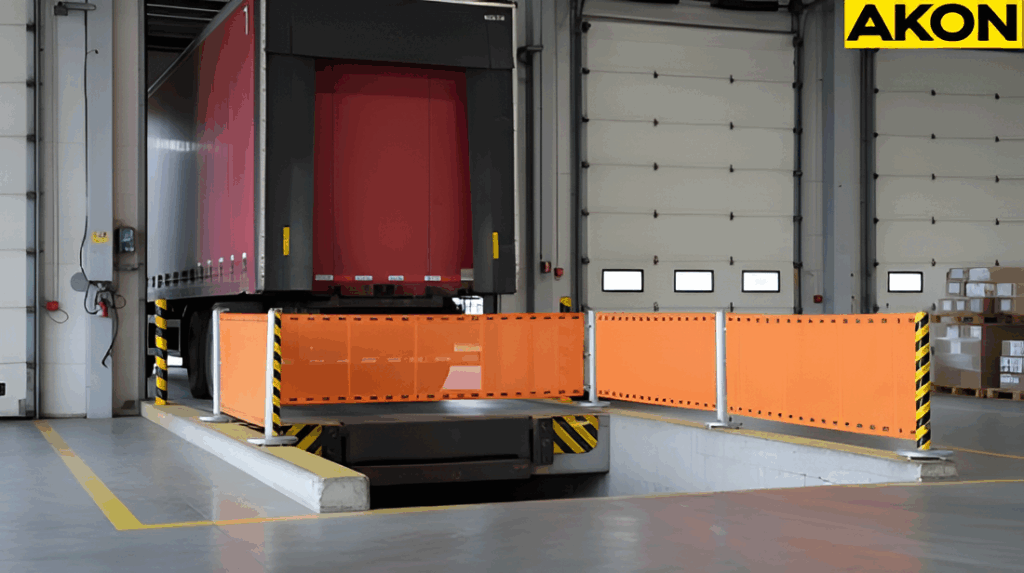
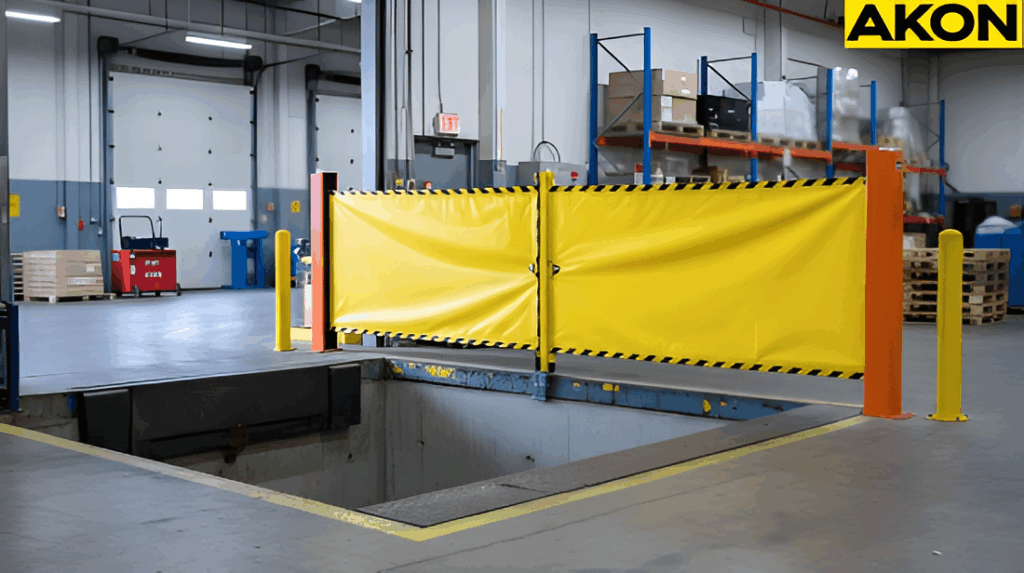
| Loading docks and open edges | 1–2 barriers per active dock | Prevents accidental access and falls |
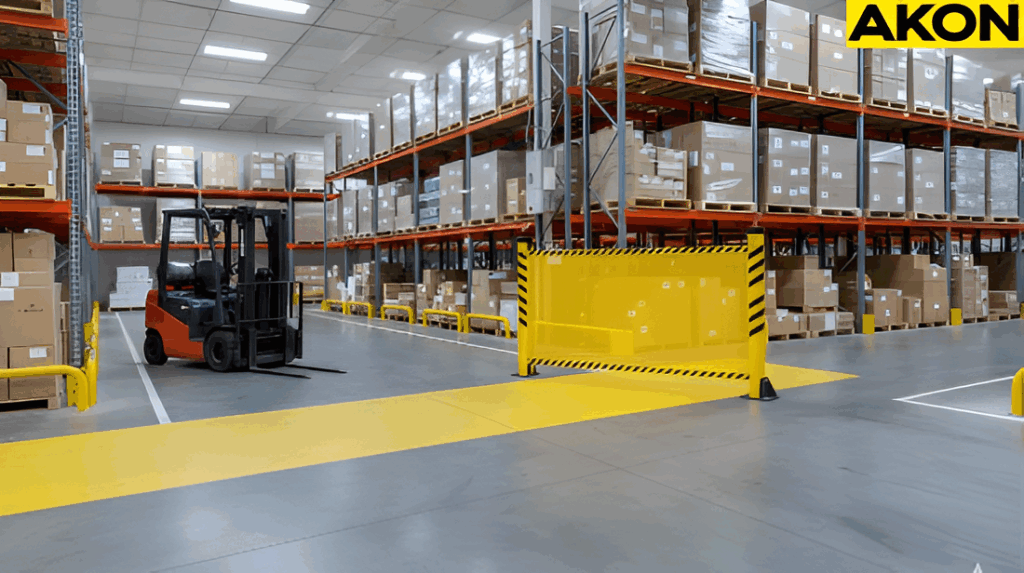
| Pedestrian and forklift crossings | Barriers on each side or flexible divider | Reduces collision risk |
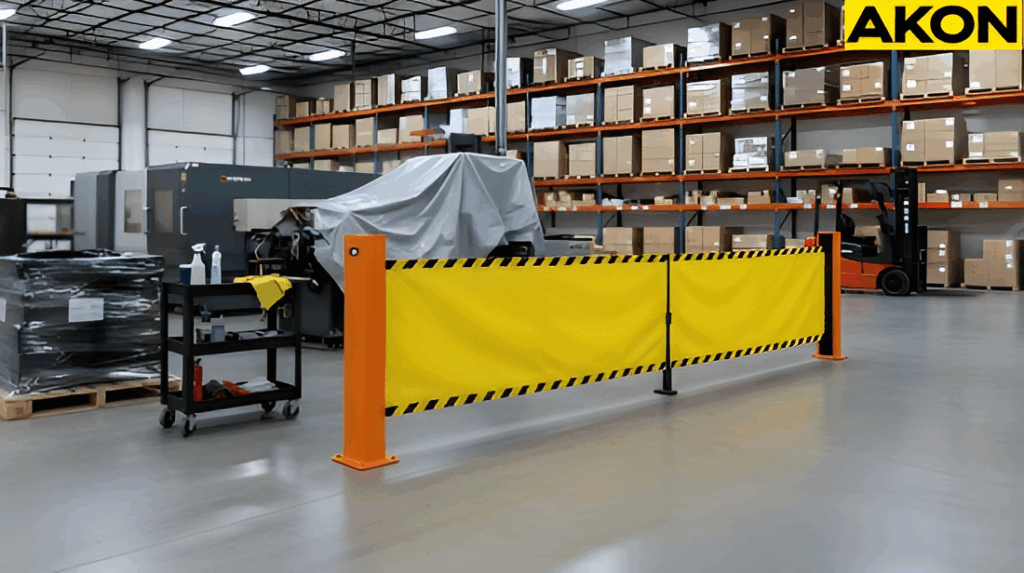
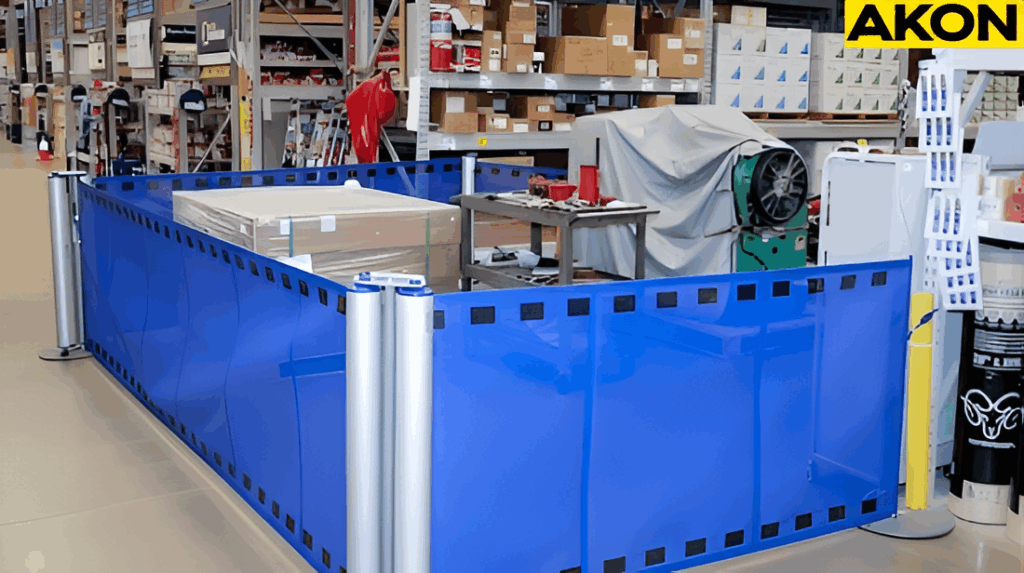
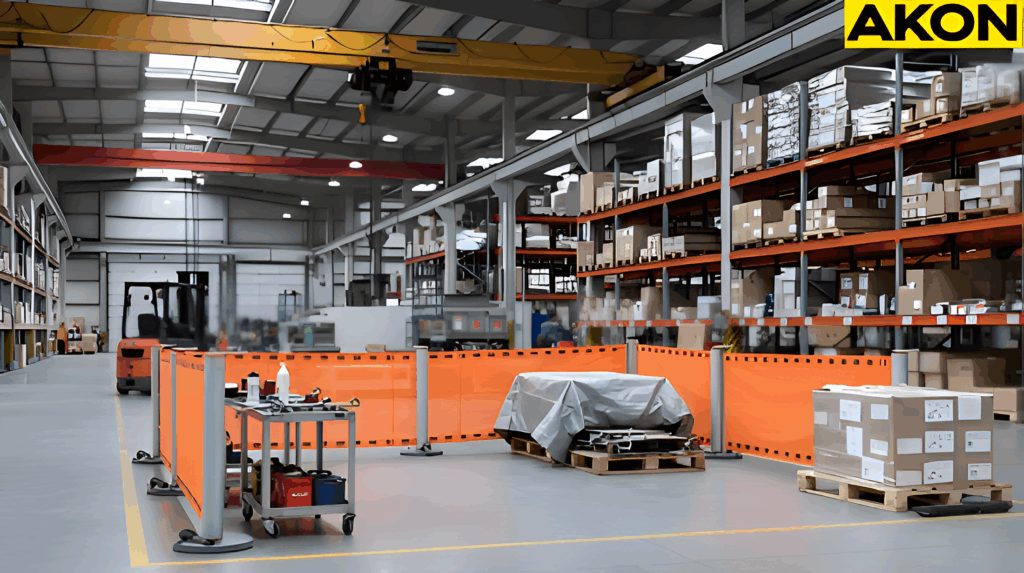
| Maintenance or staging zones | 1–2 temporary barriers | Controls access during short-term work |
| High-traffic aisles | Additional barriers as needed | Maintains clear traffic flow |
These rules of thumb provide a practical starting point for estimating barrier needs. Placement can then be adjusted as workflows, traffic patterns, and warehouse conditions change.
Product Options That Support These Rules of Thumb
Once barrier locations are identified, selecting the right product helps apply those rules effectively. Each option below aligns with common warehouse zones based on risk level, traffic patterns, and how often access needs to change.
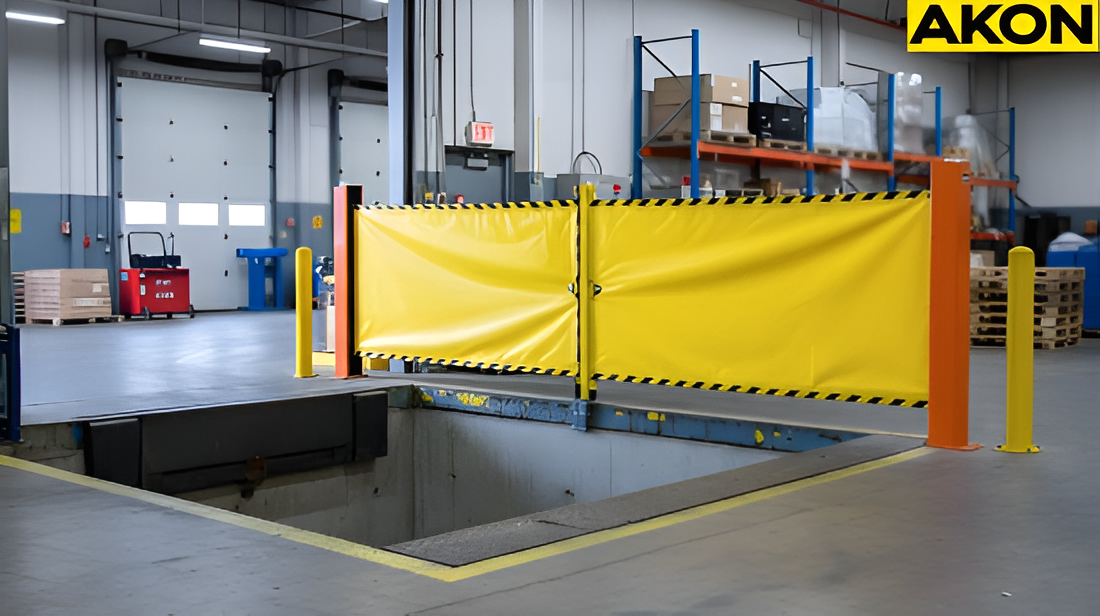
Industrial Roll Up Barricade – SB2000
The SB2000 is designed for warehouses that need a strong, clearly defined barrier in areas with consistent risk exposure. It provides a dependable visual and physical boundary without requiring permanent installation.
• Well suited for loading docks and open edges where fall risk is present.
• Steel post construction provides stability in active work zones.
• Helps secure defined areas during loading, unloading, or production tasks.
• Supports controlled access where hazards are present on a regular basis.
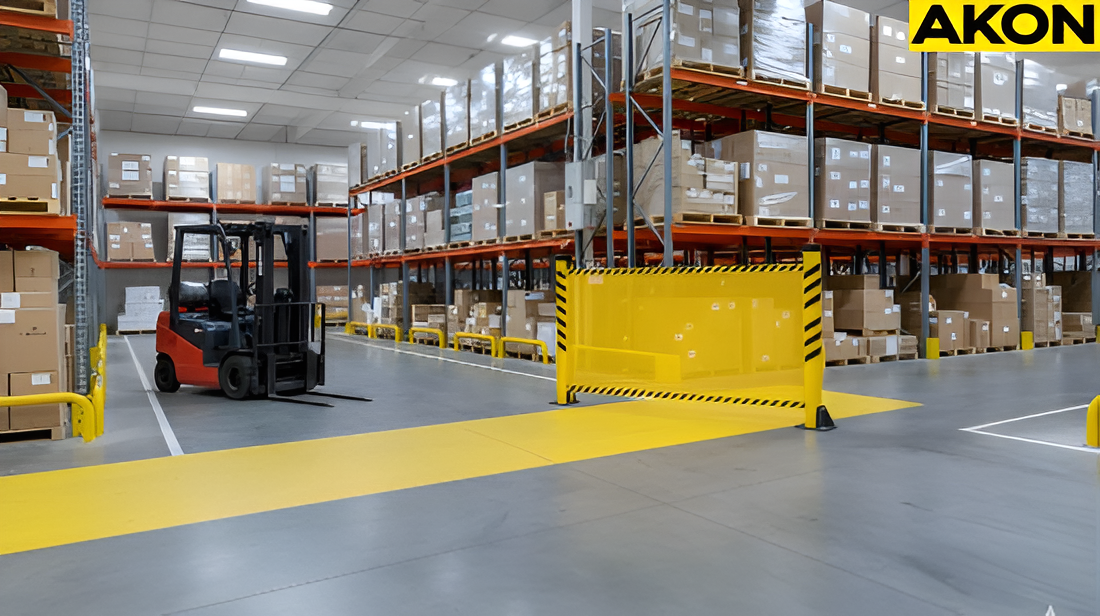
Industrial Retractable Barrier – SB3000
The SB3000 is a manually operated retractable barrier built for shared spaces that see frequent movement. It offers a clear way to separate people and equipment while keeping access flexible.
• Ideal for pedestrian and forklift crossings in busy aisles.
• High visibility design helps guide movement during daily operations.
• Retractable belt allows access to open and close as traffic changes.
• Works well in areas that require separation without stopping workflow.
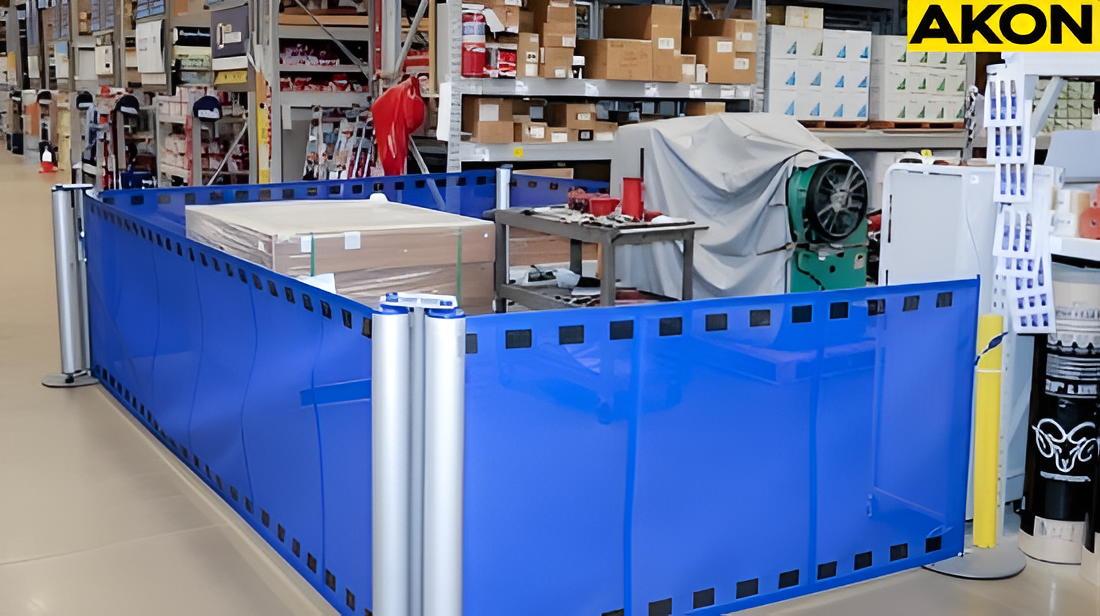
Portable Barrier – SB4000
The SB4000 is a portable roll up barrier intended for temporary or changing warehouse conditions. It allows teams to create controlled zones quickly and adjust placement as work progresses.
• Best for maintenance or staging zones that change throughout the day.
• Easy to move and deploy without anchors or fixed mounting.
• Allows quick response to short term hazards or special projects.
• Supports flexible access control during repairs or inspections.
Frequently Asked Questions
FAQs About Industrial Retractable Barriers
How do I know if my warehouse needs more safety barriers?
If people and equipment regularly cross paths without clear access control, additional barriers are usually needed. Warehouses often start by reviewing loading docks, shared aisles, and temporary work zones.
Are industrial retractable barriers better than cones and tape in warehouses?
Industrial retractable barriers provide a clearer and more reliable boundary than cones or tape. Options like the Industrial Retractable Barrier SB3000 remain visible and in place until intentionally adjusted.
Do industrial retractable barriers require permanent installation?
Many systems are designed to work without permanent anchors. The Portable Barrier SB4000 is commonly used where temporary placement or frequent relocation is needed.
How often should barrier placement be reviewed in a warehouse?
Barrier placement should be reviewed whenever layouts, traffic patterns, or workflows change. This is especially important around staging areas and shared pedestrian zones.
What warehouse areas should be prioritized first when adding barriers?
Loading docks, open edges, and pedestrian forklift crossings should be addressed first. These areas often benefit from solutions like the Industrial Roll Up Barricade SB2000.
Can retractable barriers be moved or adjusted during a shift?
Yes, many systems are designed for quick adjustment. Portable options like the SB4000 allow teams to respond to changing conditions without stopping work.
Are retractable barriers suitable for temporary maintenance projects?
Retractable barriers are well suited for short-term projects. The Portable Barrier SB4000 is frequently used to secure maintenance or inspection zones.
How many barriers does a small warehouse typically need?
There is no fixed number, but small warehouses often begin with barriers at key docks and crossings. Additional coverage is added as operations grow or change.
Do retractable barriers slow down warehouse workflow?
When placed correctly, they often improve workflow by clarifying movement paths. Barriers like the SB3000 help guide traffic without fully blocking access.
Are industrial retractable barriers easy for employees to use?
Most systems are simple to operate and require minimal training. Clear visual cues help workers quickly understand when access is restricted.
Can industrial retractable barriers be used indoors and outdoors?
Some models are designed for indoor environments, while others can handle outdoor conditions. The specific application should guide whether an SB2000, SB3000, or SB4000 is used.
What makes a barrier suitable for high-traffic warehouse areas?
Durability and visibility are key factors. The Industrial Retractable Barrier SB3000 is often chosen for busy aisles and crossings due to frequent daily use.
Should barriers fully block access or simply guide movement?
That depends on the risk level of the area. Open edges may require full restriction, while shared aisles often only need guided separation.
Can retractable barriers be combined with other safety measures?
Yes, they often complement signage, floor markings, and training programs. Barriers add a physical layer of access control to existing safety measures.
How do I avoid placing too many barriers in my warehouse?
Focus on risk zones rather than total space. Using targeted solutions like the SB2000 or SB3000 helps avoid unnecessary clutter.
Do retractable barriers help during safety inspections or audits?
Clearly defined zones make it easier to evaluate safety practices. Inspectors can quickly see where access control measures are in place.
Are retractable barriers flexible enough for changing warehouse layouts?
Many systems are designed to adapt to evolving layouts. The SB4000 is especially useful where zones shift frequently.
What is the first step before choosing a retractable barrier product?
Walk the facility and identify where access needs to be controlled. This helps match each zone to the correct barrier type.
Can barriers be added gradually instead of all at once?
Yes, many warehouses start with a few critical locations. Coverage can expand over time using products like the SB2000 or SB3000.
How do I choose between the SB2000, SB3000, and SB4000?
The choice depends on how permanent the risk is, how much traffic the area sees, and how often layouts change. Matching the product to the scenario leads to better safety outcomes.
Photo Gallery
Making the Right Barrier Decisions for Your Facility
There is no one-size-fits-all number for industrial retractable barriers. The most effective approach is to start by reviewing traffic patterns, shared spaces, and risk zones throughout your warehouse. Flexible, retractable solutions allow you to improve safety without locking your layout into a fixed setup. By taking time to evaluate how your facility operates today, you can make informed decisions that support both safety and daily efficiency.
Flexible Safety Zones