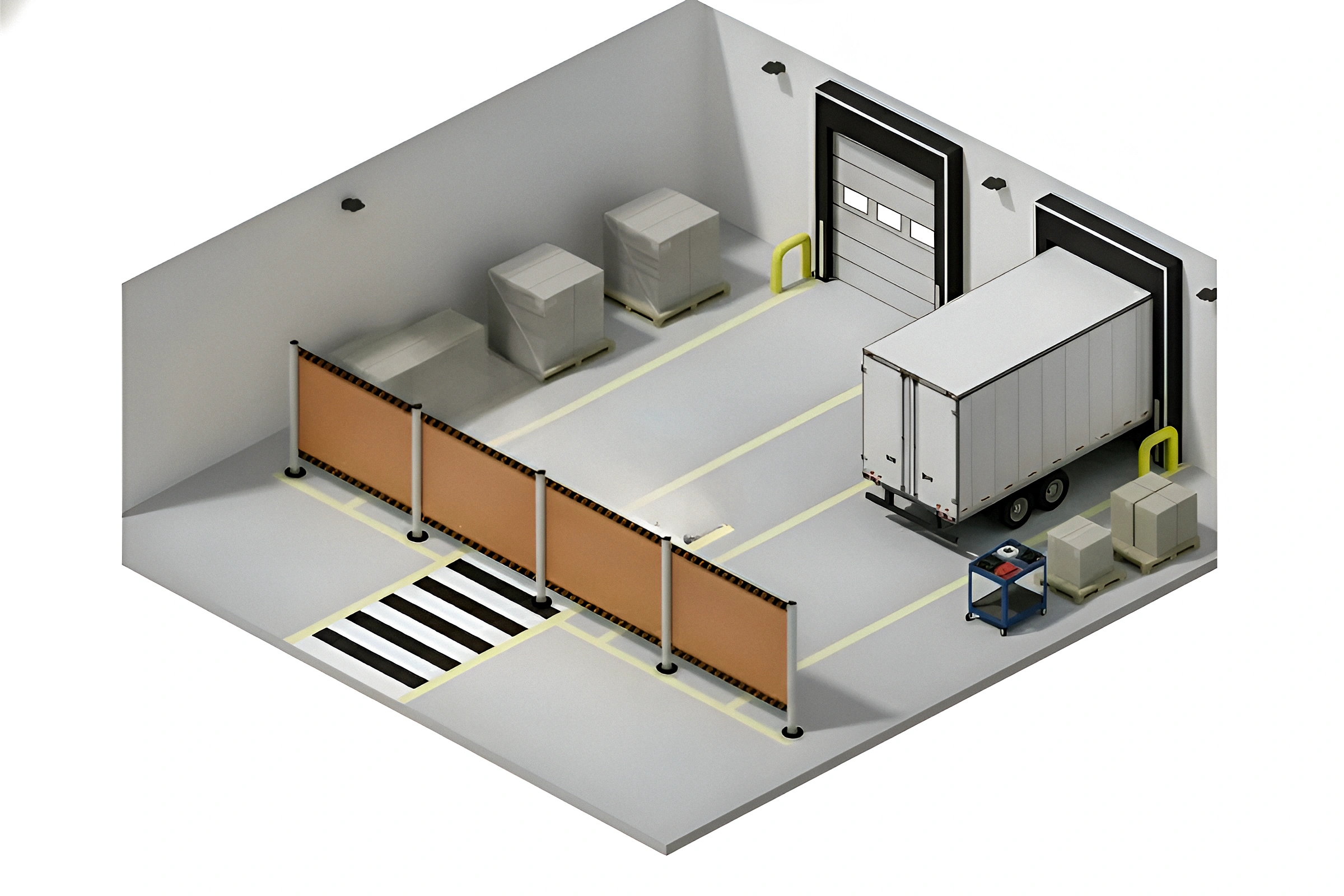
Closing Warehouse Aisles Quickly and Safely
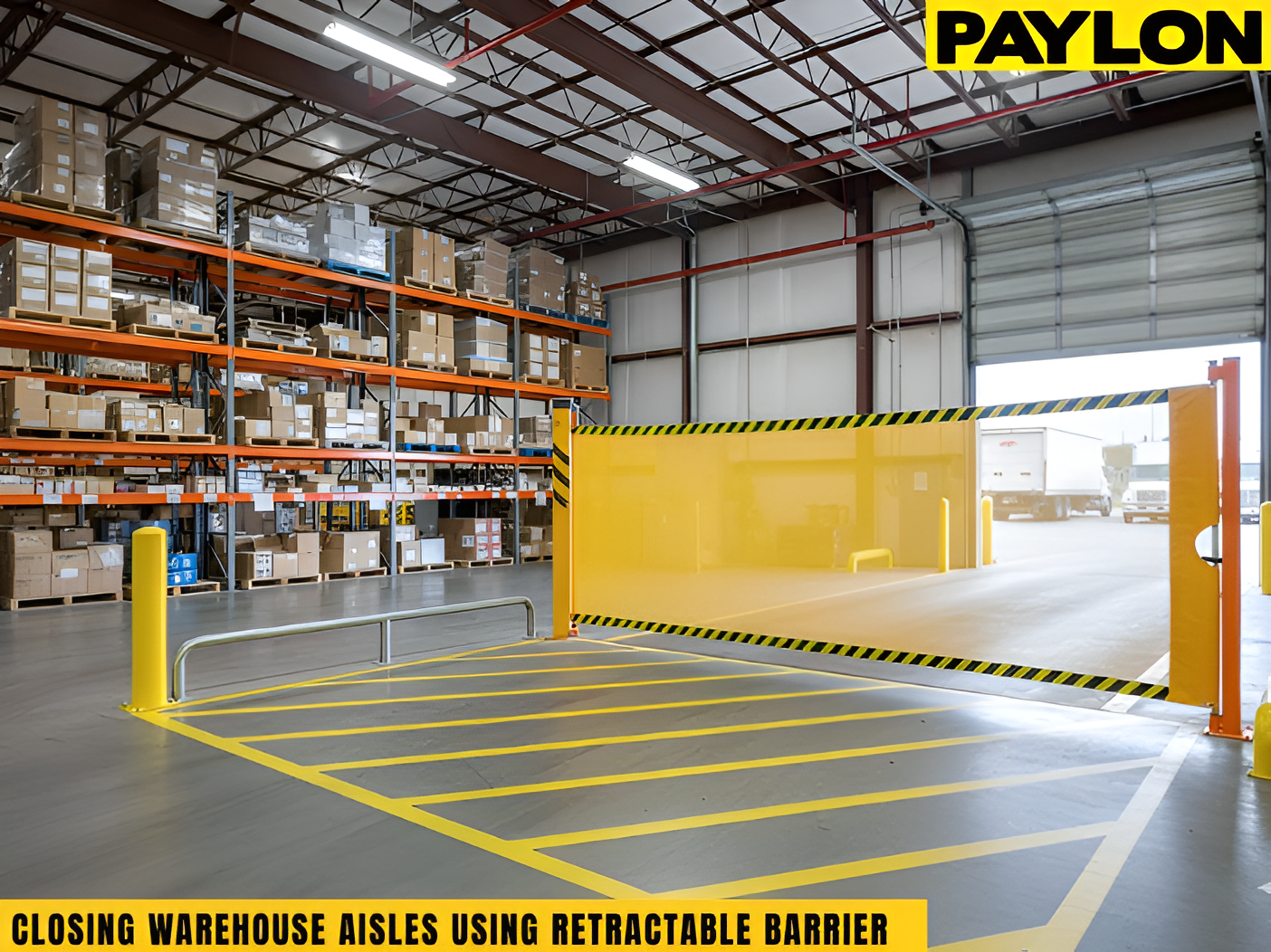
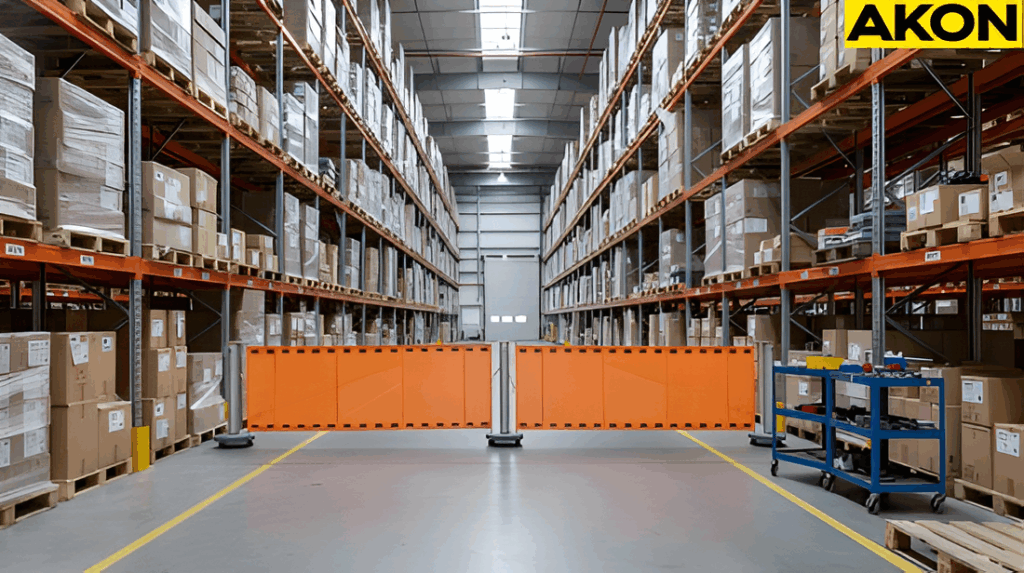
Warehouse aisles can be closed in under two minutes when fast action is needed. Sudden hazards, maintenance work, and traffic conflicts often require immediate control. This article explains why quick aisle closures matter, how retractable barriers are used, how they compare to other methods, and which options work best for temporary warehouse aisle control.
Why Warehouses Need Fast Aisle Closures
Warehouse conditions can change without warning. When an aisle becomes unsafe or unavailable, the speed of the response directly affects safety and daily operations. Fast aisle closures help prevent minor issues from escalating while work continues around the affected area.
Open or Partially Blocked Aisles Increase Safety Risks
When aisles remain open or are only partially blocked, workers and equipment may continue moving through areas that are no longer safe. In busy warehouse environments, hazards are not always easy to notice at first glance.
This increases the chance of sudden stops, near misses, or unsafe reactions. Over time, repeated exposure to unclear hazards raises the likelihood of preventable accidents.
Slow Closures Cause Confusion During Active Operations
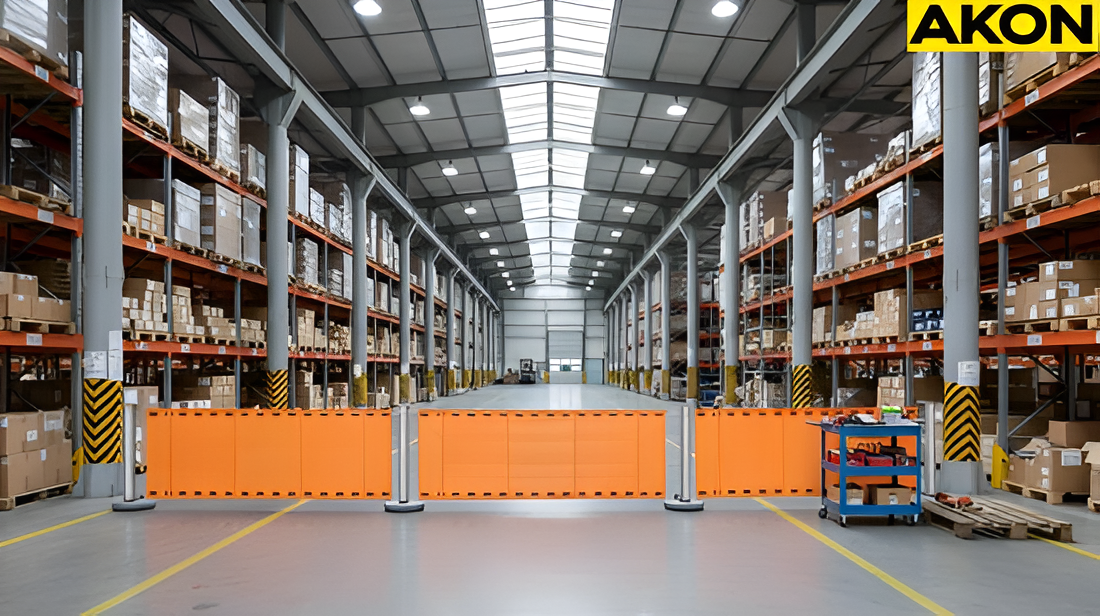
Delayed or unclear aisle closures often create uncertainty on the warehouse floor. Workers may hesitate, reroute without warning, or continue using paths that should be restricted.
This lack of clarity interrupts normal movement patterns and slows down daily tasks. During active operations, even brief delays can compound into larger workflow disruptions and increased risk.
How to Close a Warehouse Aisle in Under 2 Minutes Using a Retractable Barrier
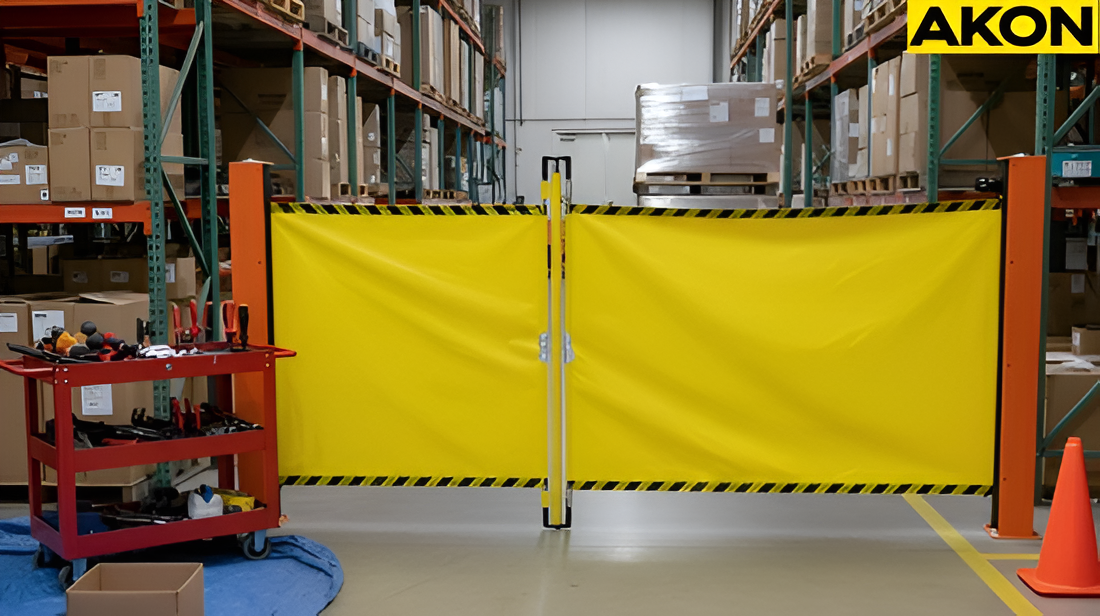
Once an aisle needs to be closed, the process should be quick, clear, and easy to repeat. This approach is designed for active warehouse floors where nearby work continues and timing matters. Using a retractable barrier allows teams to follow a consistent method that feels natural after just a few uses.
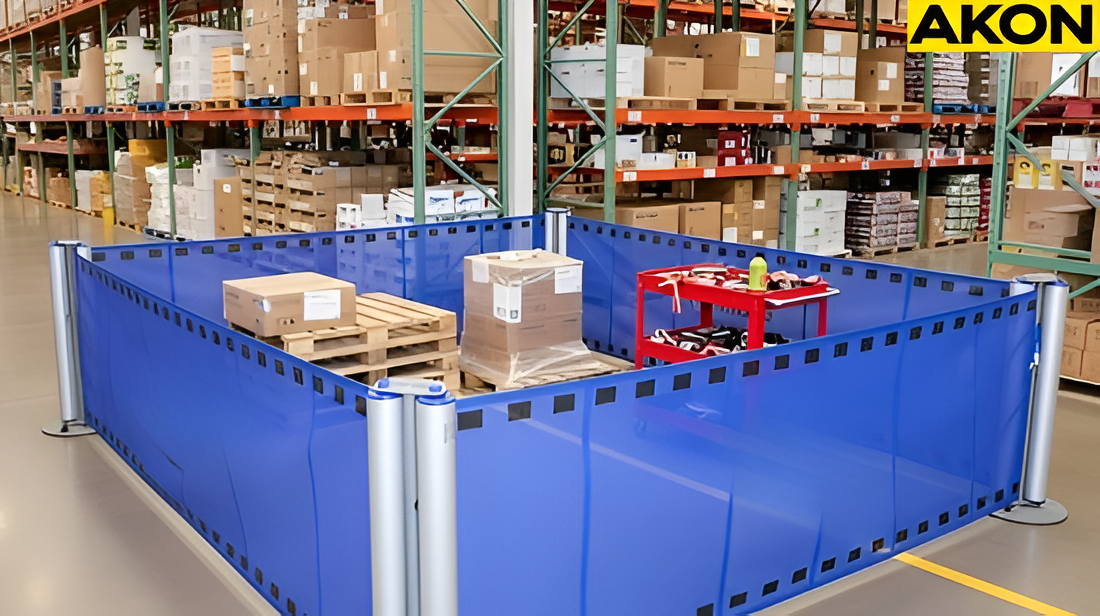
1. Identify the aisle or hazard zone. Confirm the specific section of the aisle that needs to be restricted and make sure the immediate area is ready for closure.
2. Position the barrier housing at the aisle edge. Place the barrier unit at one side of the aisle so it can extend straight across without obstruction.
3. Pull the retractable barrier across the aisle. Extend the barrier smoothly to the opposite side, keeping it level and clearly visible as it spans the opening.
4. Secure the connection point. Attach the barrier end to its receiving point so it stays firmly in place.
5. Perform a quick visibility and tension check. Make sure the barrier is easy to see and properly tensioned before allowing activity to continue nearby.
Fast Deployment
Aisles can be closed in under two minutes, helping teams respond quickly without slowing surrounding operations.
Flexible Use
The portable design allows the barrier to be repositioned easily as warehouse layouts and daily needs change.
Clear Visibility
The barrier creates an obvious visual signal that helps workers and equipment operators recognize closed aisles immediately.
Retractable Barriers vs. Other Temporary Aisle Closure Methods
After knowing how a fast aisle closure works, the next step is deciding which temporary method performs best on a busy warehouse floor. Several options are commonly used, but they do not offer the same level of reliability or consistency. Comparing them side by side makes it easier to see which approach supports quick, controlled aisle management.
| Criteria | Retractable Barriers | Cones and Tape | Chains or Fixed Barriers |
|---|---|---|---|
| Setup Speed | Very fast | Slow | Moderate |
| Visibility | High | Low | Moderate |
| Flexibility | High | Low | Low |
| Reusability | High | Limited | Moderate |
Retractable barriers stand out because they offer dependable performance across changing warehouse conditions. They provide a clearer and more consistent way to manage aisle closures compared to improvised or fixed alternatives. This makes them easier to rely on when quick decisions are needed during active operations.
Product Options That Help You Close Warehouse Aisles Faster
Once you know which type of barrier works best, the next step is choosing the right option for your facility. These SB-series barriers are designed to support fast, temporary aisle control across different warehouse layouts and operational needs.
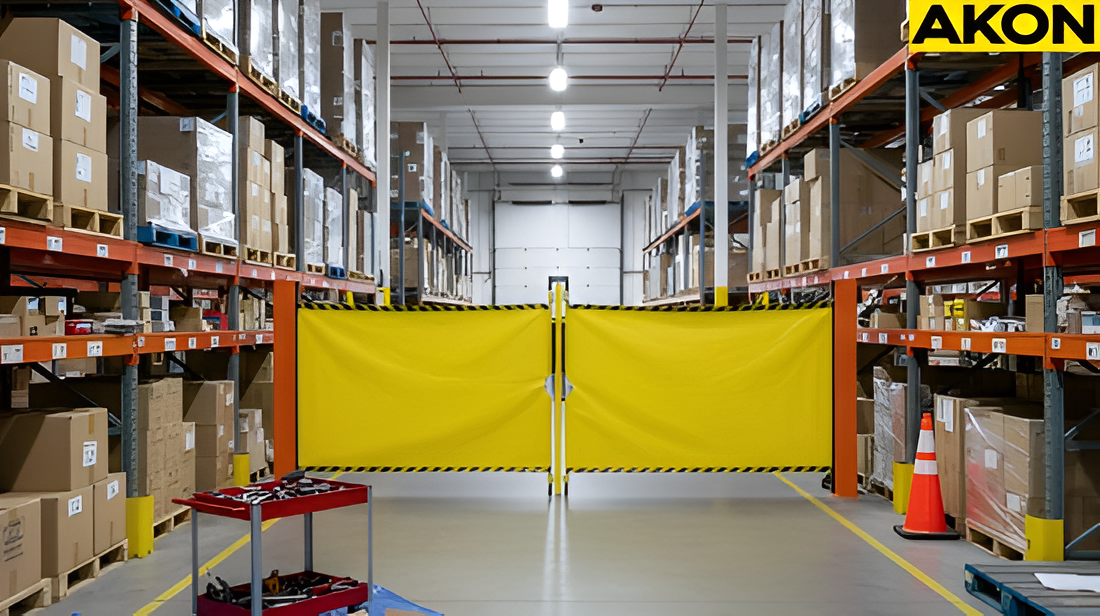
Industrial Roll Up Barricade – SB2000
The SB2000 is a dependable choice for warehouses that need to close aisles during planned work or recurring tasks. It works best in areas where closures happen often but stay in place long enough to benefit from a fixed roll-up setup.
• Ideal for maintenance areas and scheduled repair zones.
• Creates a clear visual boundary using a roll-up curtain system.
• Supports repeated use without permanent construction changes.
• Works well in aisles where layouts remain mostly consistent.
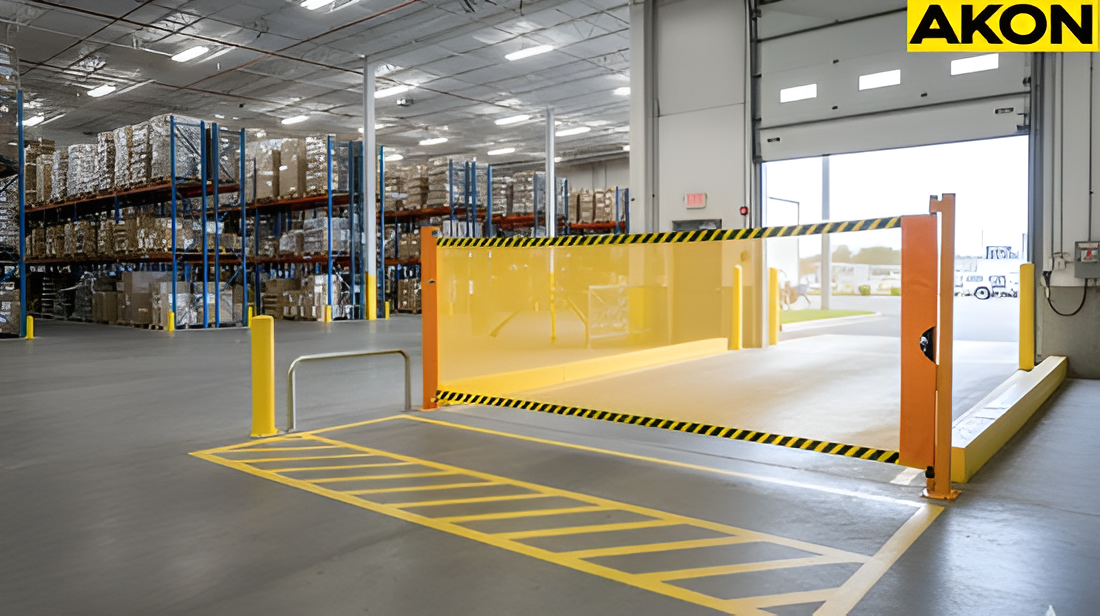
Industrial Retractable Barrier – SB3000
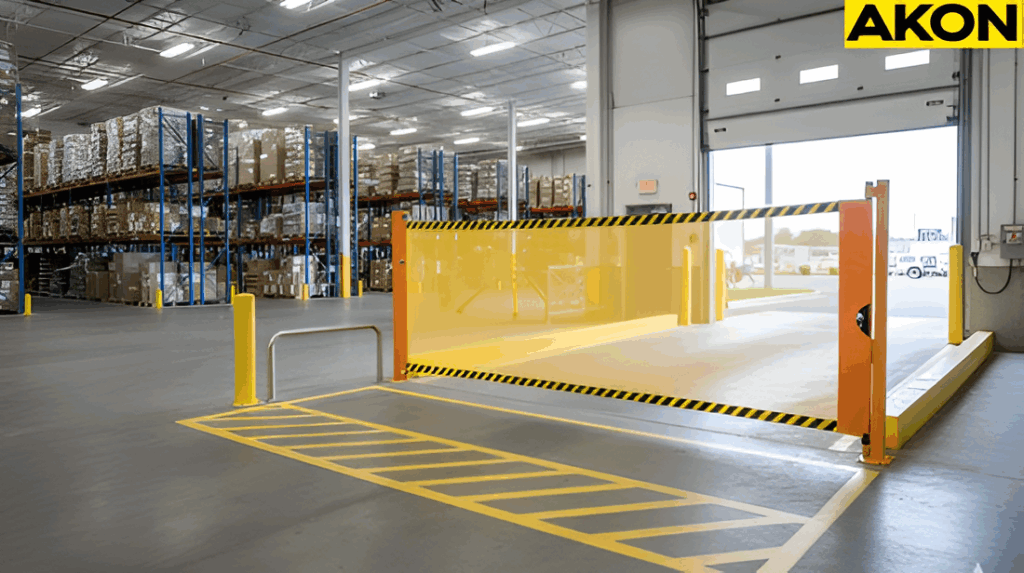
The SB3000 is built for environments where access points open and close multiple times throughout the day. It supports quick adjustments while keeping restricted areas clearly defined.
• Well suited for dock edges, crossings, and shared traffic zones.
• Helps guide movement during loading, unloading, or staging changes.
• Allows barriers to extend and retract as conditions shift.
• Fits operations that require frequent adjustments with minimal disruption.
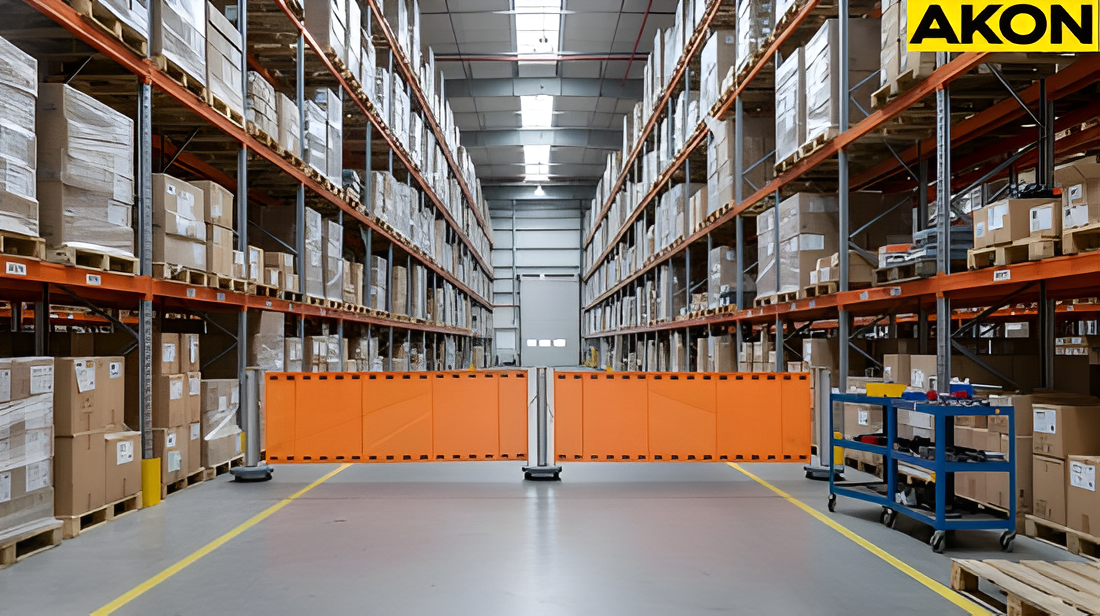
Portable Barrier – SB4000
The SB4000 offers a mobile option for warehouses that need to respond quickly to changing conditions. Its portable design makes it easy to move aisle control from one location to another as needs evolve.
• Best for wide aisles and areas with changing configurations.
• Portable setup supports rapid redeployment across the facility.
• Helps manage temporary hazards, events, or short-term work zones.
• Useful when aisle closures move multiple times during a single shift.
Frequently Asked Questions
FAQs: About Closing Warehouse Aisles
How wide of a warehouse aisle can a retractable barrier cover?
Coverage depends on the model used. Options like the Portable Barrier SB4000 are commonly chosen for wider aisles, while the Industrial Roll Up Barricade SB2000 works well in standard aisle widths.
Can one person deploy a retractable warehouse barrier?
Yes, most warehouse retractable barriers are designed for single-person use. Models such as the SB2000 and SB3000 are often deployed by one worker without assistance.
Are retractable barriers intended for temporary or repeated aisle closures?
They are built for repeated use in active warehouse environments. Facilities often deploy systems like the Industrial Retractable Barrier SB3000 multiple times per shift.
Do retractable barriers require floor anchoring?
Some models use fixed mounting points, while others are portable. The SB4000 portable barrier is frequently selected when floor anchoring is not preferred.
How long does it typically take to close an aisle with a retractable barrier?
Once familiar with the process, most teams can close an aisle in under two minutes. This timing applies across SB-series barriers when used as intended.
Can retractable barriers be moved between different aisles?
Yes, portability varies by model. The SB4000 is specifically designed to be repositioned across multiple aisles as conditions change.
Are retractable barriers suitable for busy warehouse floors?
They are commonly used in high-traffic environments. Clear placement helps barriers like the SB3000 remain visible even during peak activity.
Can these barriers be used around forklifts and equipment traffic?
Yes, retractable barriers are often used in shared spaces with equipment movement. Facilities frequently choose models like the SB3000 for dock and crossing areas.
How visible are retractable barriers from a distance?
Visibility is a key consideration in their design. The roll-up curtain style used in the SB2000 and SB4000 helps closed aisles stand out clearly.
Are retractable barriers suitable for maintenance or cleaning zones?
Yes, they are commonly used to restrict access during maintenance or cleaning. The SB2000 is often used in planned work zones that require defined boundaries.
Do retractable barriers take up space when not in use?
When retracted, they are designed to stay compact and unobtrusive. This allows normal aisle use to continue when barriers are not deployed.
Can retractable barriers be used in narrow aisles?
Some models are better suited for tighter spaces. Choosing the appropriate barrier size helps ensure proper clearance in narrow aisles.
Are retractable barriers reused across multiple shifts?
Yes, they are designed for repeated daily use. Many warehouses rely on the SB2000 and SB3000 across multiple shifts without disruption.
Do warehouse teams need special training to use these barriers?
Training requirements are minimal. Most workers can learn how to deploy SB-series barriers with basic instruction.
Are retractable barriers durable enough for daily warehouse use?
They are designed for industrial environments with frequent use. Routine inspection helps maintain long-term performance.
How quickly can an aisle be reopened after work is complete?
Reopening an aisle typically takes very little time. Barriers like the SB4000 can be removed or repositioned just as quickly as they are deployed.
Do retractable barriers replace permanent safety systems?
They are used to manage temporary access, not replace permanent controls. Warehouses often use them alongside fixed safety measures.
Can retractable barriers be used indoors and in covered outdoor areas?
Most models are intended for indoor use. Some facilities also use them in covered outdoor areas when conditions allow.
Are retractable barriers adaptable to different warehouse layouts?
Yes, adaptability depends on the model selected. The SB3000 and SB4000 are often chosen for facilities with changing layouts.
How do I choose between the SB2000, SB3000, and SB4000?
The best choice depends on aisle width, how often closures move, and whether portability is needed. Reviewing daily workflows helps determine which SB-series barrier fits best.
Photo Gallery
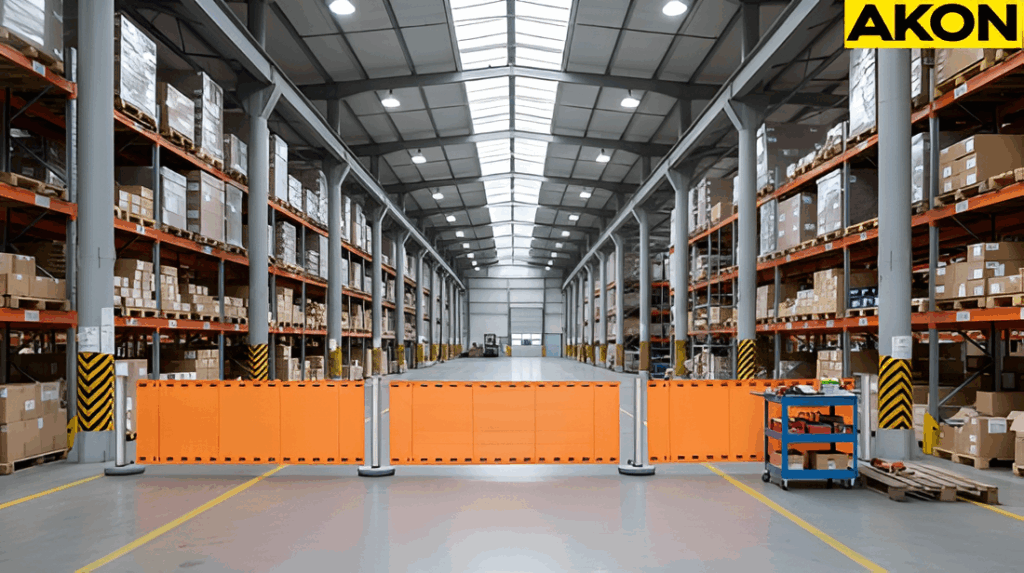
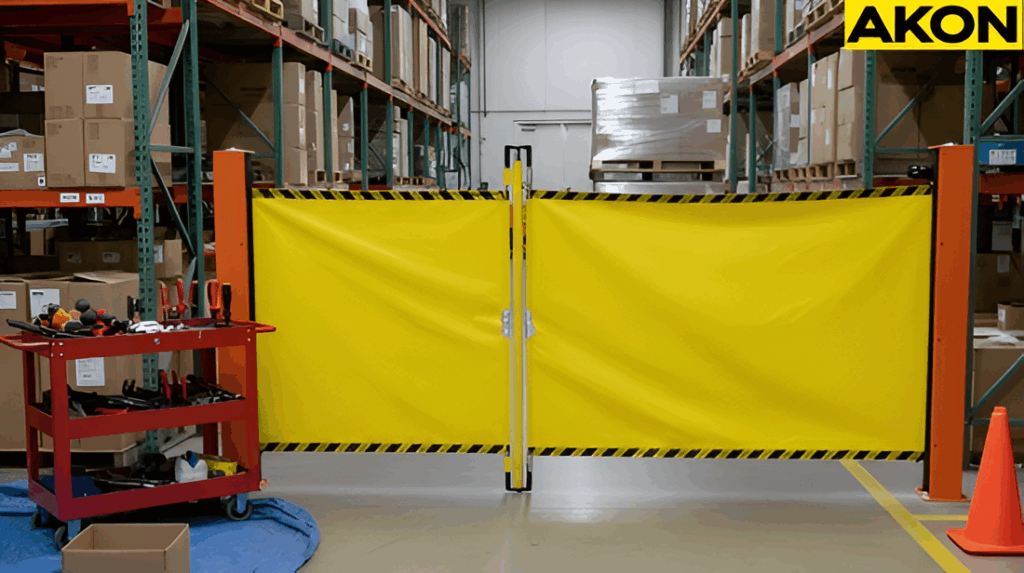
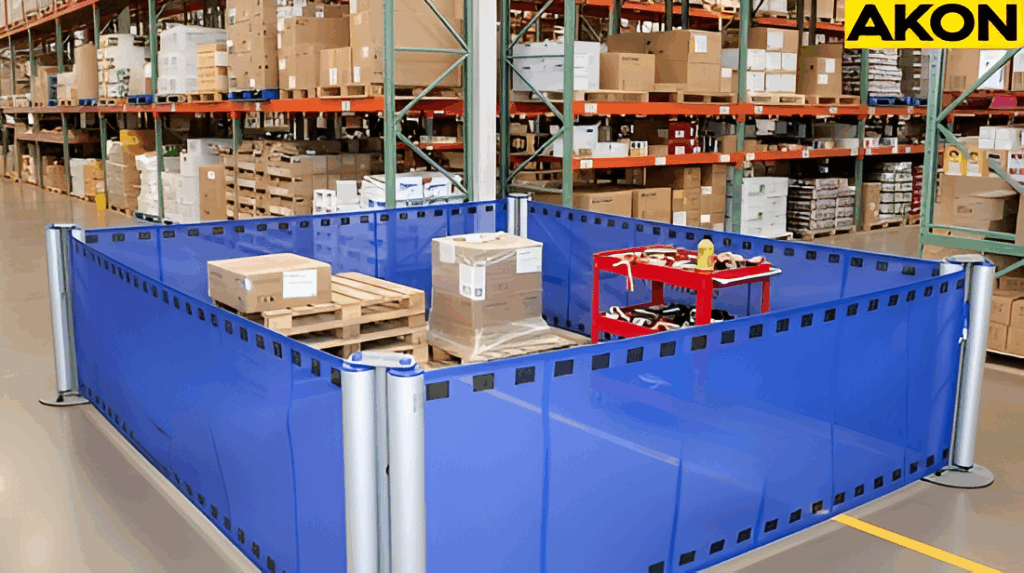
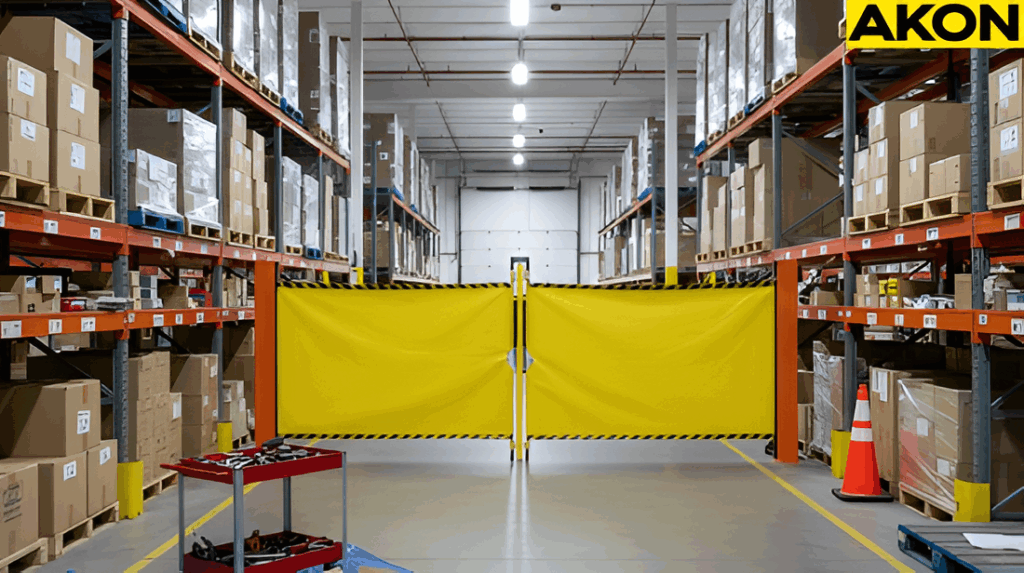
Closing Warehouse Aisles with Speed and Control
Closing a warehouse aisle does not have to slow operations or create uncertainty. With the right approach, aisles can be secured quickly and safely while maintaining clear visibility and flexible control as conditions change. If your facility regularly manages temporary aisle closures, exploring retractable barrier options can help support smoother, more controlled daily operations.
Temporary Aisle Closure