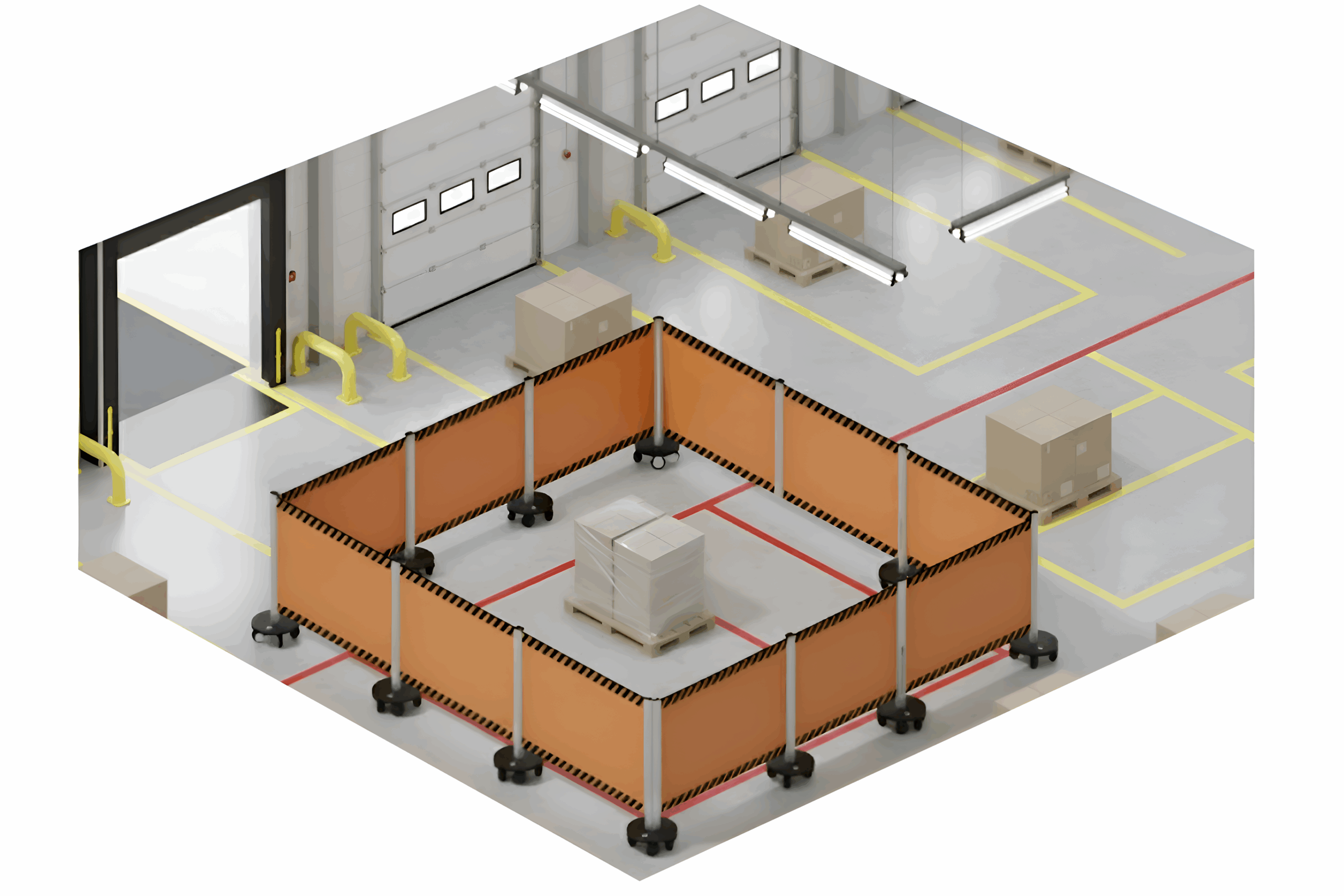
Retractable Barriers for Warehouse Dock Areas
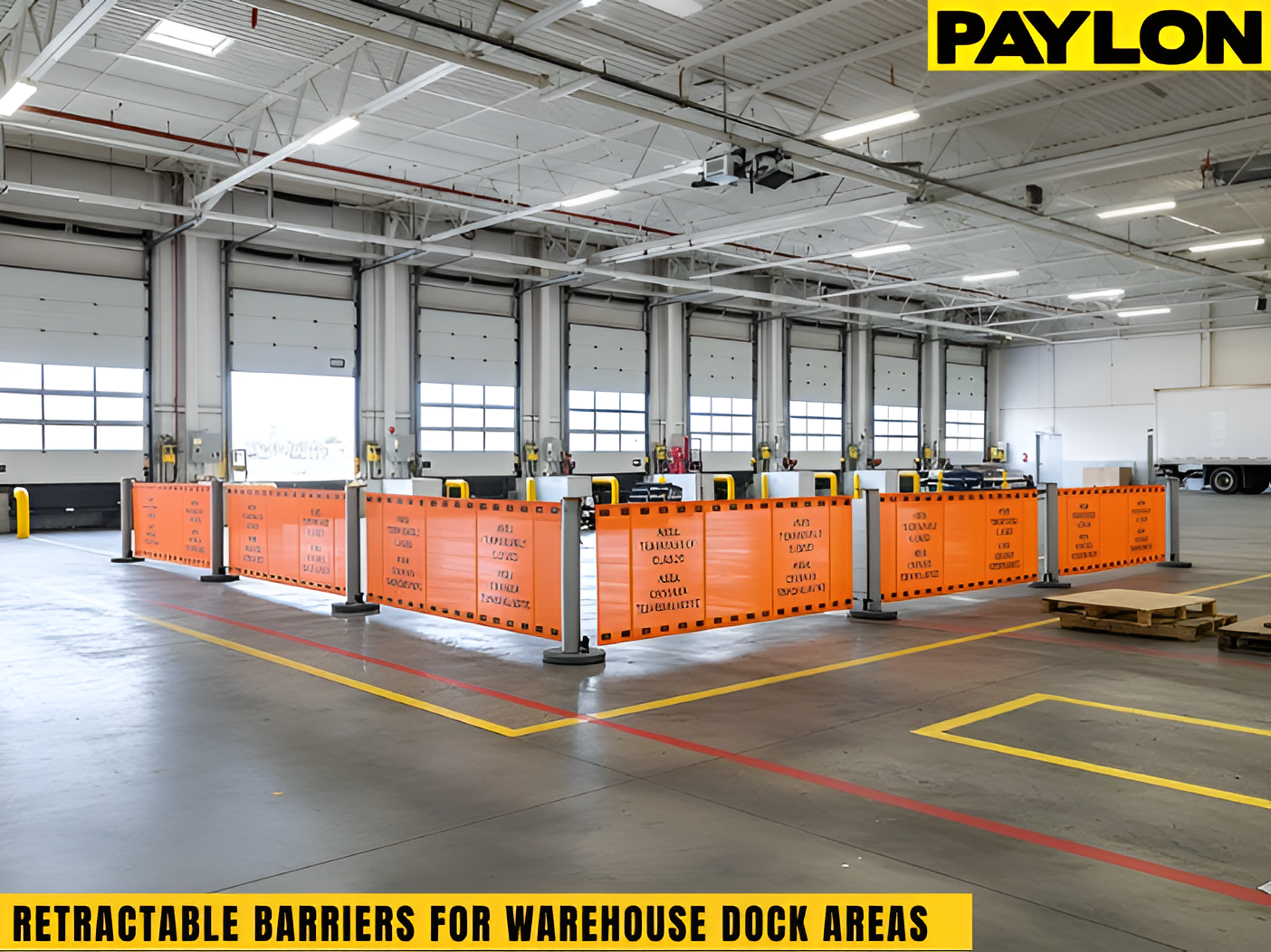
Industrial warehouse dock areas are high-risk zones where near misses often point to deeper safety gaps. This article explains why dock areas create repeated close calls, how retractable barriers help reduce those risks, the key benefits they provide, and which barrier solutions work best to improve dock safety without disrupting daily operations.
Why Dock Areas Are a High-Risk Zone
Dock areas are built for speed and efficiency, but that same pace introduces risk. As people, equipment, and dock conditions shift throughout the day, hazards can appear quickly and without notice. Understanding how these risks develop helps explain why near misses are so common in dock environments.
Open Dock Doors and Shared Traffic Increase Exposure
Open dock doors create exposed edges and drop-offs when a trailer is not present. At the same time, forklifts, pallet jacks, and pedestrians often move through the same dock space.
With multiple types of traffic operating near open edges, it becomes easier for someone or something to move too close to a hazardous area. Even brief lapses in awareness can result in close calls near dock edges.
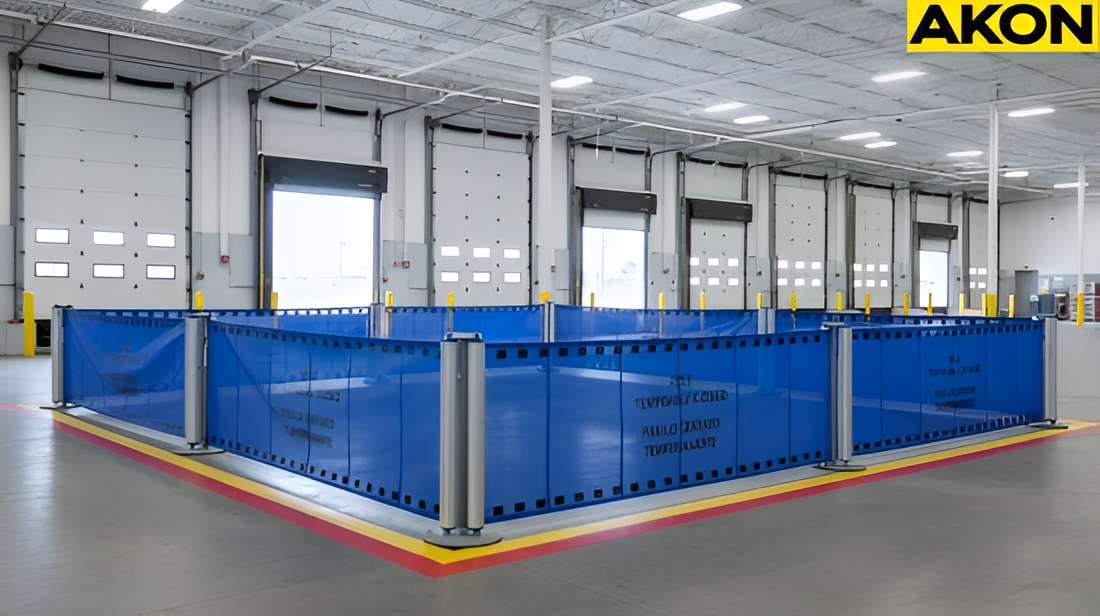
Changing Dock Activity Creates Unpredictable Conditions
Dock activity rarely stays the same for long. Trailers arrive and depart, dock doors open and close, and traffic patterns shift throughout each shift.
These transitions can turn a safe area into a hazardous one in moments. When visual cues do not clearly signal these changes, workers may not realize conditions have become unsafe.
Key Benefits of Using Retractable Barriers in Dock Areas
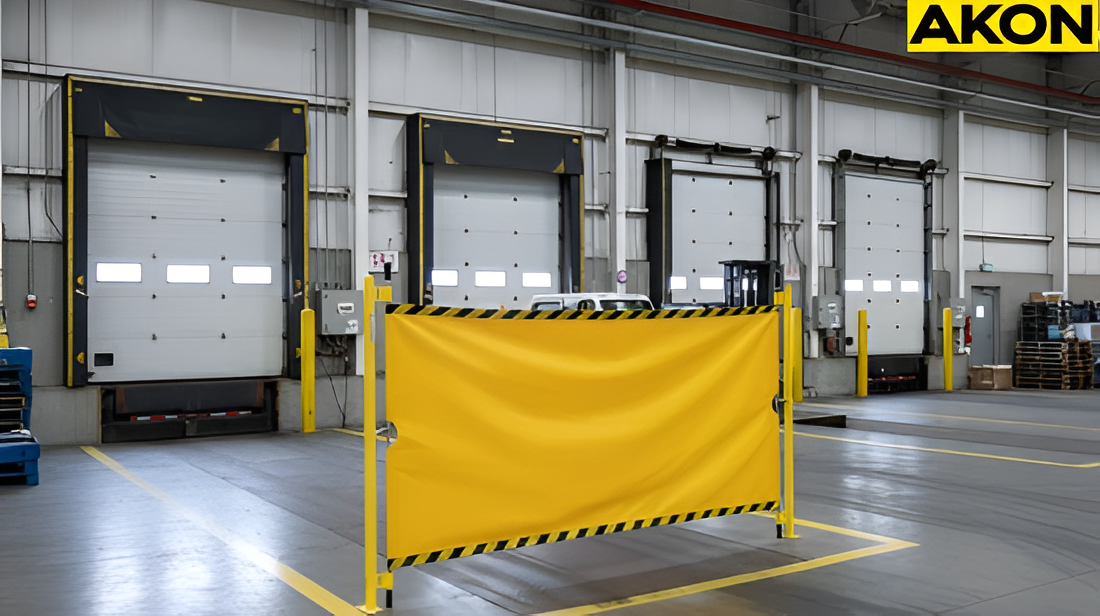
Once the risks in dock areas are understood, the next step is controlling exposure without disrupting daily operations. Retractable barriers help reduce near misses by adding clear, visible separation at dock edges while allowing dock activity to adjust throughout the day.
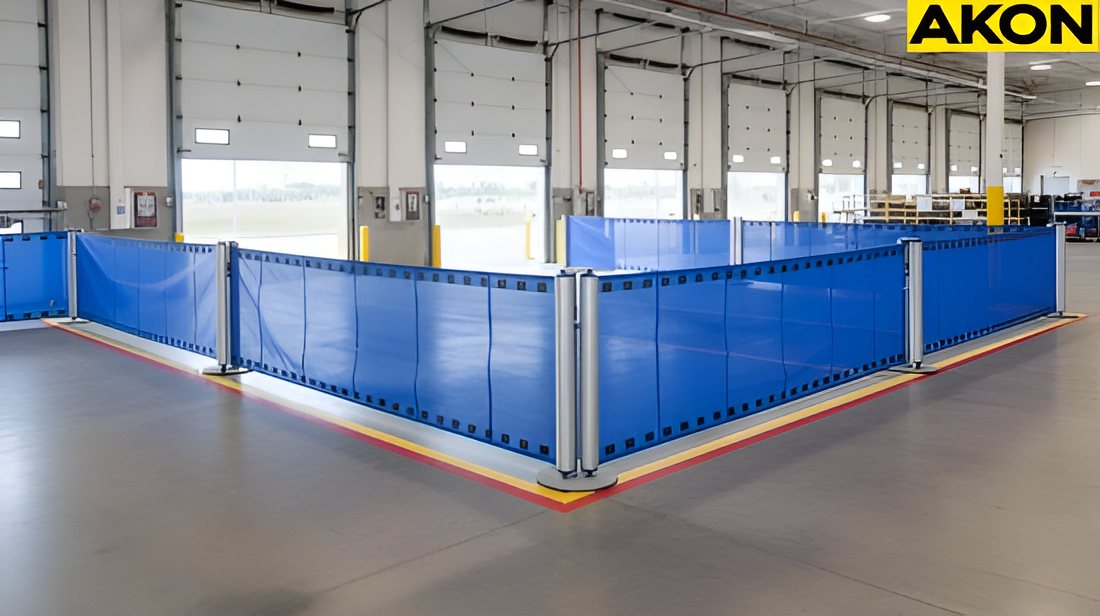
• Improves consistency across shifts. Barriers provide a repeatable way to secure dock openings regardless of who is on duty. This helps ensure safety practices remain consistent across teams and schedules.
• Reduces dependence on temporary warnings. Cones, tape, and chains are often moved, ignored, or misplaced during busy dock operations. Retractable barriers provide a more reliable control that stays in place when needed.
• Keeps dock areas organized and clear. Barriers retract when not in use, reducing clutter around dock doors. This helps maintain clear paths for both people and equipment.
Reduces Dock Area Near Misses
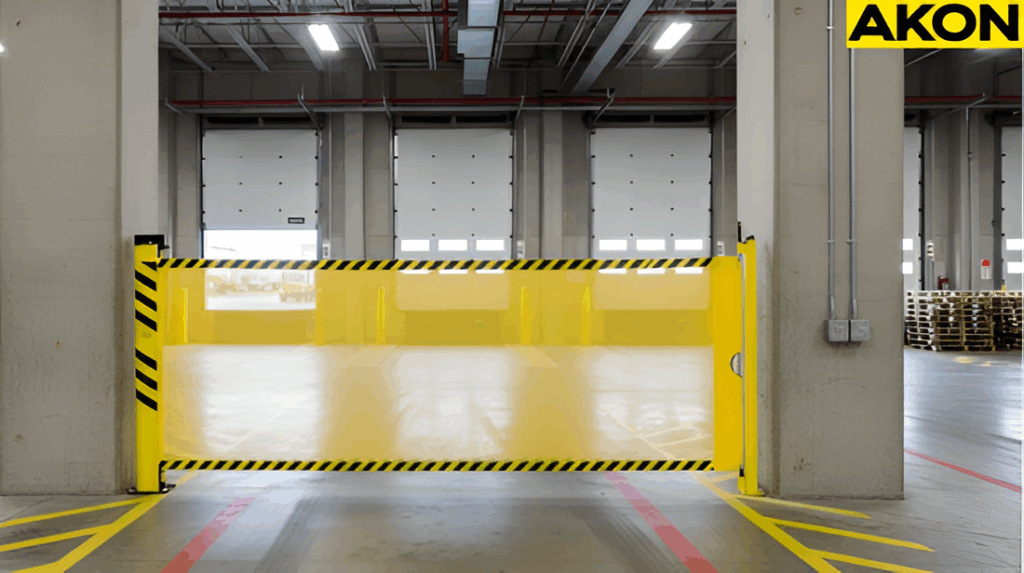
Retractable barriers create a physical stop point at open dock doors that limits unintended access to hazardous edges.
Maintains Dock Workflow
Retractable barriers deploy and retract quickly, allowing dock teams to secure openings without interrupting loading or unloading.
Improves Hazard Visibility
High-visibility barrier material makes open dock areas easy to recognize at a glance, even during busy shifts or in low-light
Understanding Retractable Dock Barriers and How They Compare
With the benefits established, the next step is understanding what retractable dock barriers are and how they fit into a dock safety setup. Retractable barriers are physical safety barriers that extend across open dock doors or exposed edges when protection is needed, then retract once dock activity resumes. They combine control and flexibility by creating a clear physical boundary without permanently restricting access or interfering with loading and unloading.
| Safety Option | Visibility | Physical Protection | Flexibility | Best Use Case |
|---|---|---|---|---|
| Retractable Barriers | High | Moderate | High | Open dock doors that need temporary, repeatable protection |
| Fixed Guardrails | Medium | High | Low | Permanent edge protection in static dock areas |
| Cones or Chains | Low | Low | High | Short-term visual warnings with minimal stopping power |
This comparison helps clarify why retractable barriers are often the better fit for active dock environments. They offer more control than temporary warnings while avoiding the limitations of permanent structures, allowing facilities to improve dock safety without sacrificing operational flexibility.
Recommended Retractable Barrier Solutions for Dock Areas
Once retractable barriers are understood at a category level, the next step is selecting a solution that matches how your dock area actually operates. The following options offer different levels of coverage and control to fit a range of dock layouts and traffic patterns.
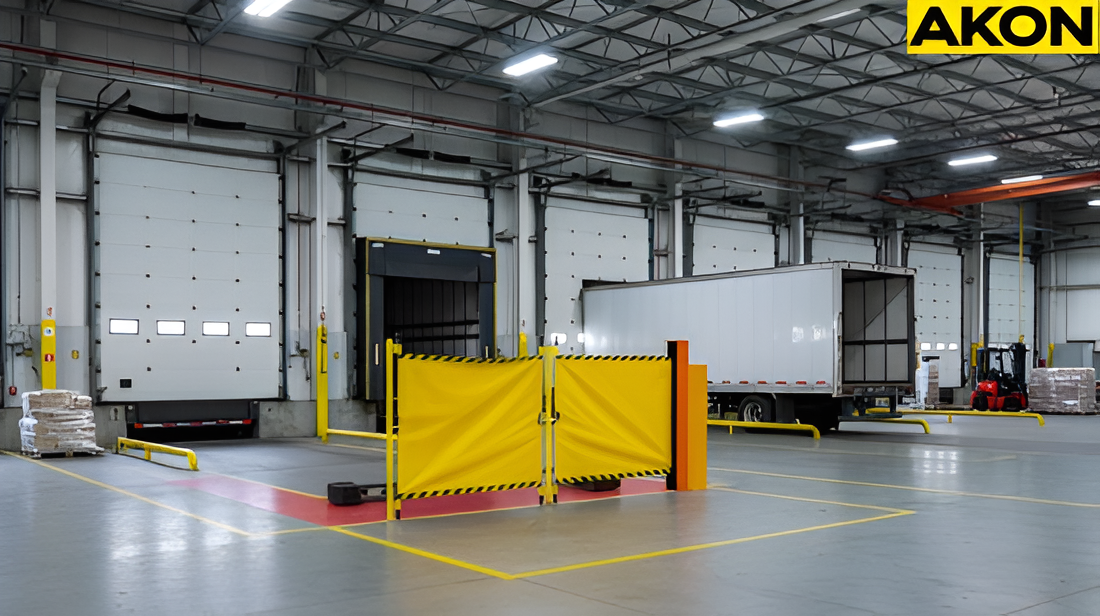
Industrial Roll Up Barricade – SB2000
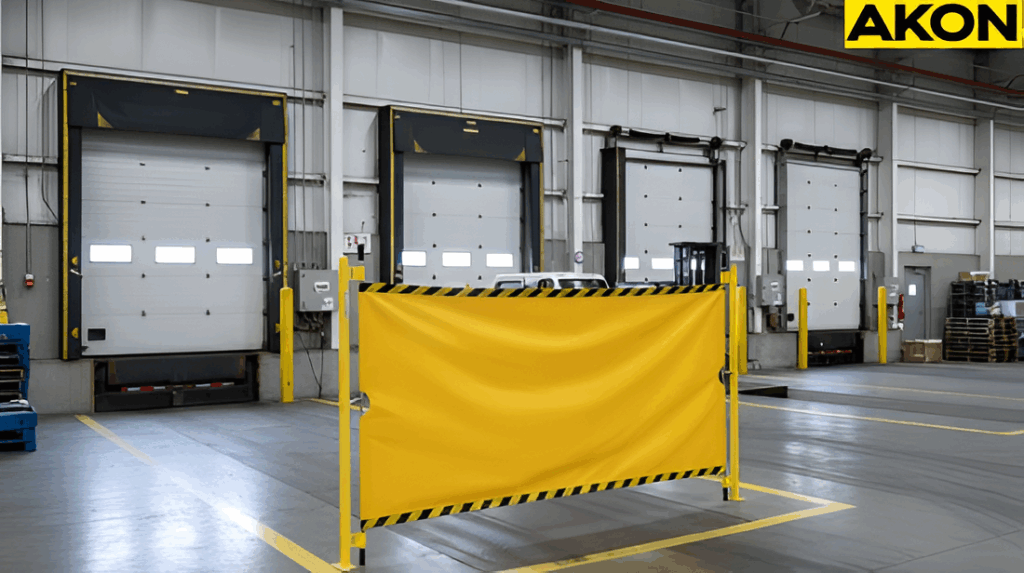
The SB2000 industrial roll up barricade is designed for facilities that need a straightforward way to secure dock-adjacent hazards without permanent installation. It provides controlled access while remaining easy to use throughout the day.
• Protects dock edges and interior hazard zones. The barricade rolls out to create a defined boundary near exposed areas.
• Best for frequently changing dock zones. It works well where dock status changes often. Teams can adjust protection quickly as conditions shift.
• Supports near miss reduction through clear boundaries. Defined stopping points reduce uncertainty around open areas.
• Simple to operate during daily use. The roll-up design allows quick deployment and retraction without adding complexity.
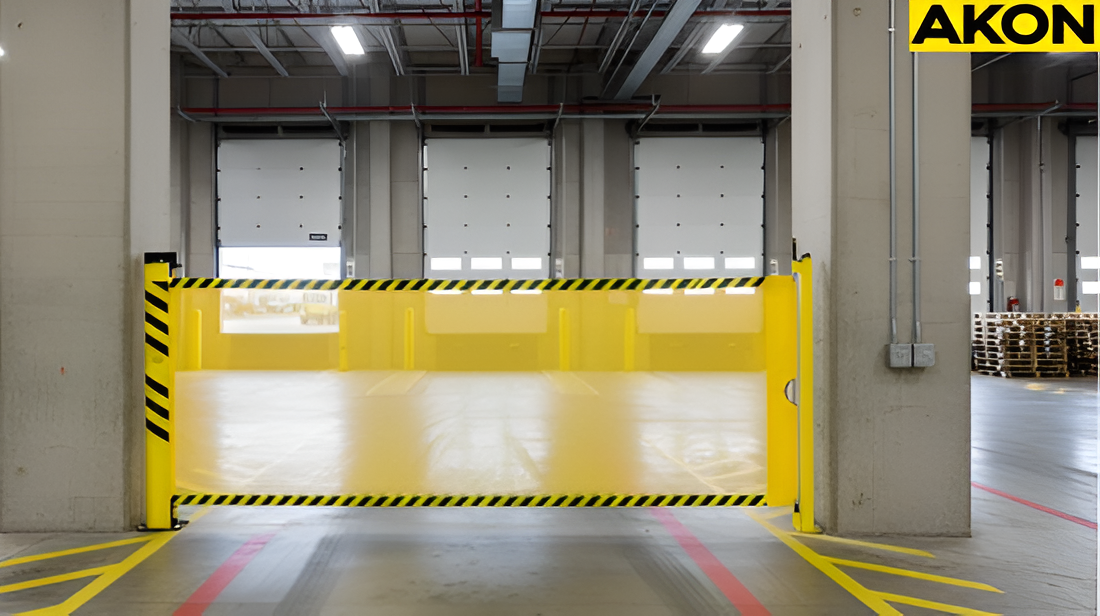
Industrial Retractable Barrier – SB3000
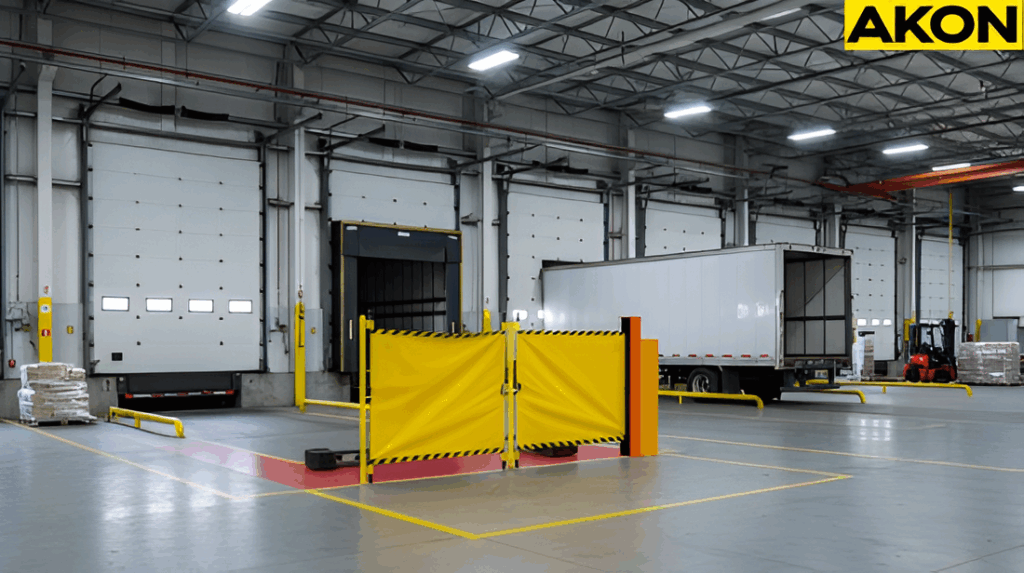
The SB-3000 industrial retractable barrier is built for active dock environments that rely on clear visual signals and adaptable access control. It helps guide traffic without restricting dock operations permanently.
• Protects shared dock-adjacent traffic areas. The barrier creates a visible signal where access should pause. This supports safer movement near dock openings.
• Best for mixed pedestrian and equipment traffic. It suits docks where forklifts and foot traffic operate in close proximity.
• Adapts to changing dock conditions. The retractable design allows teams to secure areas as activity changes. Barriers can be extended or cleared as needed.
• Maintains access when protection is not required. When retracted, the barrier stays out of the way. This keeps dock operations moving smoothly.
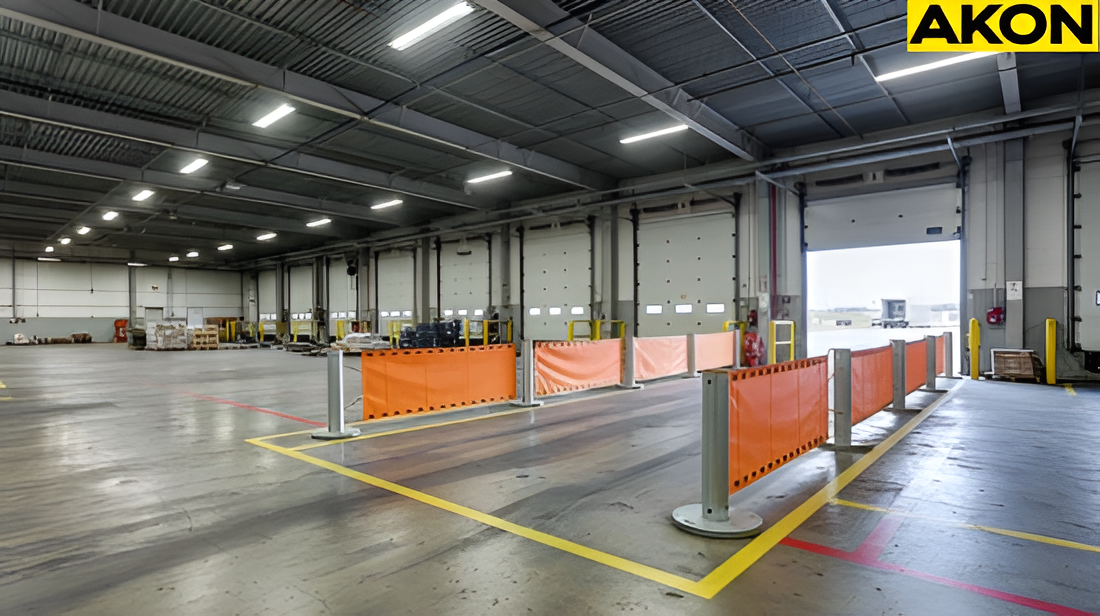
Portable Barrier – SB4000
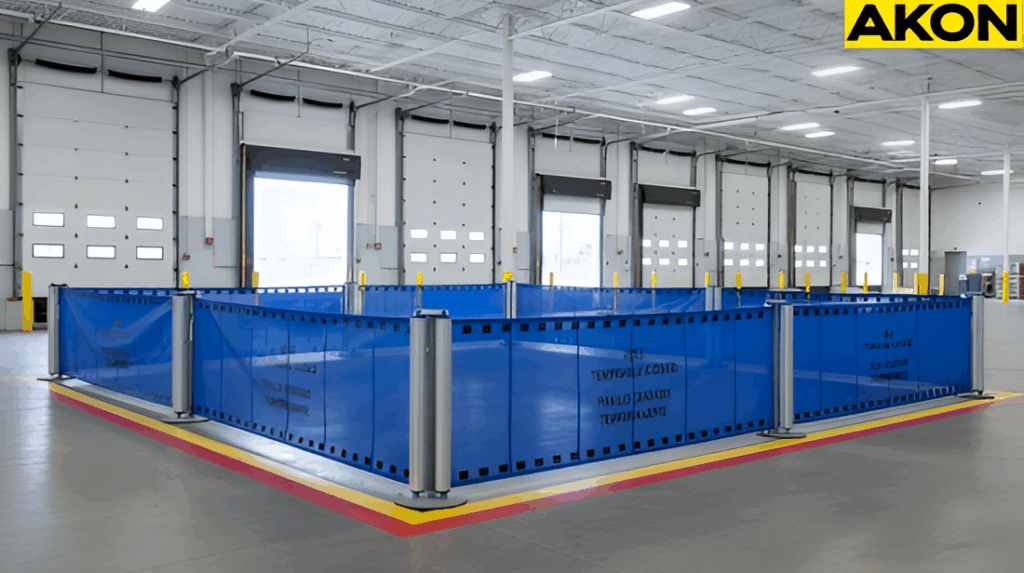
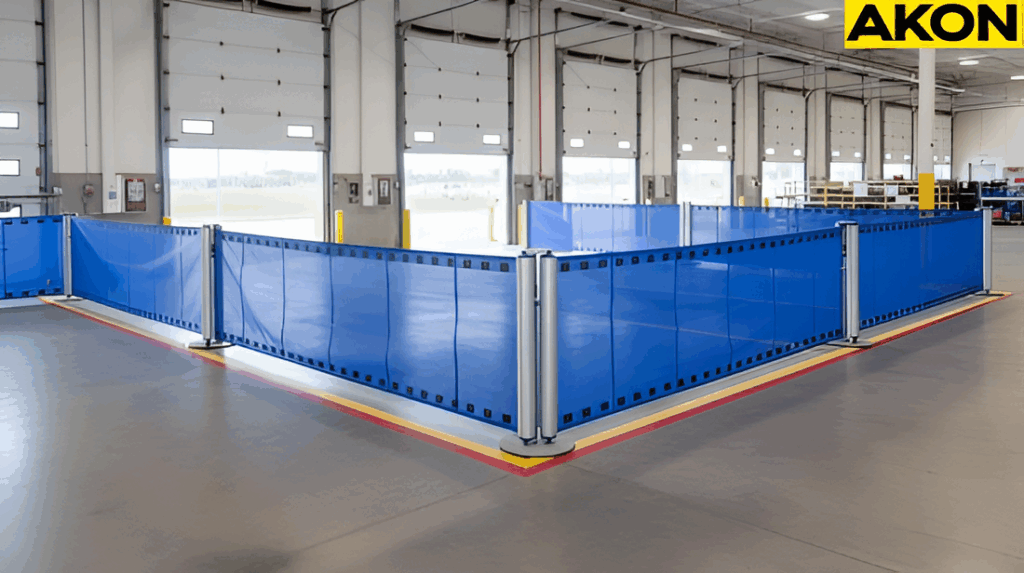
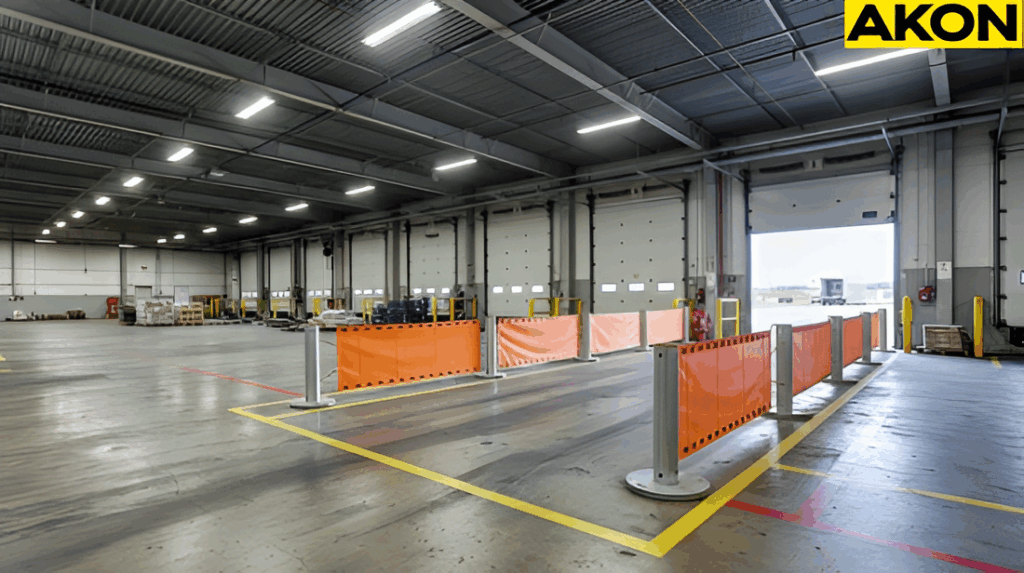
The SB4000 portable barrier offers a more complete visual boundary solution for open dock doors and exposed edges. It is designed for facilities that need high visibility and flexible placement.
• Protects open dock doors and exposed edges. The barrier clearly defines restricted zones near dock openings. This helps separate safe walkways from hazard areas.
• Best for dynamic dock layouts. Its portable design allows it to be repositioned easily. This supports docks with rotating assignments or changing workflows.
• Helps reduce near misses through space definition. Clear boundaries help workers recognize restricted areas earlier.
• Ideal for temporary or rotating dock use. It provides dependable protection without permanent mounting. This makes it suitable for evolving dock setups.
Frequently Asked Questions
FAQs: Retractable Barriers in Industrial Warehouse Dock Areas
What is a retractable dock barrier used for in industrial warehouse dock areas?
A retractable dock barrier is used to limit access to open dock doors or exposed edges when they are not actively being loaded. It helps define restricted areas without permanently blocking dock operations.
Why are retractable barriers important for dock safety?
Dock areas change quickly, and retractable barriers provide a reliable way to control access during those transitions. They help manage exposure when visual warnings alone are not enough.
When should a retractable dock barrier be deployed?
A dock barrier should be deployed anytime a dock door is open and inactive. This includes trailer gaps, shift changes, maintenance periods, or staging delays.
Do retractable dock barriers replace fixed guardrails?
No, retractable dock barriers are designed for temporary or changing conditions. Fixed guardrails are better suited for permanent edge protection in static locations.
Can forklifts safely operate near retractable dock barriers?
Yes, forklifts can operate nearby as long as the barrier clearly marks restricted areas. Proper placement helps guide equipment movement rather than interfere with it.
Are retractable dock barriers considered a physical safety control?
Yes, they provide a physical boundary that limits movement into hazardous areas. This makes them more effective than warning-only solutions.
How do retractable barriers help reduce near misses at dock doors?
They create a clear stopping point that helps workers recognize restricted zones earlier. This reduces last-second reactions near exposed edges.
Are retractable dock barriers permanent installations?
Most retractable barriers are designed to be flexible. Some are post-mounted, while others are portable and can be repositioned as layouts change.
What types of dock areas benefit most from retractable barriers?
Docks with frequent trailer changes, rotating assignments, or shared pedestrian and equipment traffic benefit the most. These environments need adaptable safety controls.
How visible are retractable dock barriers in busy warehouse environments?
They are typically made with high-visibility materials so restricted areas are easy to identify. This helps during busy shifts and in lower-light conditions.
Do retractable barriers slow down loading and unloading operations?
No, they are designed to deploy and retract quickly. This allows teams to secure dock openings without interrupting workflow.
Can retractable barriers be used during temporary dock shutdowns?
Yes, they work well during maintenance, inspections, or inactive periods. They provide protection without requiring permanent changes.
How much training is needed to use retractable dock barriers?
Very little training is required. Most barriers operate with simple extension and retraction mechanisms.
Are retractable dock barriers suitable for indoor dock areas?
Yes, they are commonly used in indoor dock environments. Some models can also be used in covered outdoor applications.
How do I choose between different retractable barrier options for my dock?
Consider how often dock conditions change and how much coverage you need. Portability, span length, and visibility all play a role.
When would an Industrial Roll Up Barricade like the SB2000 be a good choice?
The SB2000 is often chosen for dock areas that need simple, repeatable access control. It works well where conditions change frequently throughout the day.
When is an Industrial Retractable Barrier such as the SB-3000 most useful?
The SB-3000 is commonly used in busy dock environments with mixed pedestrian and equipment traffic. Its visibility helps guide movement without permanent restrictions.
What makes a Portable Barrier like the SB4000 suitable for dock doors?
The SB4000 is a good option when dock assignments or layouts shift regularly. Its portable design allows it to be repositioned as needed.
Can retractable dock barriers be used alongside other safety measures?
Yes, they are often combined with signage, floor markings, and training. This layered approach improves overall dock safety.
How do I know if a retractable dock barrier is right for my facility?
If your dock environment changes throughout the day and requires flexible control, retractable barriers are often a practical solution. Evaluating traffic flow and coverage needs can help determine the best fit.
Photo Gallery
Safer Dock Areas Without Slowing Operations
Industrial warehouse dock areas remain one of the most common locations for near misses because conditions change quickly and risks are not always obvious. Relying only on visual warnings leaves too much room for hesitation in busy dock environments. By using physical separation where it is needed, facilities can improve dock safety while keeping daily operations moving smoothly.
Dock Area Safety Zone Layout