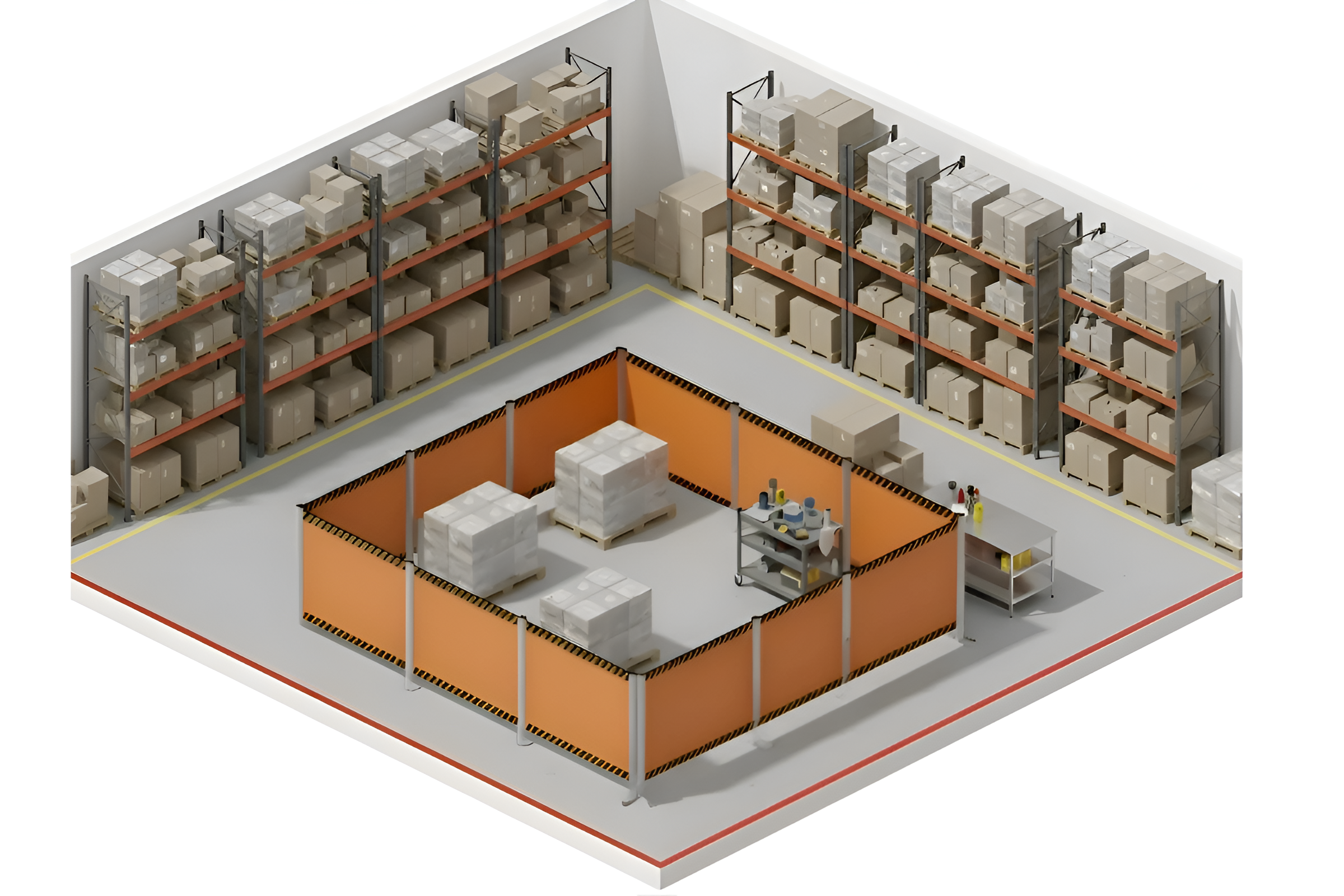
Warehouse Quarantine Retractable Barriers
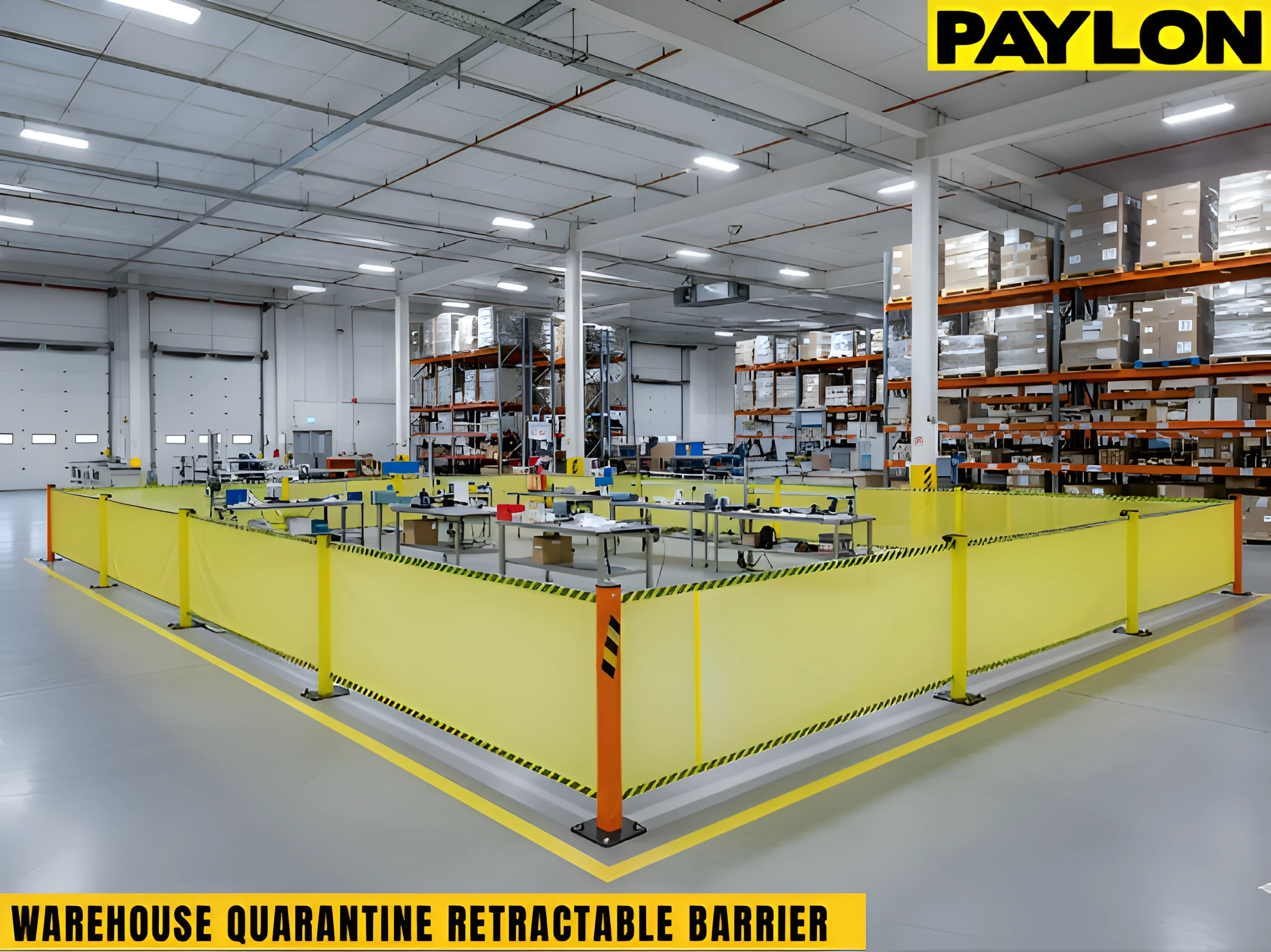
Industrial warehouse quarantine areas are used to isolate inventory placed on QA hold. This article explains why these areas require clear and controlled separation, how retractable barrier fences support temporary QA zones, how they compare to other options, and which barrier solutions work best for different inspection and quarantine needs.
Understanding Warehouse Quarantine Areas and QA Holds
Before choosing how to manage QA holds, it helps to clearly understand what warehouse quarantine areas are and why they matter. These zones play an important role in maintaining quality, safety, and order in busy industrial environments.
What Is a Warehouse Quarantine Area and QA Hold?
In an industrial warehouse, a quarantine area is a defined space used to hold inventory that cannot move forward until it has been reviewed and approved. QA holds are typically applied during inspections, product testing, or compliance checks.
They may also occur when issues are identified with received goods, labeling, or overall product condition. During this time, the inventory remains inactive until a clear decision is made.
Why Unmanaged QA Holds Create Operational Risk
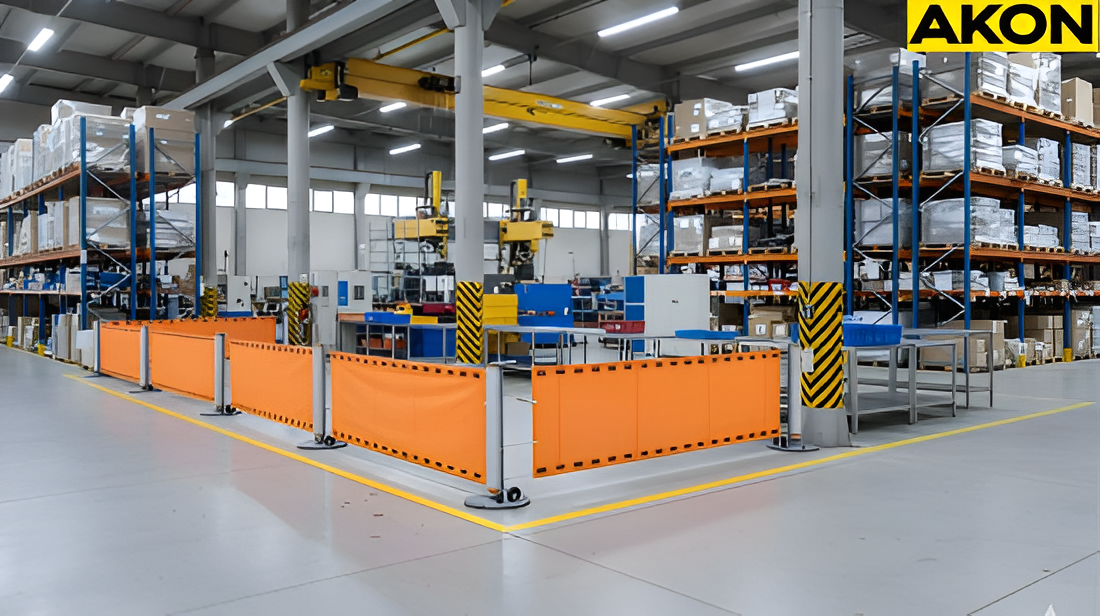
When quarantine zones are not clearly managed, operational risks increase quickly. Inventory may be moved by mistake, mixed with approved stock, or accessed by unauthorized staff or equipment.
These situations can lead to safety concerns, workflow disruptions, and compliance issues that affect productivity and create avoidable costs. Even small mistakes in control can have ripple effects across warehouse operations.
Why Industrial Warehouse Retractable Fence Barriers Work So Well
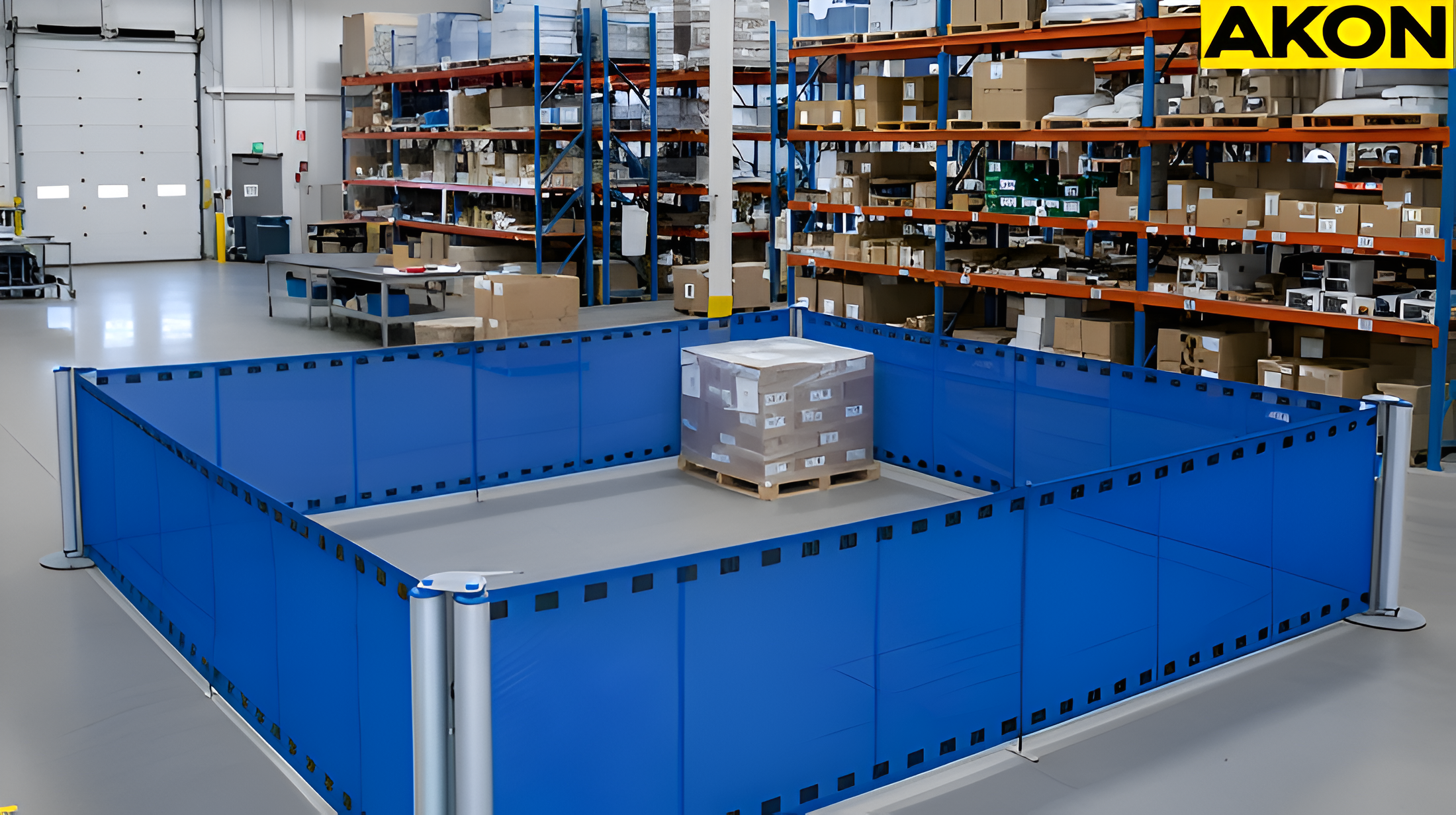
These barriers are designed to solve real warehouse safety problems quickly, without slowing down daily operations. Their effectiveness comes from how well they control access at the moment risk appears.
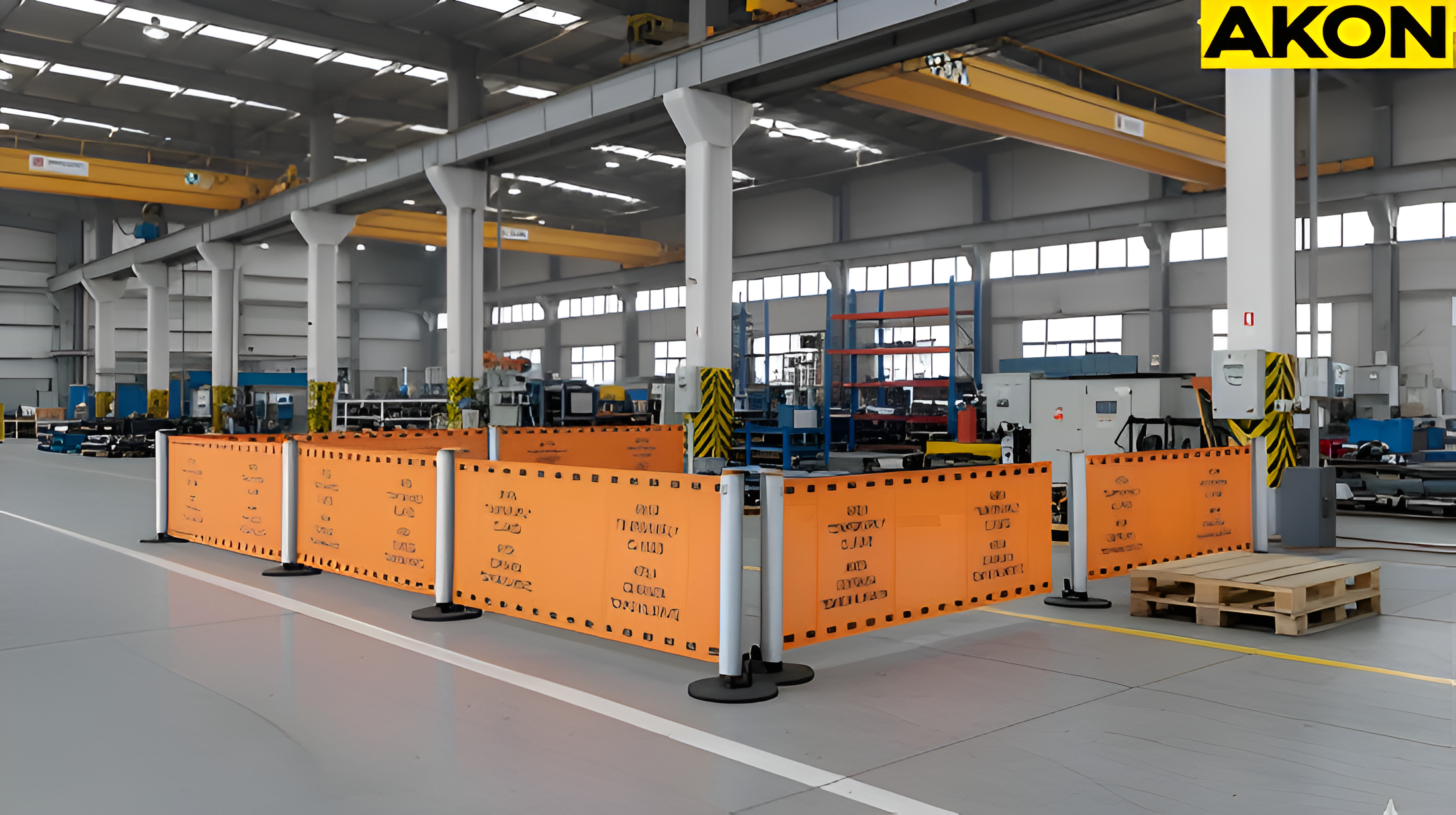
• Improved process consistency. Retractable barriers help standardize how QA hold zones are established throughout the facility. This consistency reduces confusion and ensures procedures are followed the same way across teams and shifts.
• Reduced reliance on temporary markers. Tape, cones, or signs can be overlooked in busy warehouse environments. A physical barrier provides a stronger, more reliable visual signal that reinforces restricted areas.
• Better adaptability to changing conditions. QA hold locations often shift as inspections progress or inventory is relocated. Retractable barriers allow zones to be adjusted without slowing surrounding operations.
Clear Access Control
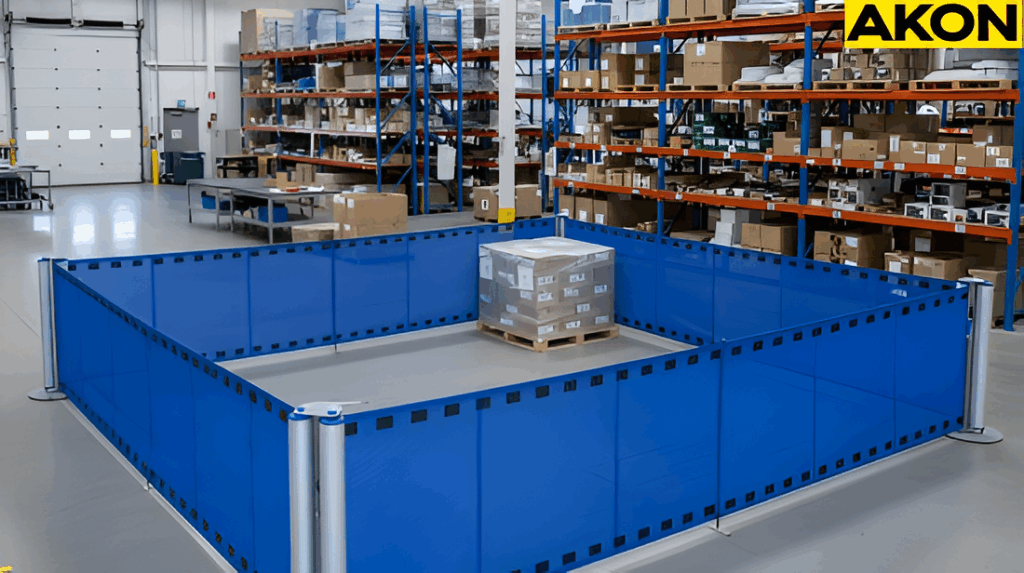
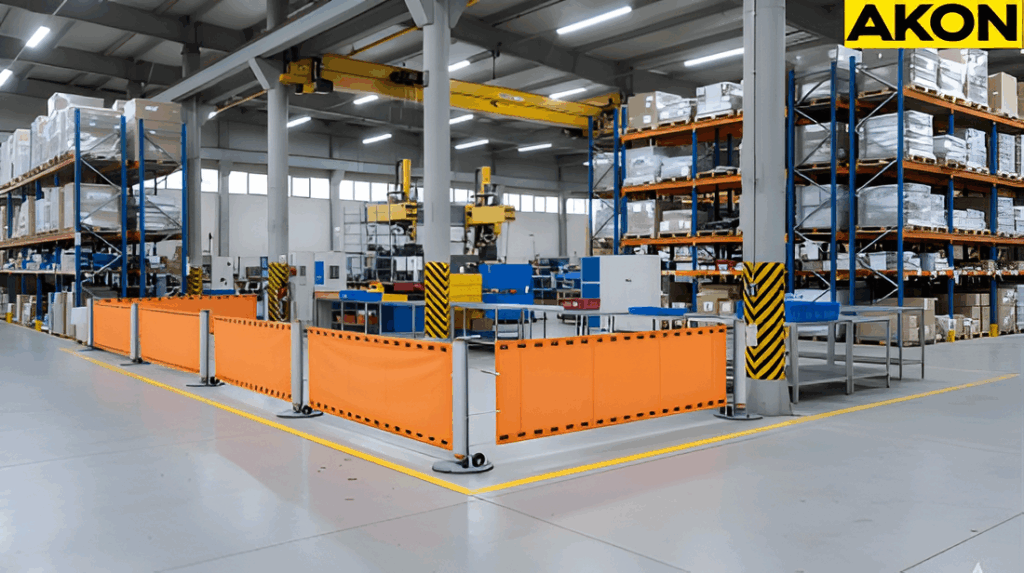
Retractable barrier fences establish a clear physical boundary that indicates where QA hold zones begin and end.
Fast Deployment and Flexibility
These barriers can be extended or retracted quickly to match changing inspection and quarantine needs.
High Visibility
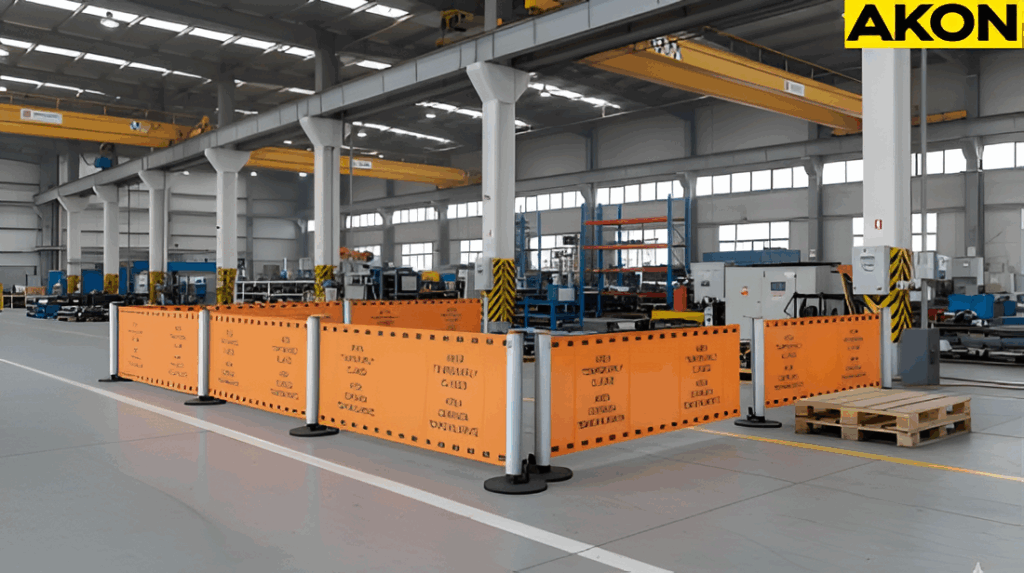
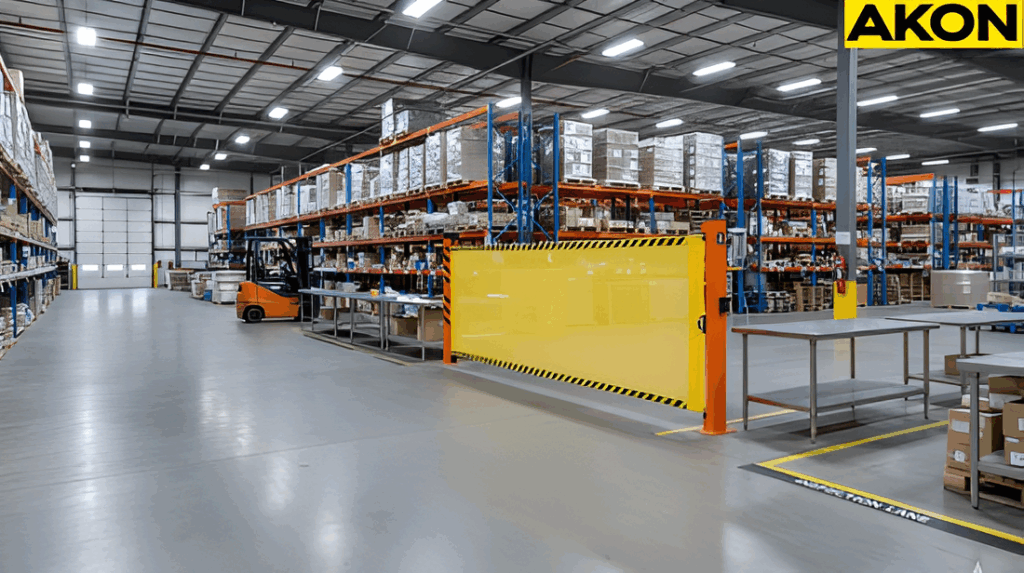
Highly visible barriers mark restricted areas while preserving open sightlines across the warehouse floor.
Retractable Barriers vs Other QA Quarantine Solutions
Once the benefits are clear, it helps to see how retractable barrier fences compare to other common methods used to manage QA quarantine areas. Different solutions offer varying levels of control, flexibility, and long-term practicality, especially in warehouses where quarantine zones may change frequently based on inspection needs.
| Solution | Deployment Speed | Reusability | Visibility | Space Efficiency | Cost and Flexibility |
|---|---|---|---|---|---|
| Retractable Barrier Fences | Quick to deploy and adjust | Built for repeated use | Clearly visible boundary | Retracts when not in use | Balanced cost with high flexibility |
| Tape and Cones | Very quick to place | Limited and often disposable | Easy to overlook | Minimal footprint | Low cost but limited control |
| Permanent Walls or Fencing | Slow to install or modify | Long-term only | Fixed and highly visible | Occupies permanent space | High cost with low flexibility |
Tape and cones are often used for quick visual warnings but rely heavily on awareness and compliance, while permanent walls or fencing provide strong separation at the cost of adaptability. Retractable barrier fences fall between these options by offering consistent separation with the flexibility to adjust as QA requirements change, making them a practical choice for dynamic warehouse environments.
Recommended Retractable Barrier Products for QA Quarantine Areas
After comparing quarantine solutions, the next step is selecting a retractable barrier that aligns with how QA holds actually operate within your facility. Each option below supports a different inspection pattern, space requirement, and level of flexibility, helping teams choose based on real workflow needs rather than features alone.
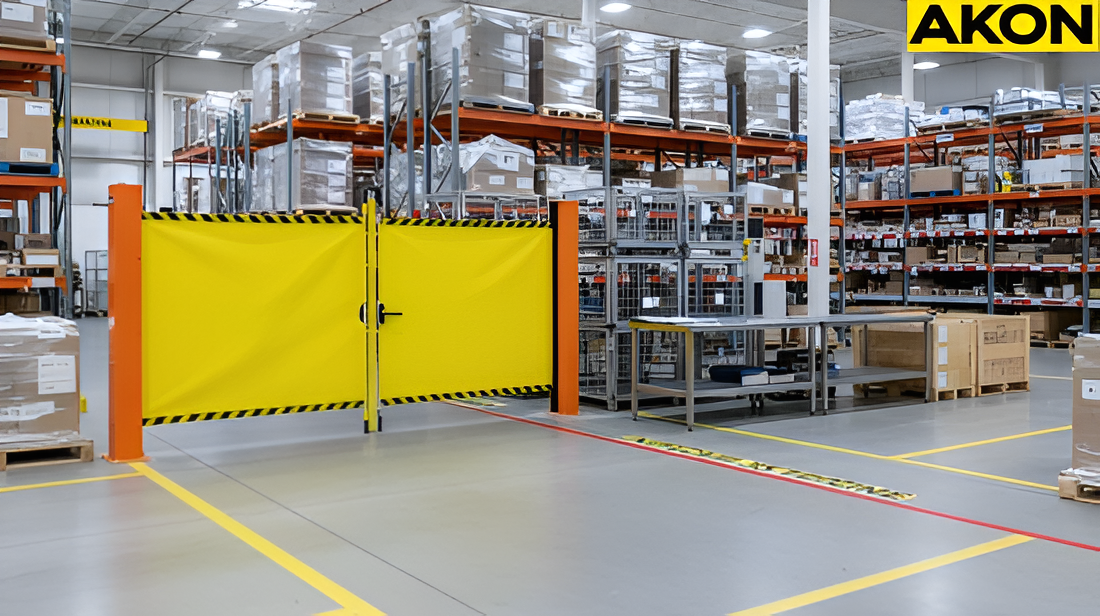
Industrial Roll Up Barricade – SB2000
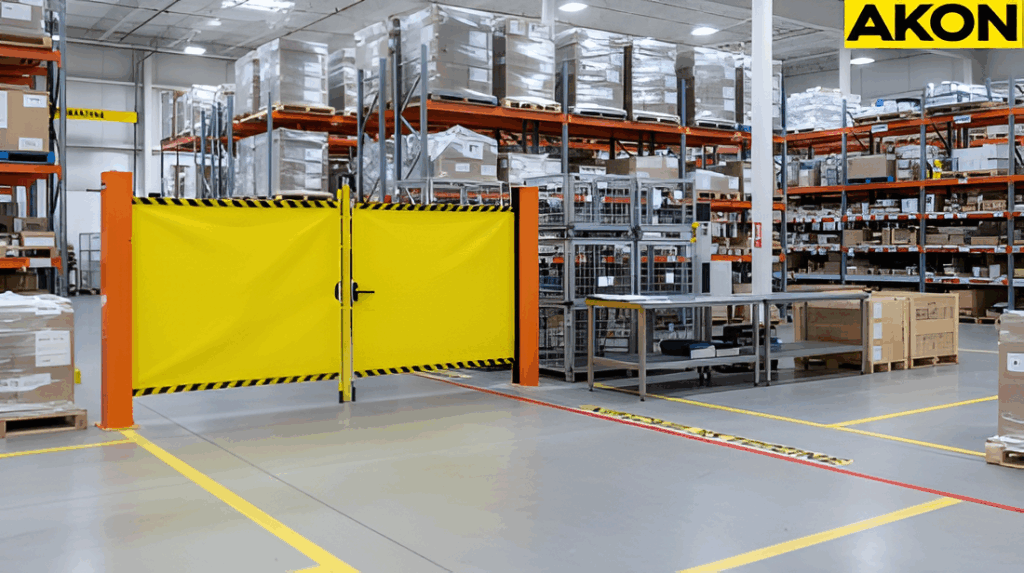
The SB2000 is designed for warehouses that need dependable separation for QA hold areas that remain active for longer periods. It is a strong fit for locations where quarantine zones are clearly established and rarely move.
• Best for consistent QA zones. Works well in areas where QA holds are set up regularly and remain in place for extended periods.
• Ideal for defined inspection points. Commonly used near receiving docks, inspection stations, or staging areas awaiting approval.
• Supports controlled access. Helps maintain separation without introducing permanent construction.
• Good fit for predictable workflows. Suits operations where quarantine locations do not change frequently.
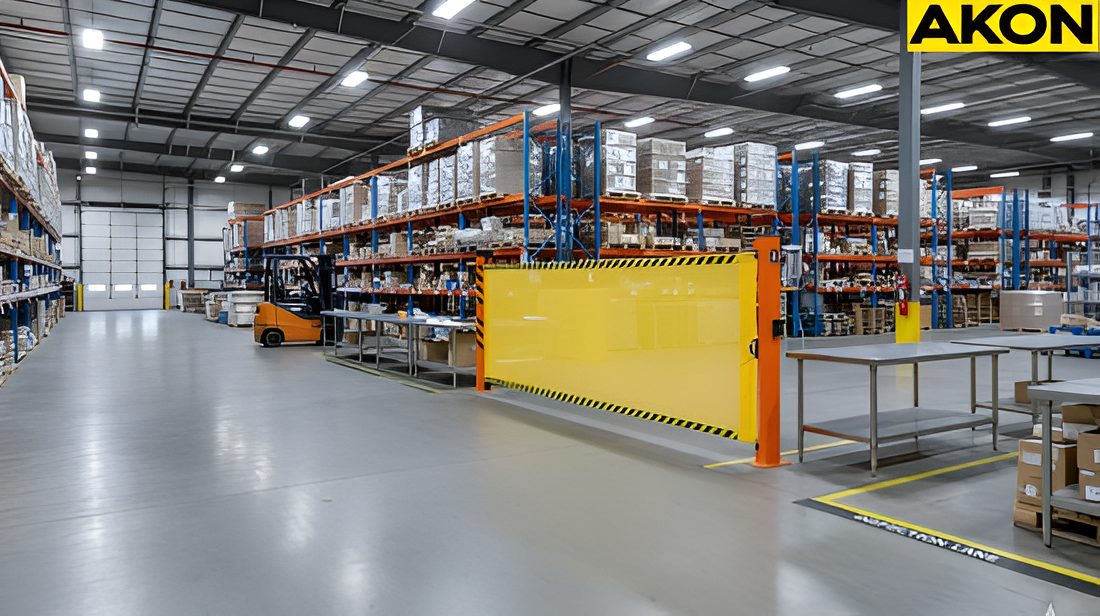
Industrial Retractable Barrier – SB3000
The SB-3000 offers a balance between stability and adaptability for warehouses with moderate QA hold activity. It is well suited for operations where quarantine areas may shift occasionally as inspection priorities change.
• Best for moderate QA hold needs. Designed for areas that require reliable separation with periodic adjustments.
• Fits shared-use spaces. Useful where inspection zones overlap with normal warehouse traffic.
• Easy to reposition when needed. Allows teams to adjust restricted areas without disrupting surrounding work.
• Balanced option for mixed operations. Works well in facilities managing both routine and temporary QA holds.
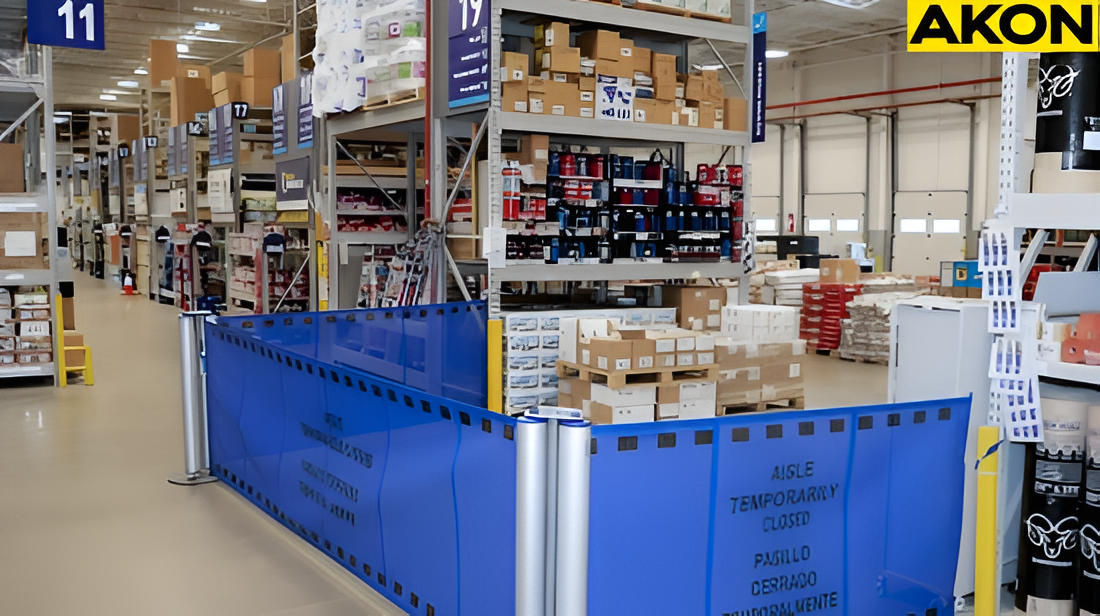
Portable Barrier – SB4000
The SB4000 is built for fast-paced environments where QA holds can appear with little notice and move throughout the day. Its portable design supports temporary quarantine zones without fixed installation.
• Best for frequently changing QA holds. Ideal when quarantine zones move between aisles or work areas.
• Supports rapid response scenarios. Useful for unexpected inspections, damaged goods, or short-term compliance checks.
• Flexible placement without fixed mounting. Can be deployed wherever separation is needed without altering the facility layout.
• Strong option for dynamic environments. Fits operations where adaptability is critical to maintaining flow.
Frequently Asked Questions
FAQs About Warehouse Quarantine Barriers
What is a QA hold in a warehouse?
A QA hold is a process that prevents inventory from moving forward until it has been inspected, tested, or approved. During a QA hold, products are isolated to avoid accidental use or shipment.
Why are quarantine areas important in warehouse operations?
Warehouse quarantine areas help keep unapproved or questionable inventory separate from active stock. This supports quality control, safety, and compliance processes.
Can warehouse quarantine areas be temporary?
Yes, many warehouse quarantine areas are temporary and only exist until inspections are completed. Retractable barrier systems are often used to support these short-term needs.
How long does inventory stay in a quarantine area?
Inventory stays in a quarantine area until inspections, testing, or reviews are finished. The length of time depends on internal QA procedures and compliance requirements.
What risks occur when quarantine areas are not clearly controlled?
Poorly managed quarantine zones can lead to inventory mix-ups, safety concerns, and workflow disruptions. Clear separation helps prevent these issues.
How do retractable barriers support QA holds in warehouses?
Retractable barrier systems help create defined quarantine areas that can be adjusted as QA needs change. Products like the SB2000, SB-3000, and SB4000 are commonly used for this purpose.
Which retractable barrier is best for long-term quarantine areas?
The SB2000 is often chosen for quarantine zones that remain in place for longer periods. It works well in areas with consistent inspection or approval workflows.
What barrier option works best for changing QA hold locations?
The SB4000 portable barrier is designed for QA holds that move between different warehouse areas. It is well suited for fast-changing inspection needs.
When is the SB-3000 a good choice for QA quarantine areas?
The SB-3000 is a good fit for moderate QA hold activity where zones change occasionally. It supports warehouses that need flexibility without full portability.
Can retractable barriers be moved between warehouse areas?
Yes, portable systems like the SB4000 can be relocated between aisles, staging areas, or inspection zones as needed. This makes them useful for dynamic operations.
Do retractable barriers block visibility in the warehouse?
Most retractable barrier systems are designed to maintain visibility while still defining restricted areas. This helps teams stay aware of surroundings during daily operations.
Are retractable barriers better than tape or cones for quarantine areas?
Retractable barriers provide stronger physical separation than tape or cones. They are harder to overlook and help reinforce QA control.
When should permanent walls be used instead of retractable barriers?
Permanent walls may be appropriate when quarantine areas never change location. Retractable barriers are typically preferred for flexible or temporary QA needs.
Are retractable barriers suitable for small inspection areas?
Yes, options like the SB2000 and SB-3000 work well in smaller inspection zones. The choice depends on how often the area needs to change.
Can retractable barriers support compliance requirements?
Clear quarantine areas help support compliance by reducing accidental access and product handling. This makes retractable barriers useful in regulated environments.
Do retractable barrier systems require permanent installation?
Some systems are mounted in place, while others are portable. The SB4000 does not require permanent installation and can be deployed as needed.
Can retractable barriers be used near receiving and staging areas?
Yes, they are commonly used near receiving docks and staging zones to isolate incoming or unapproved inventory during inspections.
How do retractable barriers affect daily warehouse workflows?
They allow QA zones to exist without stopping surrounding operations. Teams can continue working while respecting restricted areas.
Can one warehouse use multiple types of retractable barriers?
Yes, many facilities use a mix of SB2000, SB-3000, and SB4000 systems to match different QA scenarios within the same warehouse.
What should a warehouse consider before choosing a quarantine barrier system?
Warehouses should consider how often QA holds occur, where inspections take place, and how much flexibility is required. Matching these needs to options like the SB2000, SB-3000, or SB4000 helps ensure effective quarantine control.
Photo Gallery
Making QA Quarantine Areas Easier to Manage
Effective QA quarantine areas depend on clear separation that can adapt as inspections and workflows change, and retractable barrier fences provide that balance of flexibility, visibility, and control without disrupting daily warehouse operations. By choosing the right barrier approach, teams can maintain QA standards, reduce errors, and keep work moving efficiently, making solutions like the SB4000 and related retractable barrier systems a practical next step for managing quarantine zones in real-world warehouse environments.
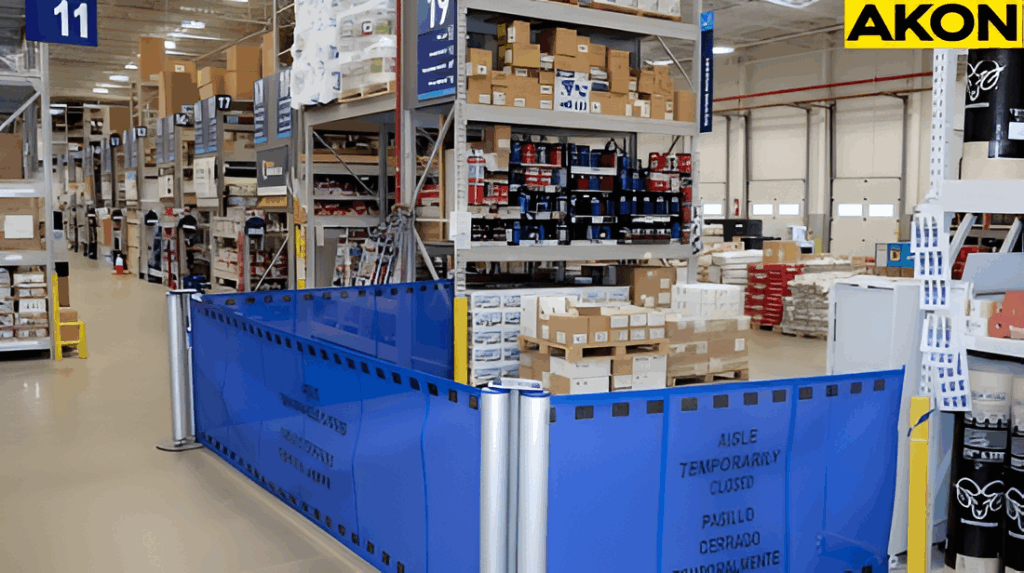
Temporary Quarantine Zone