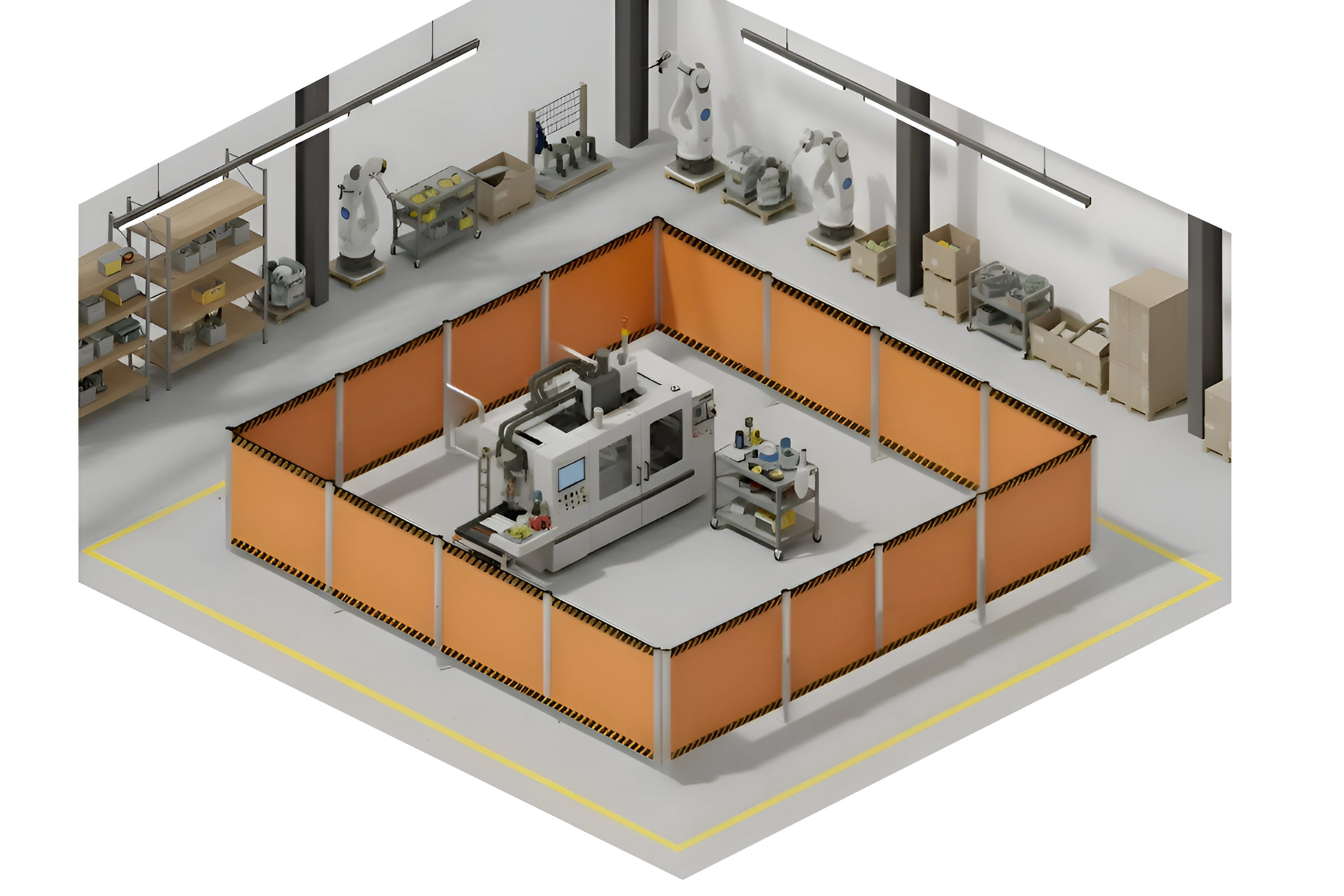
Warehouse Retractable Fence Barriers
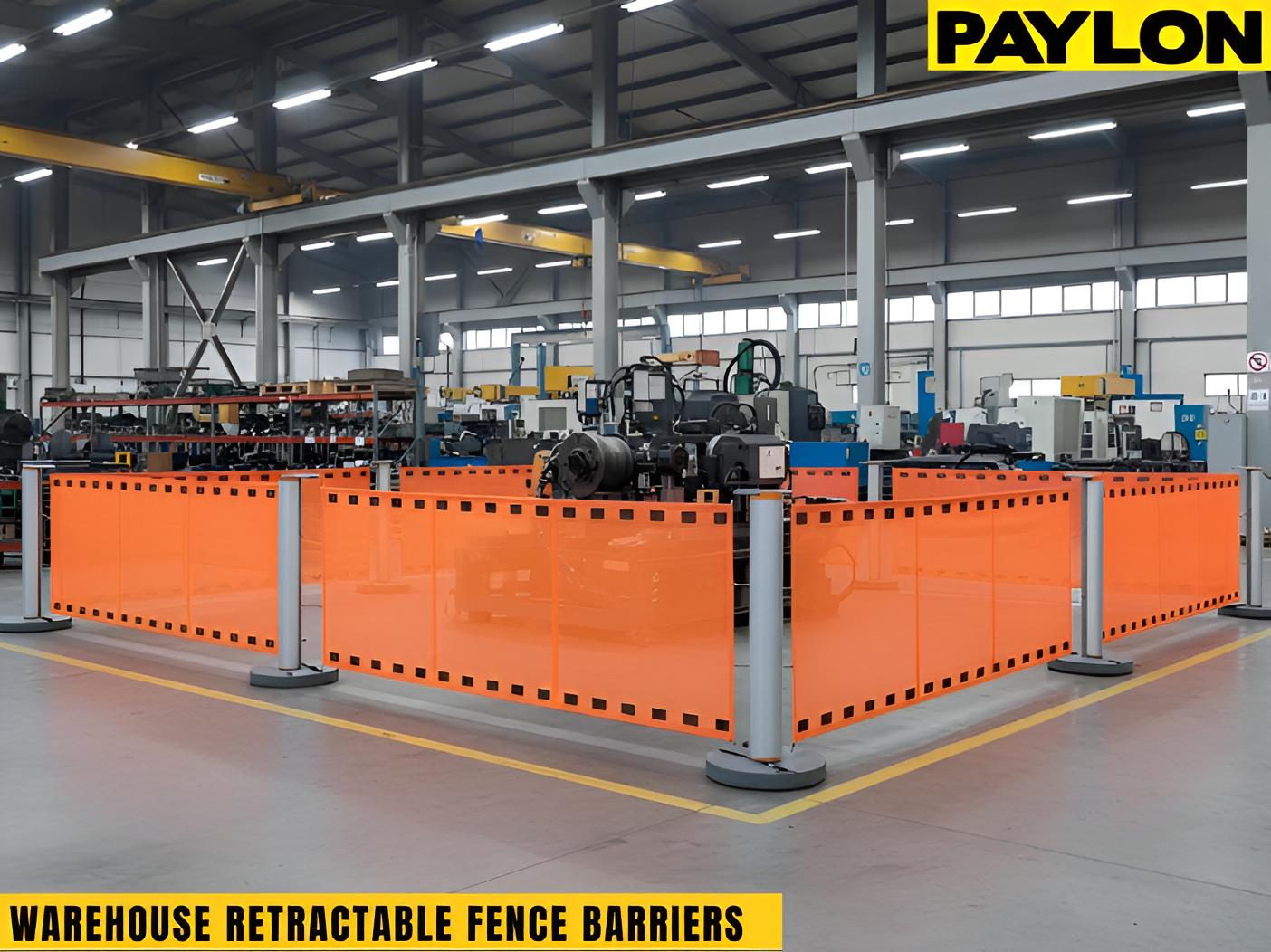
Warehouse hazards change quickly as aisles close, equipment is serviced, and traffic patterns shift. Industrial warehouse retractable fence barriers provide a fast, practical way to block off these hazards. This guide explains what these barriers are, why they work so well, how they compare to other safety options, and which solutions fit different warehouse needs.
What Are Industrial Warehouse Retractable Fence Barriers?
In active warehouse environments, safety tools need to be easy to understand and quick to use. Industrial warehouse retractable fence barriers are designed to help teams control access to specific areas without adding complexity or permanent changes to the space.
A Simple, Portable Safety Boundary
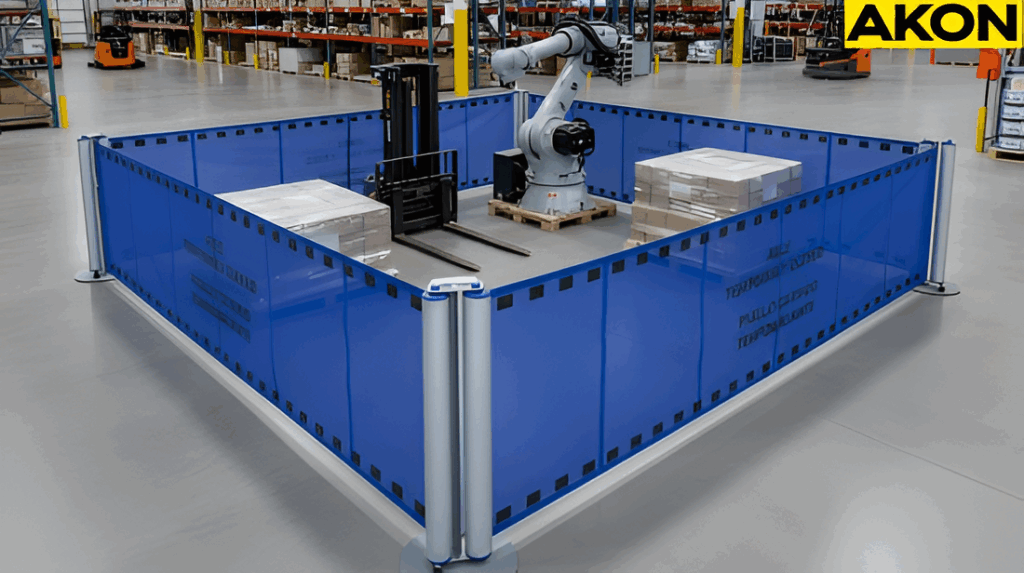
Industrial warehouse retractable fence barriers are portable barriers used to create temporary physical boundaries in work areas. They extend when access needs to be restricted and retract once the area is safe again.
This makes them well suited for locations where conditions change often, such as aisles, walkways, and short-term work zones that require controlled access during daily operations. They are typically deployed by on-site staff without special tools or training.
How They Differ From Other Safety Barriers
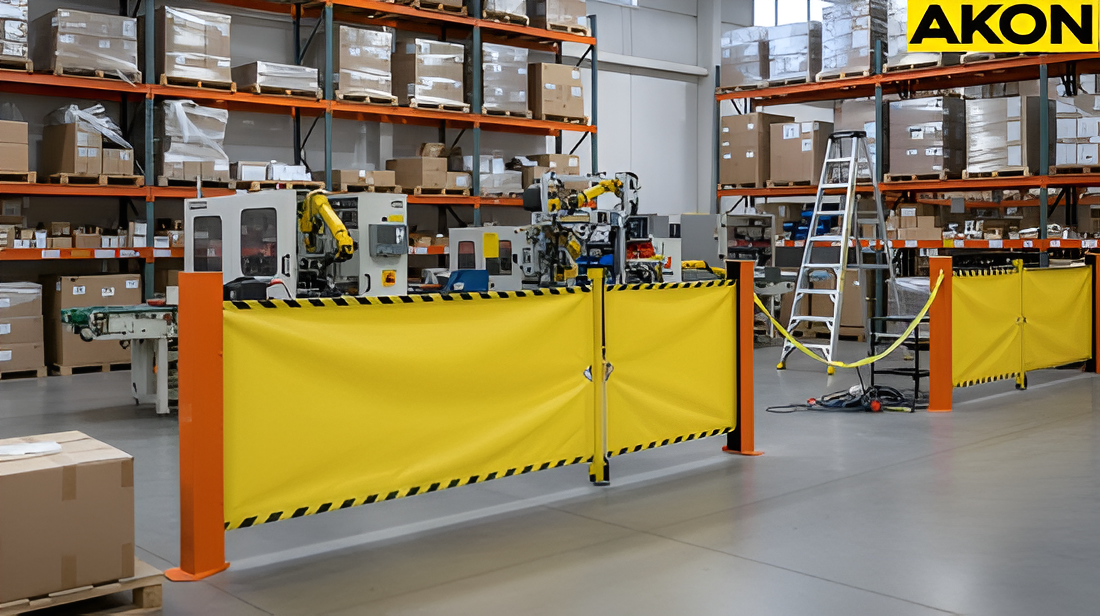
Retractable fence barriers differ in form from cones, tape, and permanent guardrails. Cones and tape act as visual markers but do not physically block movement. Permanent guardrails provide fixed separation and stay in place at all times.
Retractable barriers sit between these options, offering a physical boundary that can be moved, repositioned, or removed as needed. The SB-4000 is one example commonly used in warehouse settings to support this type of flexible access control.
Why Industrial Warehouse Retractable Fence Barriers Work So Well
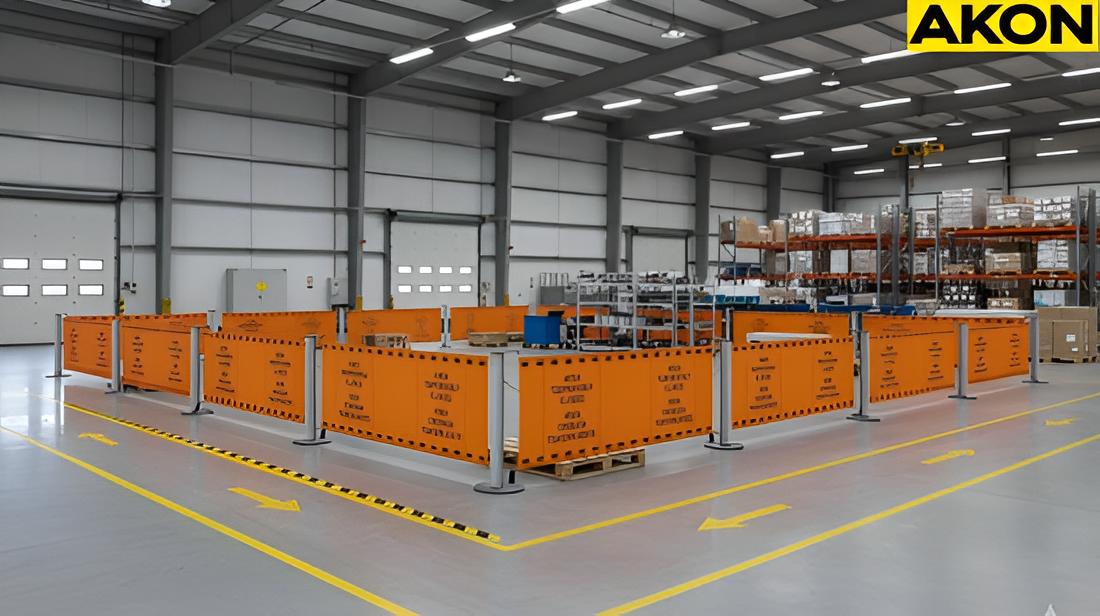
These barriers are designed to solve real warehouse safety problems quickly, without slowing down daily operations. Their effectiveness comes from how well they control access at the moment risk appears.
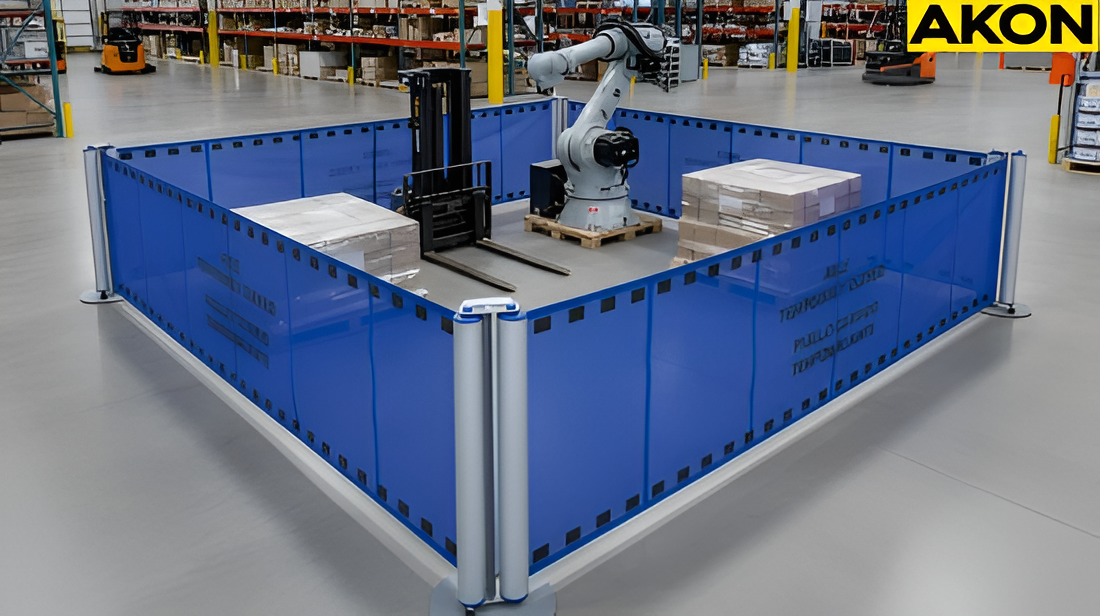
• They reduce on-the-floor uncertainty. Workers can immediately tell when an area is restricted without needing verbal instructions or added signage. This helps prevent accidental entry into active or unsafe zones during short-term tasks.
• They support uninterrupted operations. Instead of shutting down entire sections of the warehouse, teams can isolate only the affected area. This allows surrounding work to continue safely and efficiently.
• They encourage consistent safety habits. Because these barriers are quick to deploy and remove, teams are more likely to use them as intended. Over time, this supports better daily safety routines and compliance.
Fast Hazard Containment
Deploys in seconds to block off hazardous areas without tools, anchoring, or installation delays.
Flexible and Portable
Easily moved, retracted, or repositioned as workflows change, making them ideal for dynamic warehouse environments.
Clear Visual Safety
Creates an obvious physical and visual boundary that helps workers instantly recognize restricted zones.
Retractable Fence Barriers vs Other Warehouse Safety Options
Different warehouse hazards require different safety approaches. Some situations call for a quick, temporary way to restrict access, while others need long-term separation that stays in place at all times. Choosing the right option depends on how often the hazard appears, how much flexibility is needed, and how the space is used day to day.
| Feature / Need | Retractable Fence Barriers | Cones and Tape | Fixed Guardrails |
|---|---|---|---|
| Speed of Deployment | Very fast | Fast | Slow |
| Portability | High | Medium | Low |
| Space Efficiency | Retracts when not in use | Requires floor space | Permanent footprint |
| Best Use Case | Temporary hazard control | Short-term marking | Permanent separation |
| Visual Clarity | High | Medium | Medium |
Retractable fence barriers are best suited for hazards that appear and clear throughout the day, such as maintenance areas or temporary aisle closures. Cones and tape work well for short-term visual guidance where physical blocking is not required. Fixed guardrails are more appropriate for locations that need constant protection and do not change.
Product Solutions for Fast Hazard Control
Once you have identified the right safety approach, the next step is selecting a retractable barrier that fits your warehouse layout and how access needs to be controlled day to day. These product options support different space requirements while keeping access management straightforward.
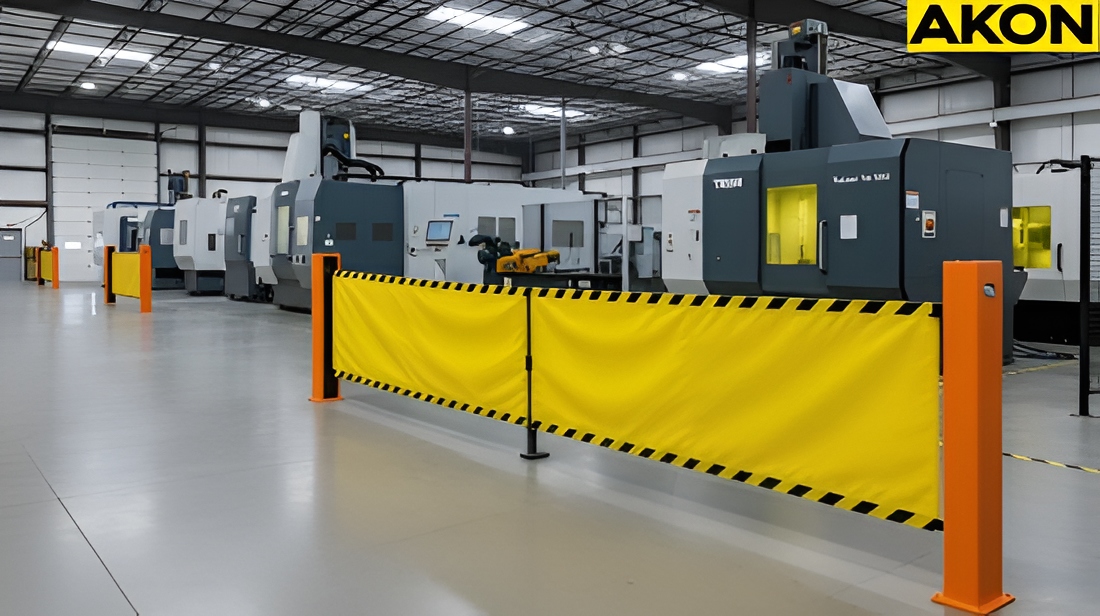
Industrial Roll Up Barricade – SB2000
The SB2000 is designed for areas where access must be restricted quickly but does not require a fully portable system. It works well in fixed locations where hazards appear periodically and need clear separation.
• Unrolls from a mounted post to block off restricted zones when needed
• Suitable for aisles, machine areas, and temporary work zones
• Provides a consistent access point for repeat use in the same location
• Supports controlled access without permanent floor installatio
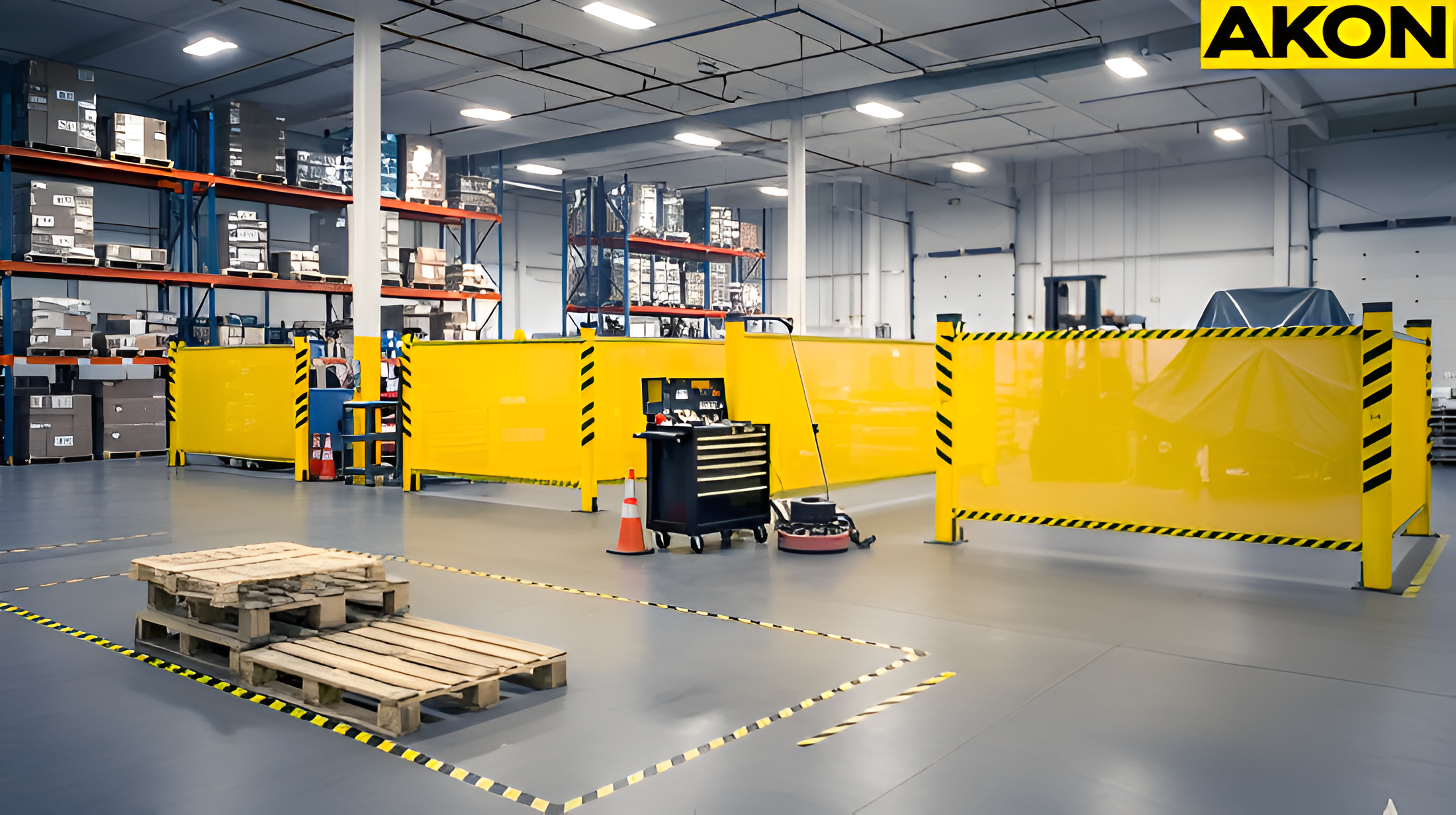
Industrial Retractable Barrier – SB3000
The SB3000 is a manually operated retractable barrier intended for flexible, short-term access control. It fits warehouses that frequently adjust workflows or need to guide traffic around changing work areas.
• Used to section off work zones or guide movement through shared spaces
• Works well in facilities with frequent layout changes
• Simple manual operation for repeated daily use
• Appropriate for areas that need temporary restriction without fixed separation
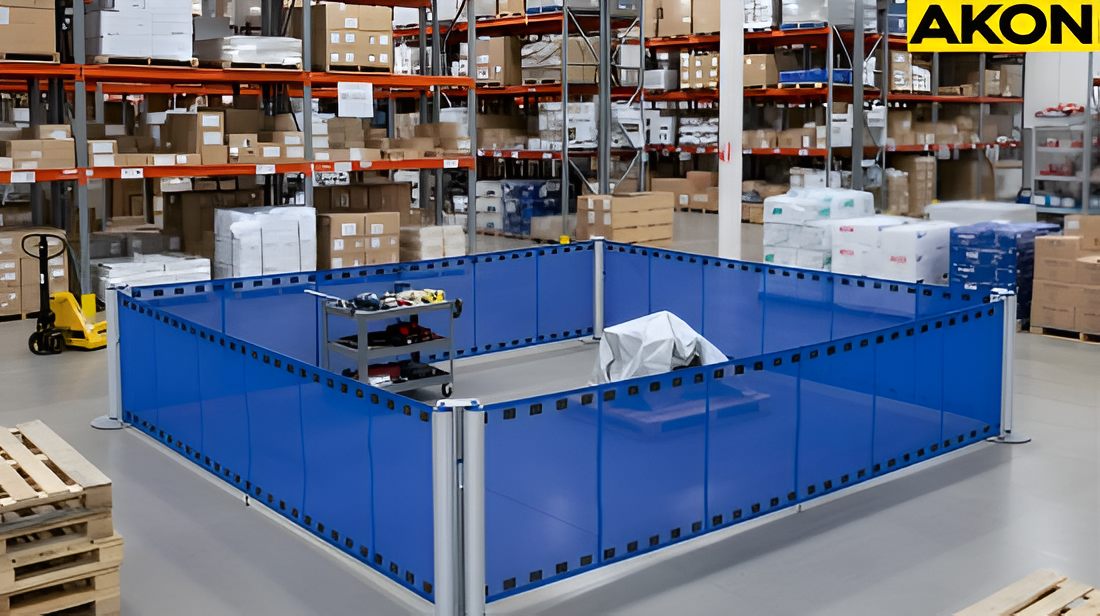
Portable Barrier – SB4000
The SB4000 is a portable retractable barrier system built for environments that require mobility across multiple locations. It allows teams to move access control points as hazards shift throughout the facility.
• Easily relocated between zones as needs change
• Designed for open floor plans and shared work areas
• Does not require floor anchoring or permanent mounting
• Supports consistent access control across multiple locations
Frequently Asked Questions
FAQs About Industrial Warehouse Retractable Fence Barriers
How fast can a retractable fence barrier be set up in a warehouse?
Most retractable fence barriers can be set up in seconds once positioned. Portable options like the SB4000 are commonly used when immediate access control is needed.
Do retractable fence barriers need to be permanently installed?
No, many retractable fence barriers do not require permanent installation. Models such as the SB4000 are designed to be used without floor anchoring.
Can retractable fence barriers be used near forklift traffic?
Yes, retractable fence barriers such as the SB3000 and SB4000 are often used near forklift routes to help manage pedestrian access during active operations.
Can multiple retractable barriers be used together for wider areas?
Yes, multiple retractable barriers can be arranged to cover larger openings or wide hazard zones. This approach is commonly used with SB3000 systems in open warehouse layouts.
When is a fixed barrier a better choice than a retractable one?
A fixed barrier is better when an area requires constant separation and does not change. Retractable options like the SB2000 are better suited for areas with recurring but temporary restrictions.
Are retractable fence barriers only for indoor warehouses?
Most retractable fence barriers are designed for indoor industrial use. Products like the SB2000 are typically installed in protected warehouse environments.
Can retractable barriers replace cones and safety tape?
Retractable barriers do not replace cones and tape in every situation. Systems such as the SB3000 are chosen when a physical access boundary is preferred over visual markers.
Are retractable fence barriers easy for warehouse staff to operate?
Yes, retractable fence barriers are designed for simple operation. Portable systems like the SB4000 can be deployed by on-site staff without special tools or training.
Can retractable fence barriers be reused multiple times per shift?
Retractable barriers are built for repeated use throughout the day. The SB3000 is commonly used in areas that require frequent access changes.
Do retractable fence barriers work in narrow aisles?
Yes, retractable fence barriers are often used in narrow aisles. Compact systems such as the SB2000 help control access without taking up unnecessary space.
Do retractable barriers block visibility completely?
Visibility depends on the barrier design. Many systems, including the SB3000, provide clear visual separation while still allowing awareness of surrounding activity.
Can retractable fence barriers help improve safety compliance?
Yes, having a visible physical boundary encourages workers to respect restricted areas. Facilities often use SB4000 barriers to reinforce access rules during temporary work.
Are retractable fence barriers suitable for maintenance zones?
Retractable fence barriers are commonly used during maintenance tasks. The SB4000 is often chosen when maintenance areas shift throughout the facility.
How much space do retractable barriers take when not in use?
When retracted, these barriers take up minimal space. Systems like the SB2000 are designed to stay out of the way during normal operations.
Can retractable fence barriers be used in shared work areas?
Yes, retractable barriers work well in shared spaces where access needs to change. The SB3000 is frequently used to guide movement in these environments.
Do retractable fence barriers require electrical power?
Most retractable fence barriers operate manually and do not require power. This makes portable options such as the SB4000 easy to use anywhere in the warehouse.
Are retractable fence barriers durable enough for industrial use?
Retractable barrier systems are built for industrial settings. Products like the SB2000 are designed to withstand repeated daily use.
Can retractable barriers help separate pedestrian and equipment traffic?
Yes, retractable barriers are often used to separate pedestrians from equipment routes. The SB3000 is commonly selected for this purpose.
How do I choose between the SB2000, SB3000, and SB4000?
The right choice depends on layout and mobility needs. The SB2000 fits fixed locations, the SB3000 works well for flexible layouts, and the SB4000 is ideal for portable use across multiple areas.
Are retractable fence barriers a long-term safety solution?
Retractable fence barriers can be part of a long-term safety strategy. Many facilities rely on systems like the SB3000 and SB4000 to manage recurring temporary hazards.
Photo Gallery
A Smarter Way to Manage Warehouse Hazards
Industrial warehouse retractable fence barriers provide a practical way to block off hazards as conditions change throughout the workday. Their ability to be deployed quickly, adapt to different layouts, and clearly define restricted areas makes them well suited for active warehouse environments. Whether managing temporary maintenance zones, shifting traffic patterns, or recurring safety needs, these barrier systems help maintain control without disrupting operations. To learn more, explore available barrier solutions or take the next step in finding the right option for your facility.
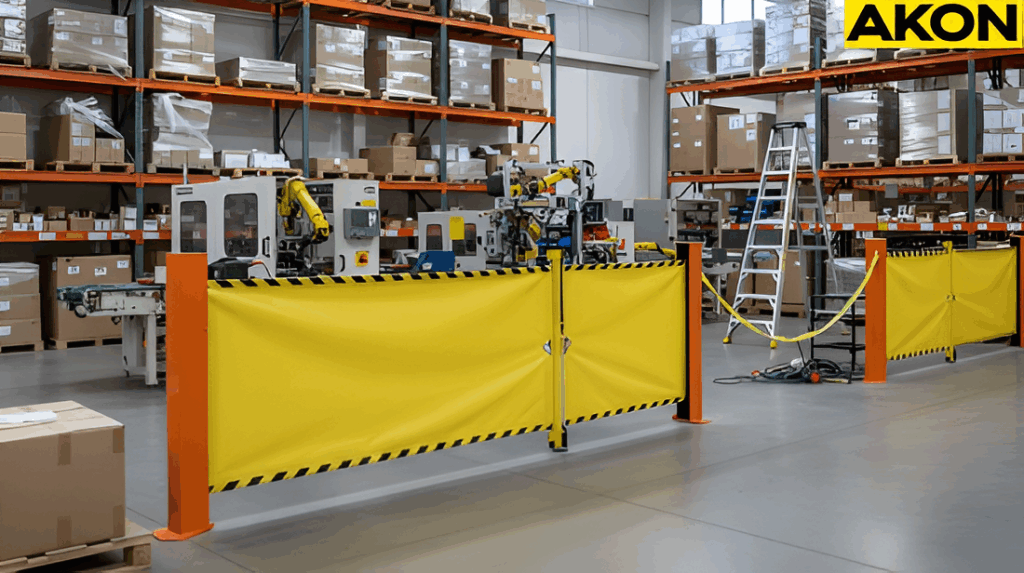
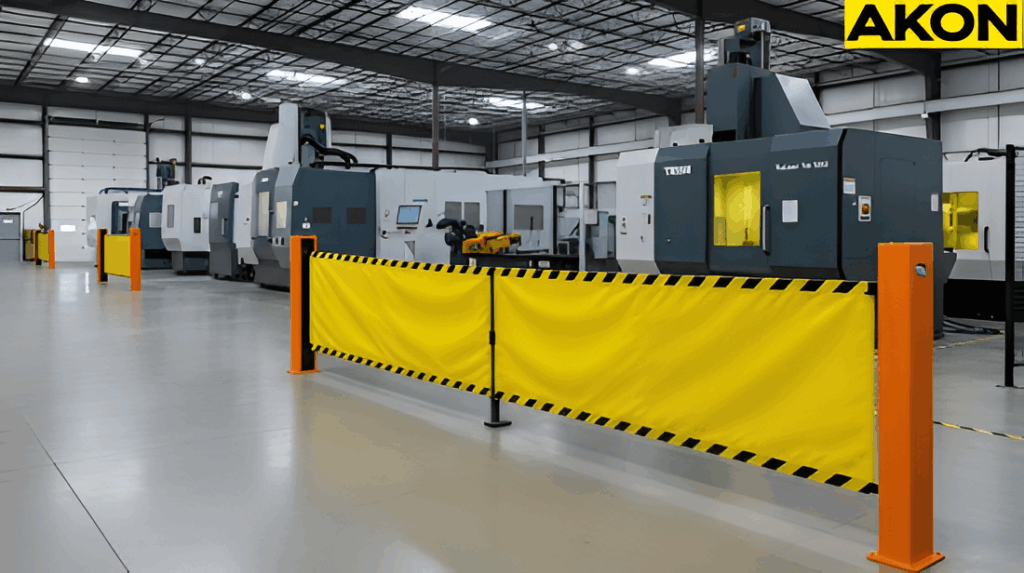
Controlled Access Around Machinery