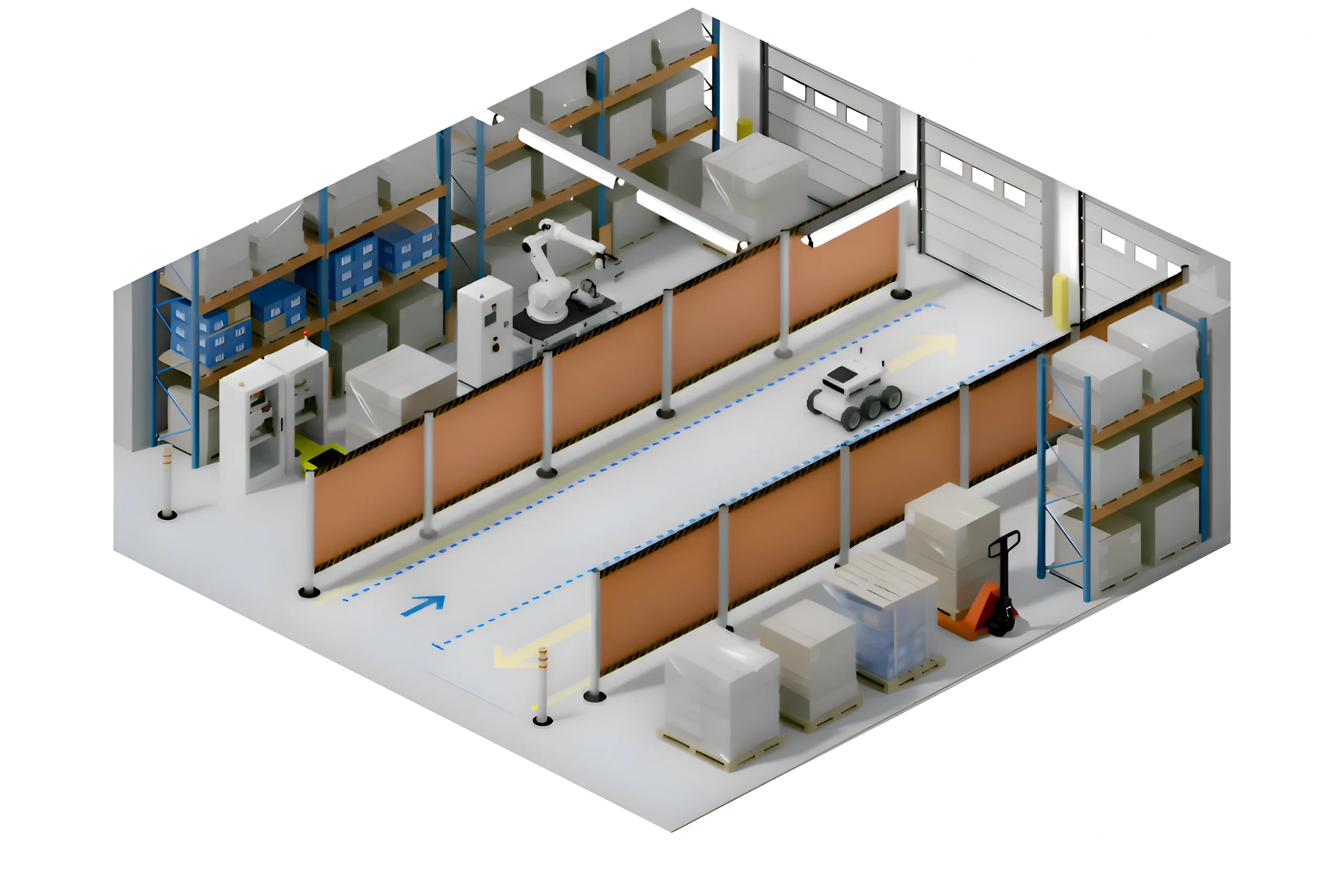
Retractable Barriers for Robotics & Automation in Wareouse
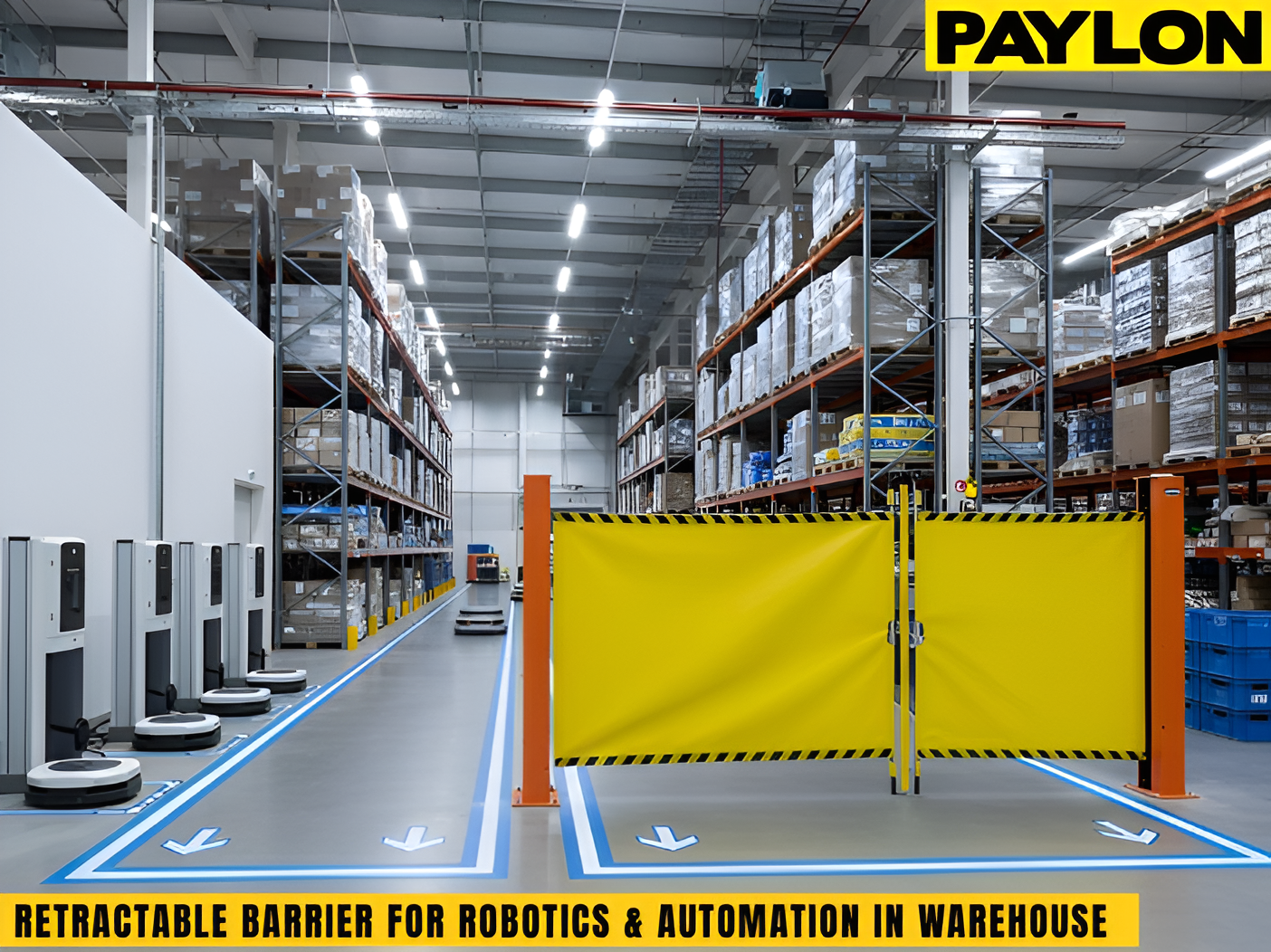
Robotics and automation create warehouse areas that change throughout the day, requiring access to be controlled at specific times. This article explains why temporary access control matters, how retractable barriers support flexible safety, compares available options, reviews practical product solutions, and answers common questions to help warehouse managers evaluate the right approach for their facility.
Why Temporary Access Control Is Essential in Automated Warehouses
As warehouses become more automated, access challenges become part of everyday operations. Automation improves speed and efficiency, but it also changes how and when people interact with equipment. Understanding where access breaks down helps explain why temporary access control is necessary in these environments.
Shared Workspaces Between People and Automation
Robots and AMRs often move through the same areas where employees walk, monitor systems, or move materials. Even in highly automated facilities, people still need to enter these spaces for routine tasks.
Access is usually brief and task-specific, such as checking equipment, adjusting systems, or supporting daily operations. These shared workspaces create frequent moments where access must be managed carefully without disrupting automated processes.
Access Methods That Do Not Match Real Workflows
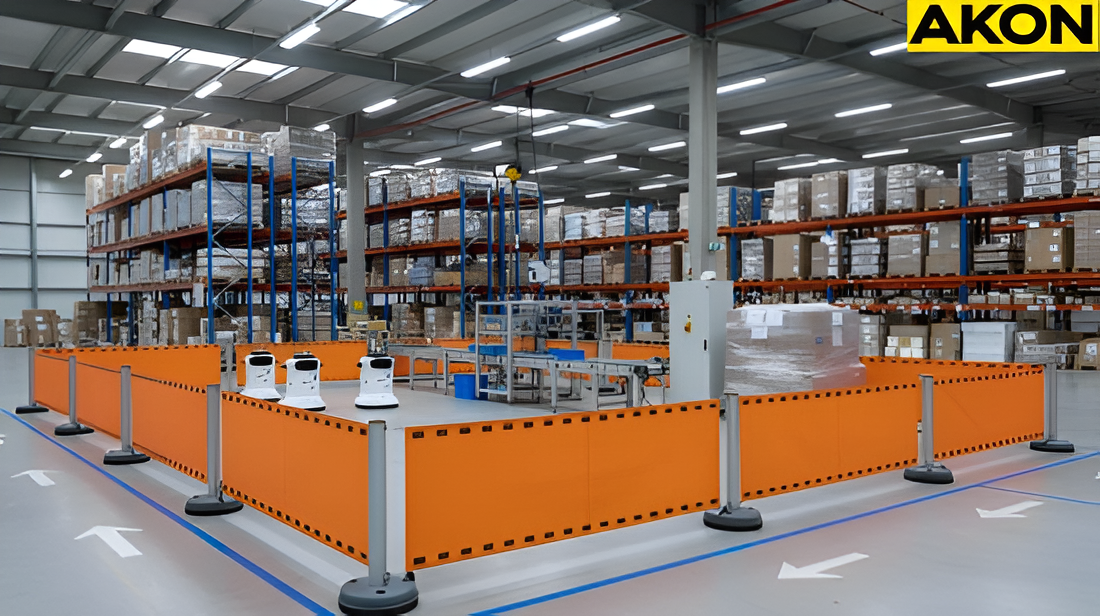
Many access control methods are not designed for fast-changing environments. Fixed guarding can restrict movement when quick access is required, while tape and cones rely on visual cues that are easy to miss in busy areas.
As workflows shift throughout the day, these tools fail to keep up. The result is inconsistent access control that creates confusion and slows down work instead of supporting it.
Retractable Barriers as a Flexible Safety Solution
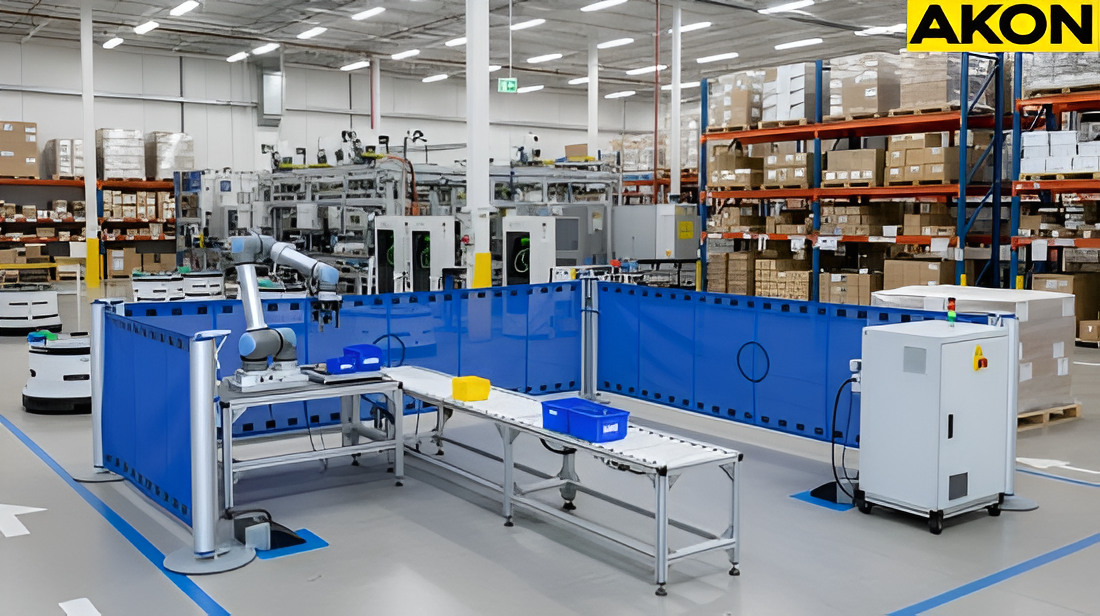
In automated warehouses, safety solutions must adapt as quickly as workflows change. Access control needs to adjust in real time without slowing people down or interrupting automated systems.
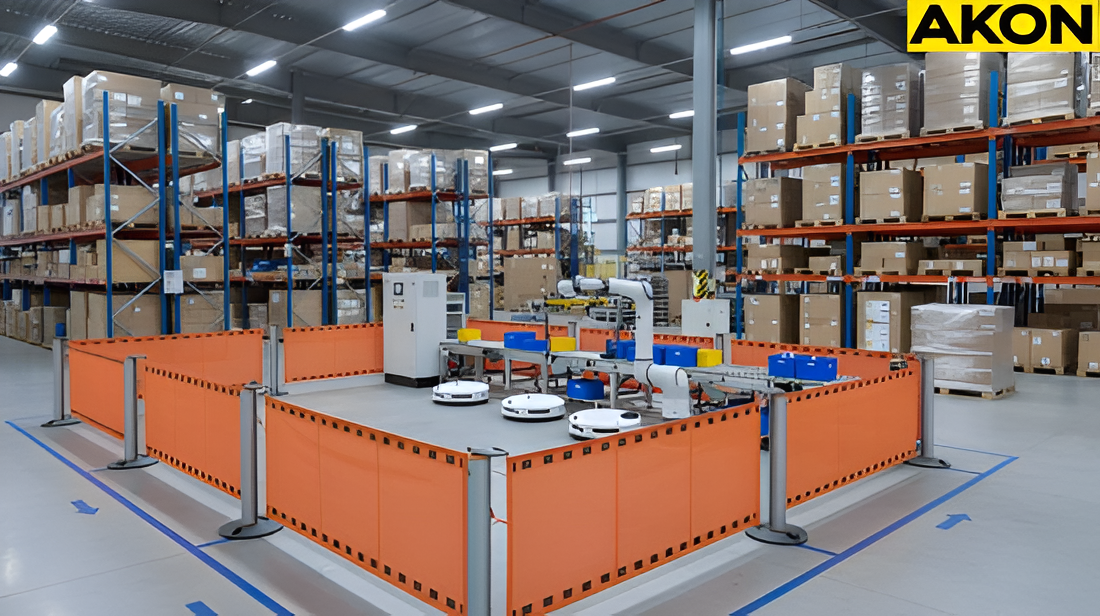
• Clear decision points. Workers immediately understand where access is limited. This reduces hesitation and helps keep movement predictable around automated zones.
• Smoother coordination between teams. Automated systems and manual tasks often overlap during the day. Adjustable access control supports cleaner transitions without stopping nearby work.
• Faster response to change. Warehouse conditions can shift with little notice. Barriers that adjust easily allow safety teams to respond without disrupting productivity.
Temporary Access Control
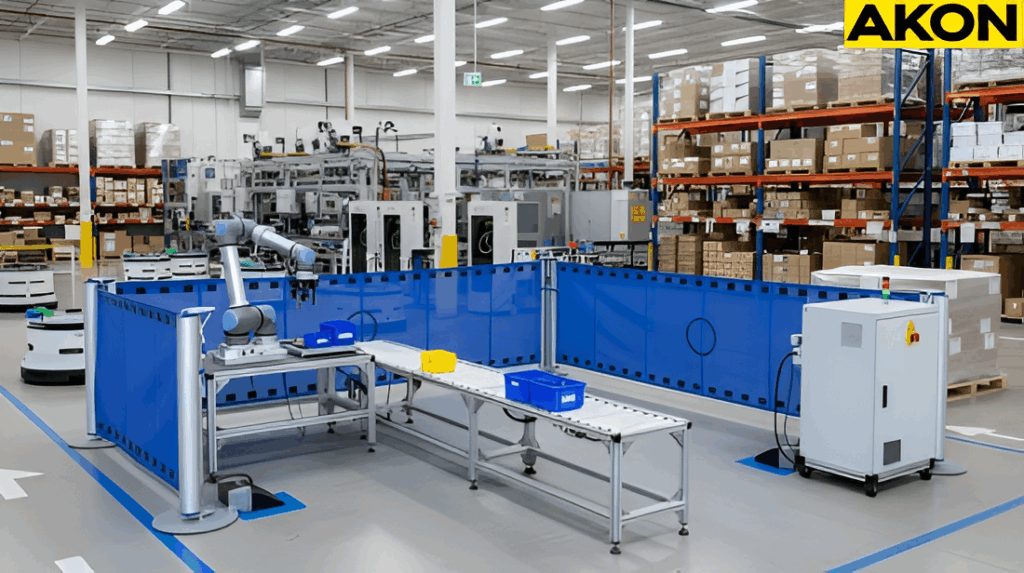
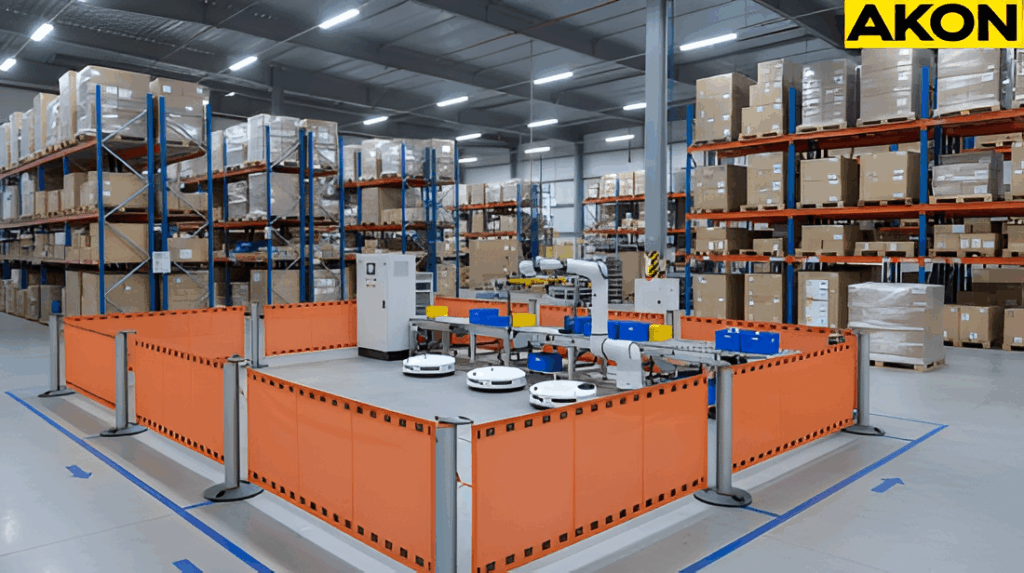
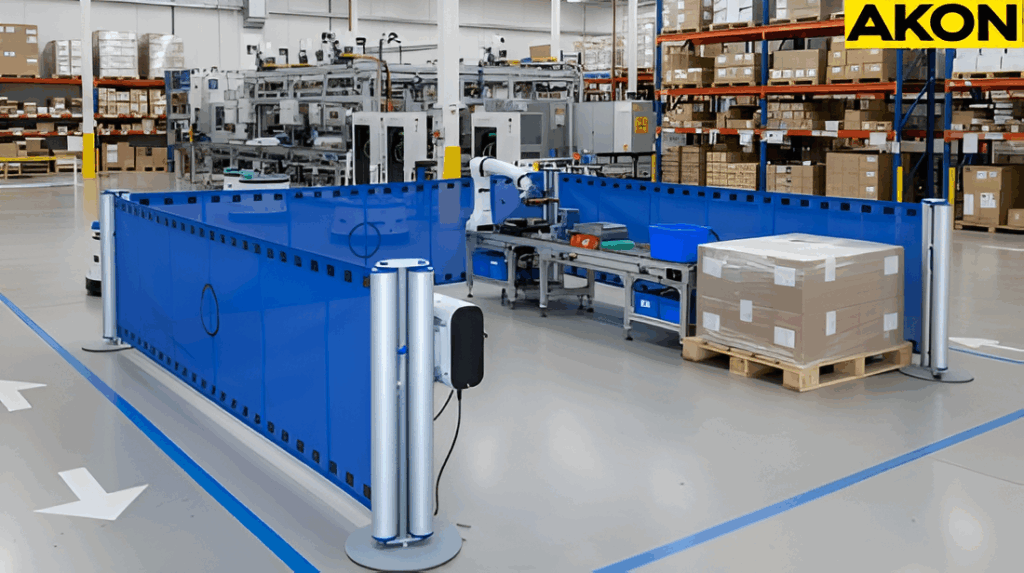
Retractable barriers define restricted zones only when automation is active, allowing areas to reopen quickly once access is needed.
Flexible Deployment
These barriers can be repositioned as robot paths, work zones, or layouts change, making them well suited for fast-moving warehouse environments.
High Visibility Safety
Clear, full-height barriers create an obvious visual boundary that workers recognize immediately.
Temporary Access Control Options in Automated Warehouses
Once the need for flexible access control is clear, the next step is understanding how different options perform in automated environments. Not all temporary access control methods are designed for spaces where robots, AMRs, and people interact throughout the day. Comparing these options side by side helps warehouse managers choose solutions that match real operational demands.
| Access Control Option | Mobility | Visibility | Flexibility | Best-Use Scenarios in Automated Warehouses |
|---|---|---|---|---|
| Retractable Roll-Up Barriers | High | High | High | Changing robot work zones, maintenance access, dynamic workflows |
| Belt Barriers | High | Medium | Medium | Light pedestrian guidance in low-traffic areas |
| Fixed Guarding | Low | High | Low | Permanent hazard areas with limited access needs |
| Floor Markings or Cones | Medium | Low | Low | Visual guidance in low-risk or temporary spaces |
Retractable roll-up barriers stand out because they balance mobility, visibility, and flexibility in a way that fits automated warehouse operations. They allow access to be controlled when needed and removed just as easily when conditions change. For facilities with shifting robot activity and short-term access needs, this makes them a practical option compared to more rigid or less visible alternatives.
Product Solutions That Support Temporary Access Control
Selecting the right barrier comes down to how often access changes and where control is needed within the warehouse. The following solutions are designed to support temporary access control in automated environments while keeping workflows efficient and adaptable.
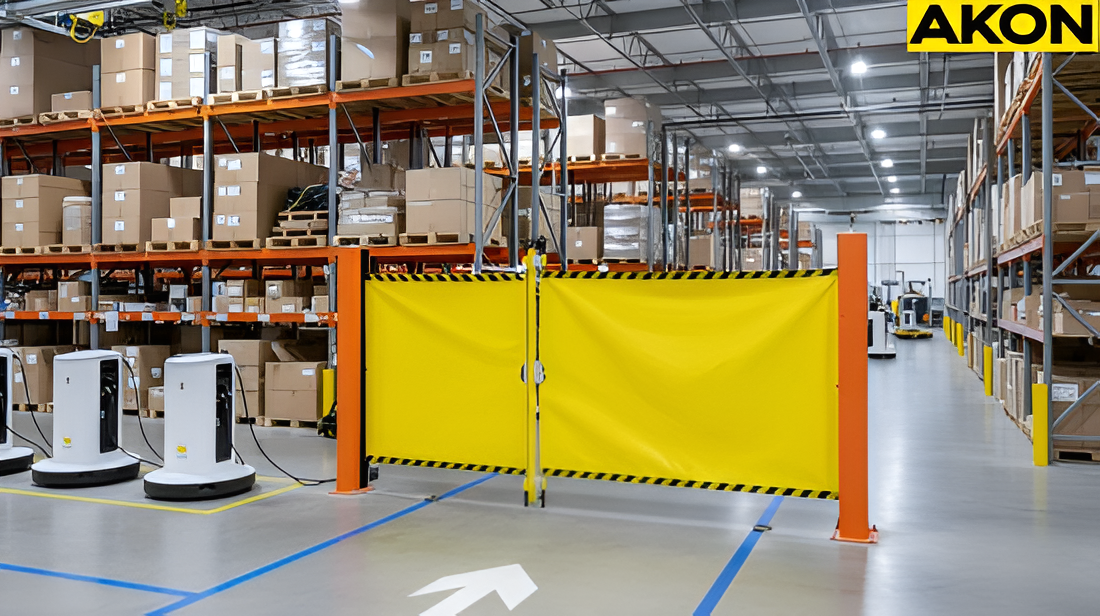
Industrial Roll Up Barricade – SB2000
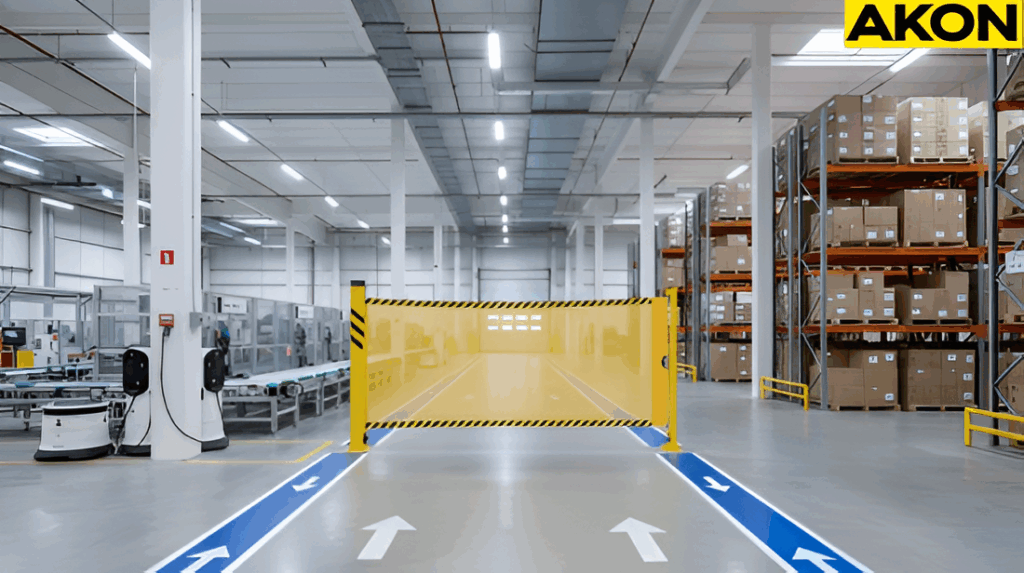
The Industrial Roll Up Barricade SB2000 is suited for areas that need to be secured temporarily but on a regular basis. It provides consistent access control where operations pause and resume throughout the day.
• Blocks access quickly during maintenance or inspection tasks.
• Unrolls from a fixed post to secure the same area repeatedly.
• Ideal for short-term shutdowns or controlled work zones.
• Fits locations where access control follows a predictable pattern.
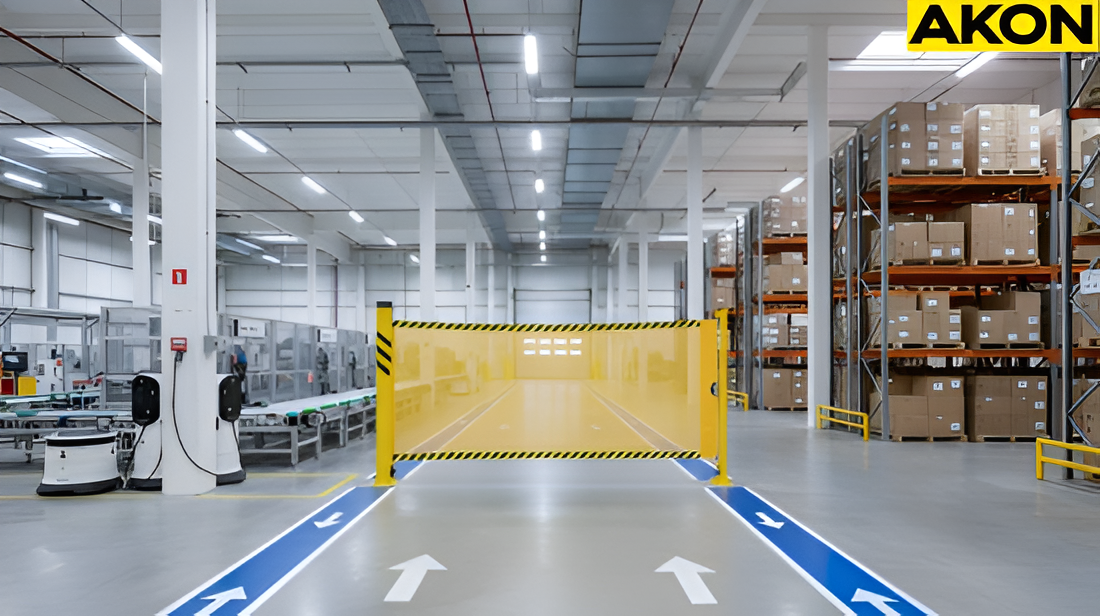
Industrial Retractable Barrier – SB3000
The Industrial Retractable Barrier SB3000 is designed for tighter spaces where full-size barriers may not fit. It delivers targeted access control without taking up unnecessary floor space.
• Supports access control in narrow aisles or defined pathways.
• Helps guide people and equipment through controlled zones.
• Useful near dock edges or compact automation areas.
• Balances visibility with space efficiency in busy environments.
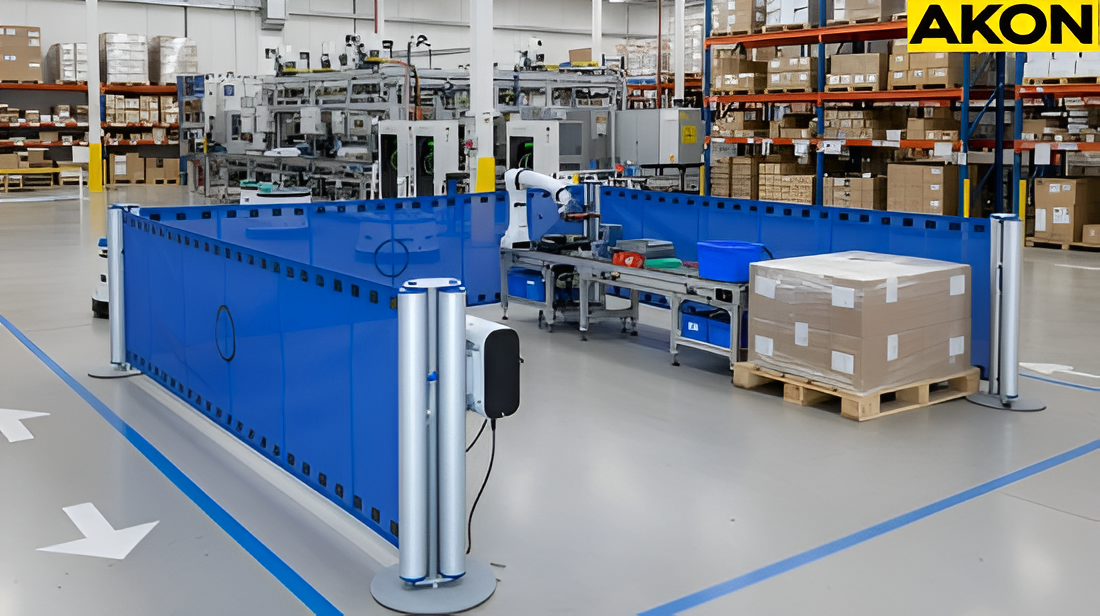
Portable Barrier – SB4000
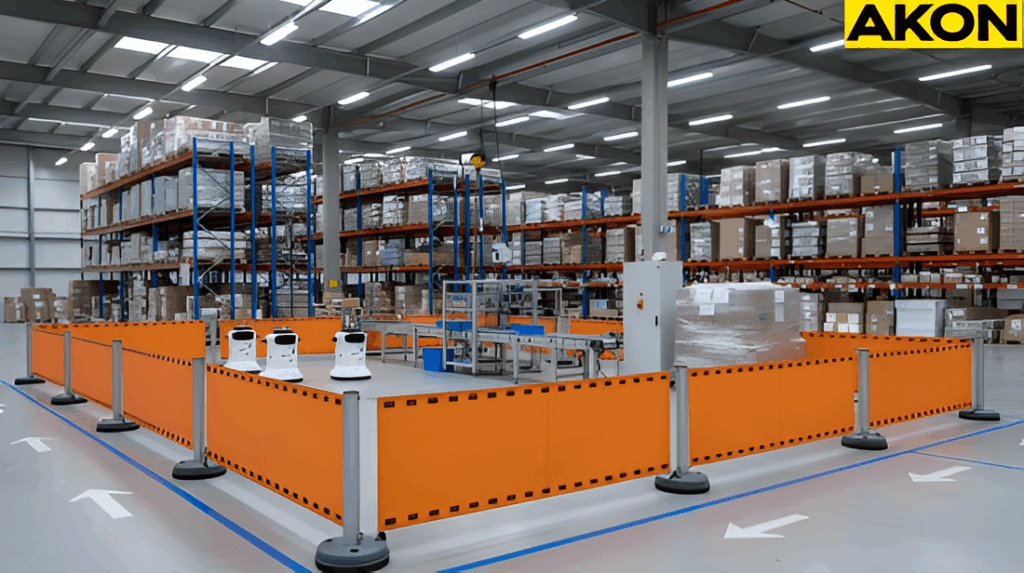
The Portable Barrier SB4000 is built for warehouse areas that change location throughout the day. It supports fast adjustments without requiring permanent installation or fixed mounting points.
• Designed for dynamic automation zones with shifting access needs.
• Helps create clear boundaries around active robot work areas.
• Easy to move and redeploy as layouts or workflows change.
• Works well in large, open spaces where access control must stay flexible.
Frequently Asked Questions
FAQs: Robotics and Automation in Industrial Warehouses
Are retractable barriers safe to use around robots and automation?
Yes. Retractable barriers such as the Portable Barrier SB4000 provide clear visual separation that helps keep people out of active automation zones while systems are running.
When should temporary barriers be used instead of fixed guarding?
Temporary barriers are best suited for automated warehouses where access needs change throughout the day, such as areas supported by the SB2000 during maintenance or inspections.
How quickly can retractable barriers be deployed or moved?
Most retractable barriers can be deployed or repositioned in minutes, especially portable options like the SB4000 that are designed for fast adjustments.
Where are retractable barriers most effective in automated warehouses?
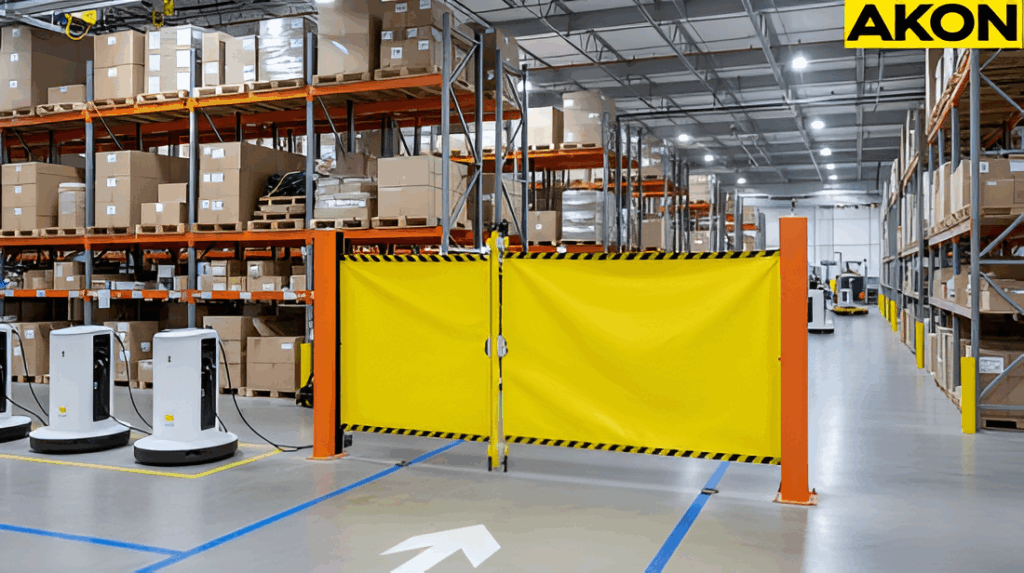
They are commonly used around robot work cells, inspection zones, charging areas, and short-term workspaces where access is only needed at certain times.
Do retractable barriers slow down warehouse operations?
No. When selected correctly, products like the SB3000 help control access without stopping nearby automated or manual workflows.
Can one person set up a retractable barrier?
Yes. Most industrial retractable barriers, including the SB2000 and SB4000, are designed so a single worker can deploy them safely.
Are retractable barriers meant to physically stop robots or equipment?
No. Retractable barriers are visual access control tools that guide people, not physical restraints for robots or machinery.
How do retractable barriers support warehouse safety programs?
They help reinforce clear access control by making restricted areas easy to identify during active automation cycles.
Can retractable barriers be used during maintenance and inspections?
Yes. The Industrial Roll Up Barricade SB2000 is often used to secure areas temporarily while maintenance or inspections are in progress.
Do retractable barriers work in high-traffic warehouse areas?
Yes. High-visibility designs like the SB3000 and SB4000 are easier to notice than tape or cones in busy environments.
Are retractable barriers suitable for warehouses using AMRs?
Yes. They are commonly used in facilities where AMR routes overlap with pedestrian access and need clear visual control.
Can retractable barriers be reused in different areas of the warehouse?
Yes. Portable options such as the SB4000 are designed to be reused and relocated as access needs change.
How do retractable barriers compare to floor markings or cones?
Retractable barriers provide a stronger visual boundary and can be removed or repositioned as conditions change, unlike fixed floor markings.
Are retractable barriers only useful in large warehouses?
No. Smaller automated facilities also use products like the SB3000 to manage access in narrow aisles or defined zones.
Do retractable barriers require permanent installation?
Some models are fixed in place, such as the SB2000, while others like the SB4000 are portable and do not require permanent mounting.
Can retractable barriers reduce confusion on the warehouse floor?
Yes. Clear boundaries help workers quickly understand when an area is restricted and when access is allowed.
Are retractable barriers compatible with changing warehouse layouts?
Yes. These barriers are well suited for facilities that frequently adjust layouts, workflows, or automation paths.
Do retractable barriers replace other safety systems?
No. They are typically used alongside existing safety measures as part of a broader access control strategy.
How durable are industrial retractable barriers?
Industrial models like the SB2000, SB3000, and SB4000 are built to withstand regular warehouse use when maintained properly.
How do warehouse managers choose the right retractable barrier?
The right choice depends on layout, access frequency, and space constraints, with many facilities evaluating whether the SB2000, SB3000, or SB4000 best fits their specific access needs.
Photo Gallery
Choosing the Right Approach for Temporary Access Control
Robotics and automation have changed how warehouse floors operate, making flexibility essential for maintaining safe and efficient workflows. Temporary access control allows teams to manage when and where people can safely enter automated areas without slowing daily operations. Retractable barriers support this approach by adapting to changing layouts, short-term tasks, and shifting activity throughout the day. For warehouse managers, the next step is reviewing current access points and evaluating which barrier options best align with both safety goals and operational efficiency.
Active Robotics Work Zones