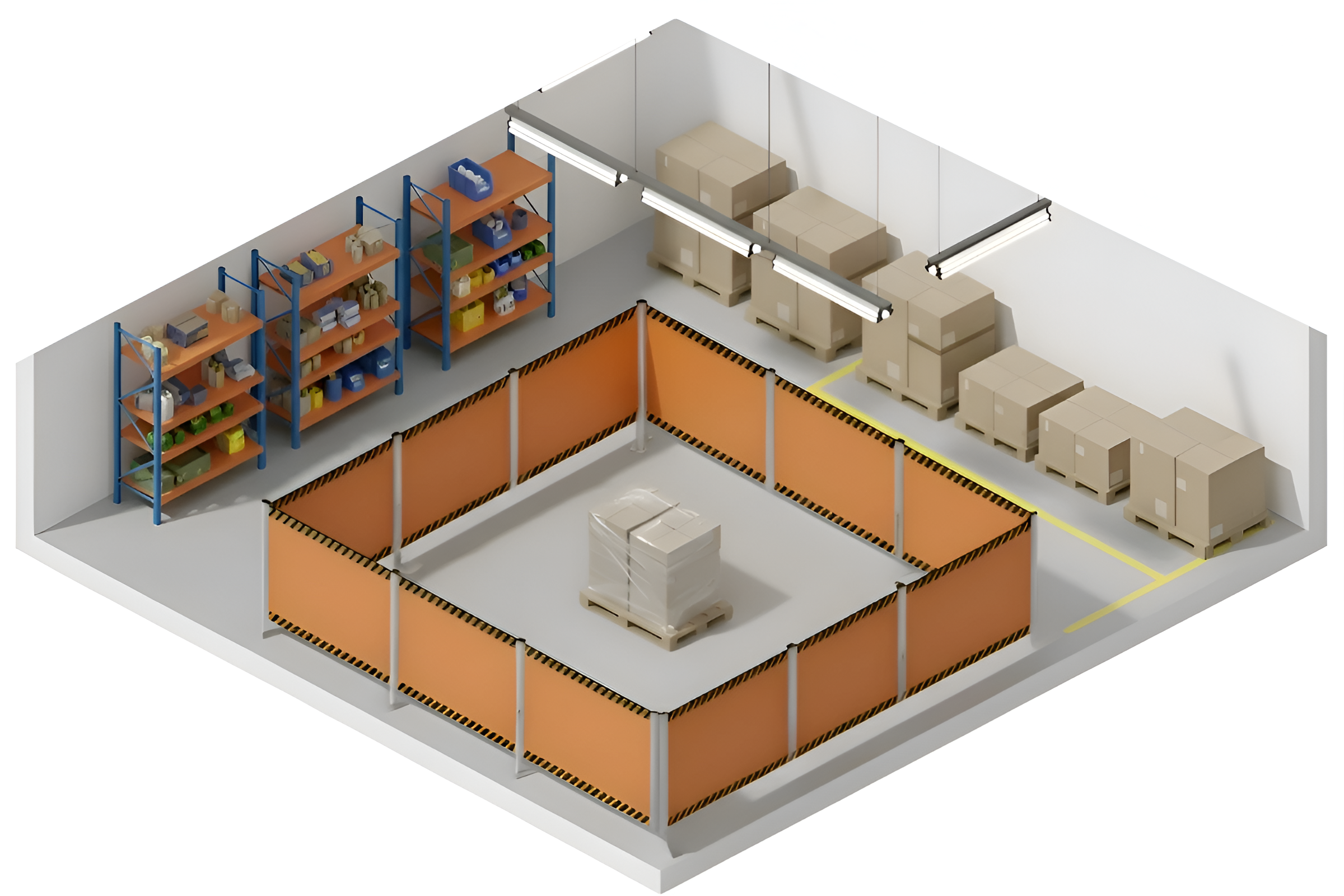
Single Vs Dual Retractable Barriers
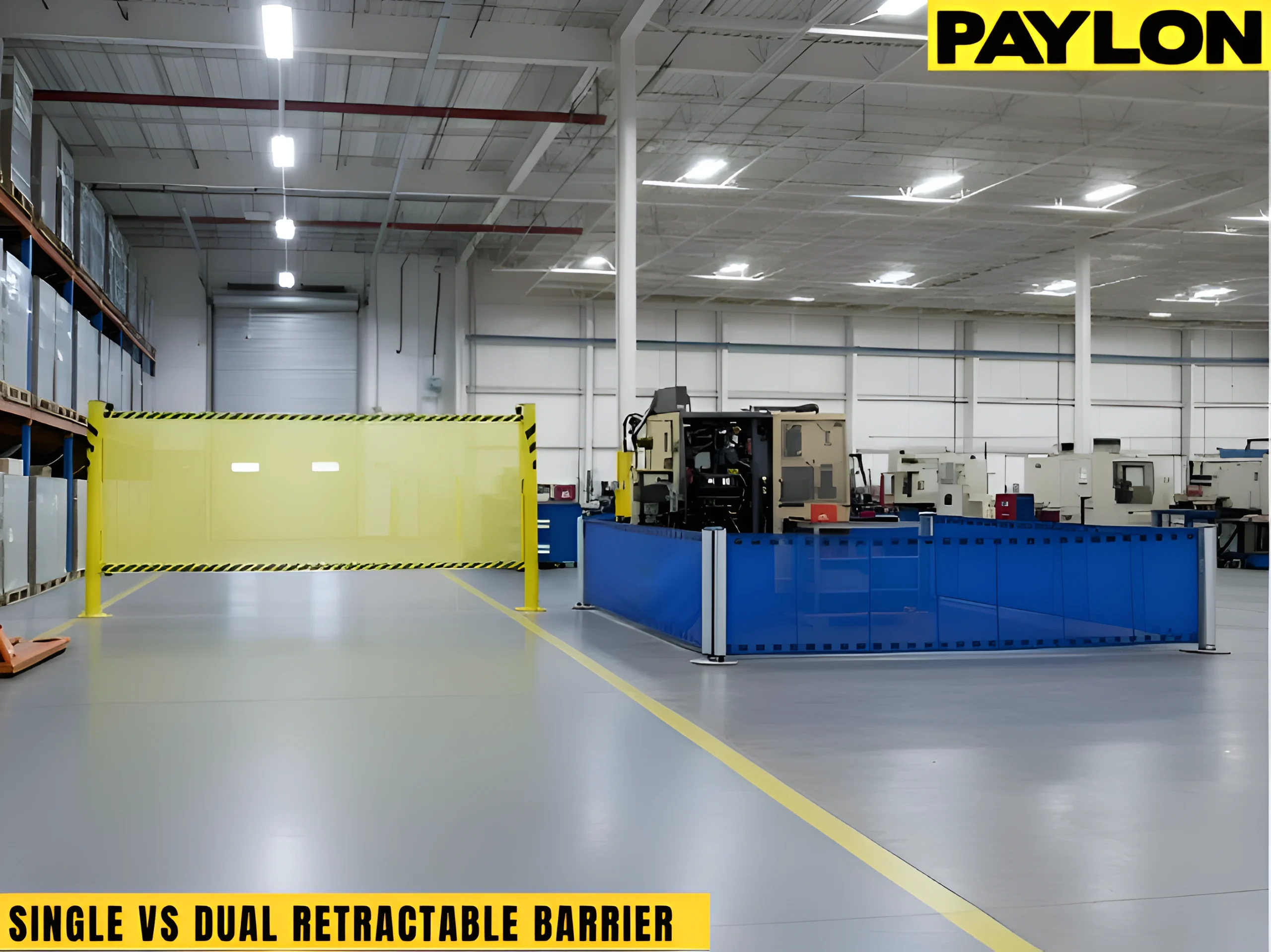
Industrial environments change throughout the day, creating shifting safety and access challenges. Choosing the right retractable barrier setup plays a key role in managing these risks. This guide compares single and dual retractable barrier configurations and helps you determine the best option based on your space, safety requirements, and daily workflow demands.
What Are Industrial Warehouse Retractable Fence Barriers?
In active warehouse environments, safety tools need to be easy to understand and quick to use. Industrial warehouse retractable fence barriers are designed to help teams control access to specific areas without adding complexity or permanent changes to the space.
Retractable Barriers vs Fixed Fencing
Industrial retractable barriers are temporary, movable barrier systems designed to control access without permanent installation. Unlike fixed fencing or hard partitions, they can be deployed only when needed and removed just as easily. This makes them well suited for environments where access points and work zones change throughout the day.
These barriers are adaptable and offer flexibility in high-traffic, dynamic environments. They also eliminate the need for expensive and time-consuming installation, offering cost-effective safety solutions for evolving spaces.
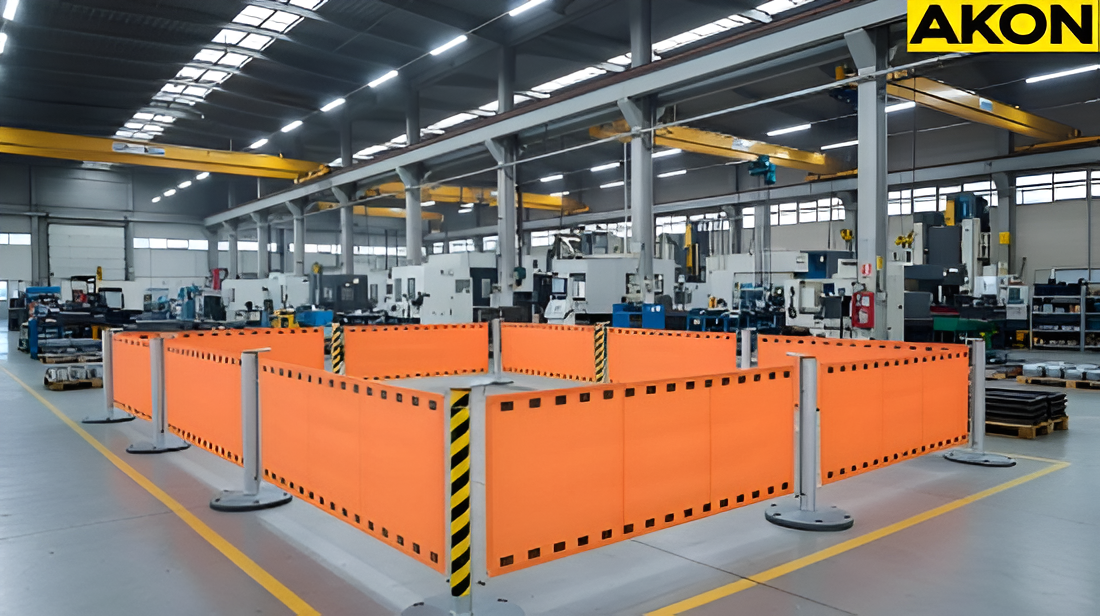
How Retractable Barriers Are Used in Industrial Spaces
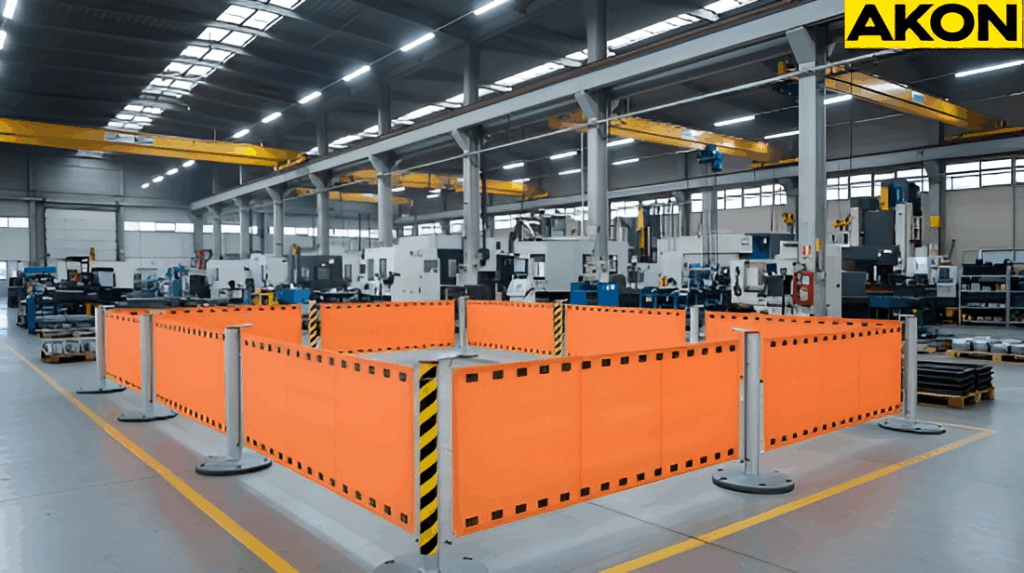
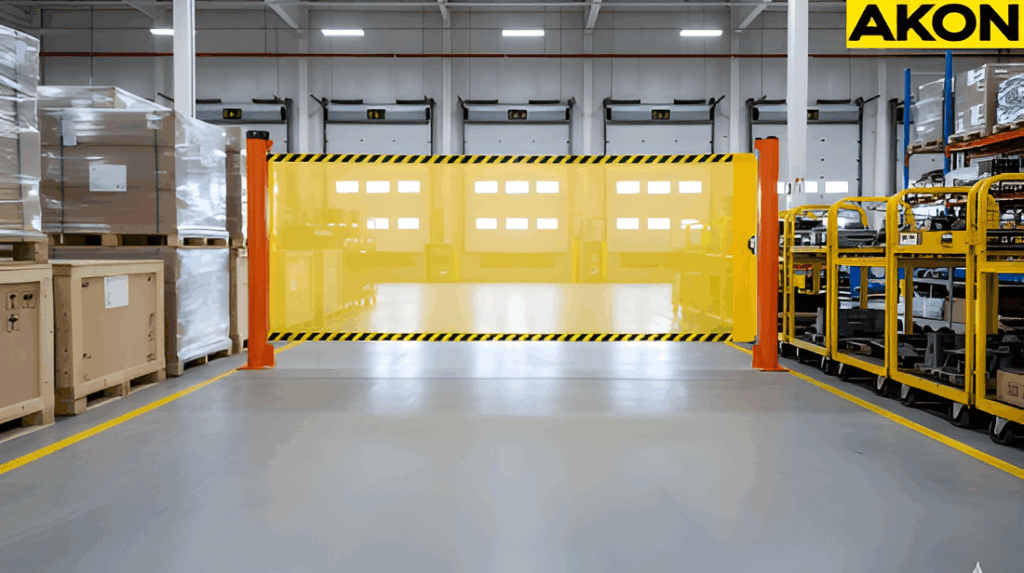
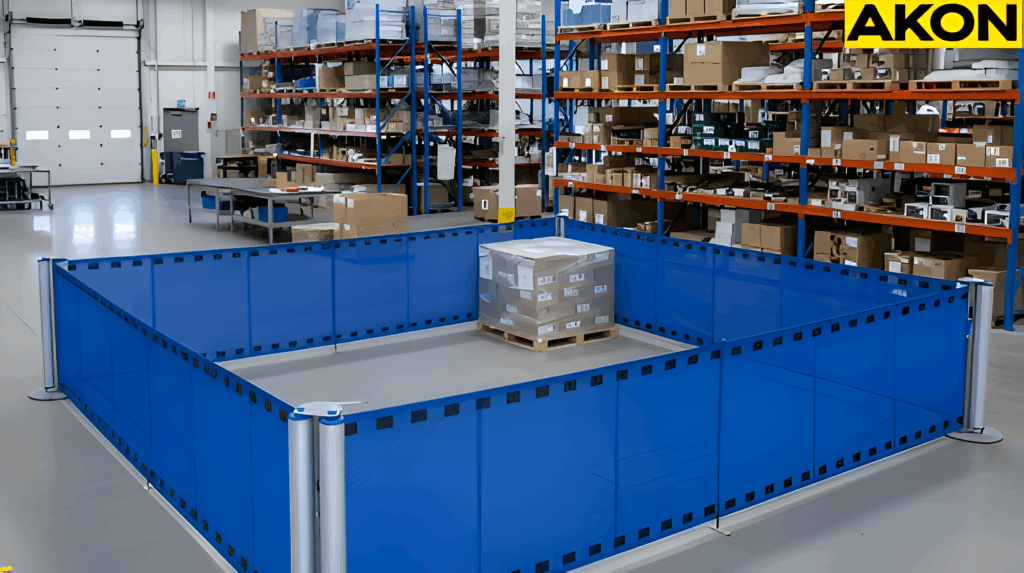
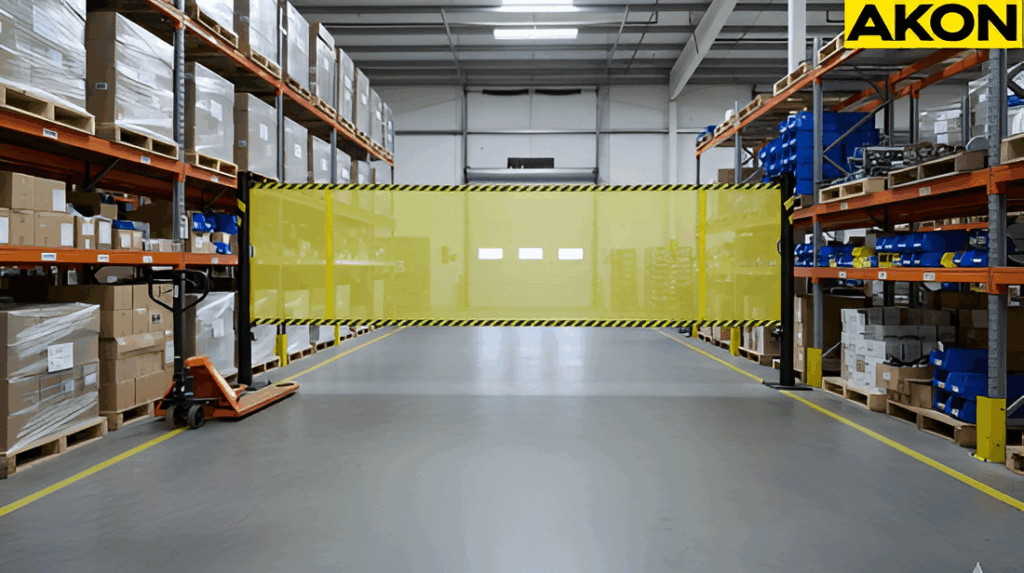
These barriers are commonly used in warehouses, staging zones, and temporary keep-out areas to define boundaries as conditions shift. Because they are portable and easy to reposition, teams can adapt layouts without tools or downtime. This flexibility allows facilities to maintain control while supporting ongoing operations.
Retractable barriers are particularly useful in areas where workflows change frequently and need to be reconfigured for different tasks. They offer a fast, efficient way to maintain safety standards while keeping operations running smoothly.
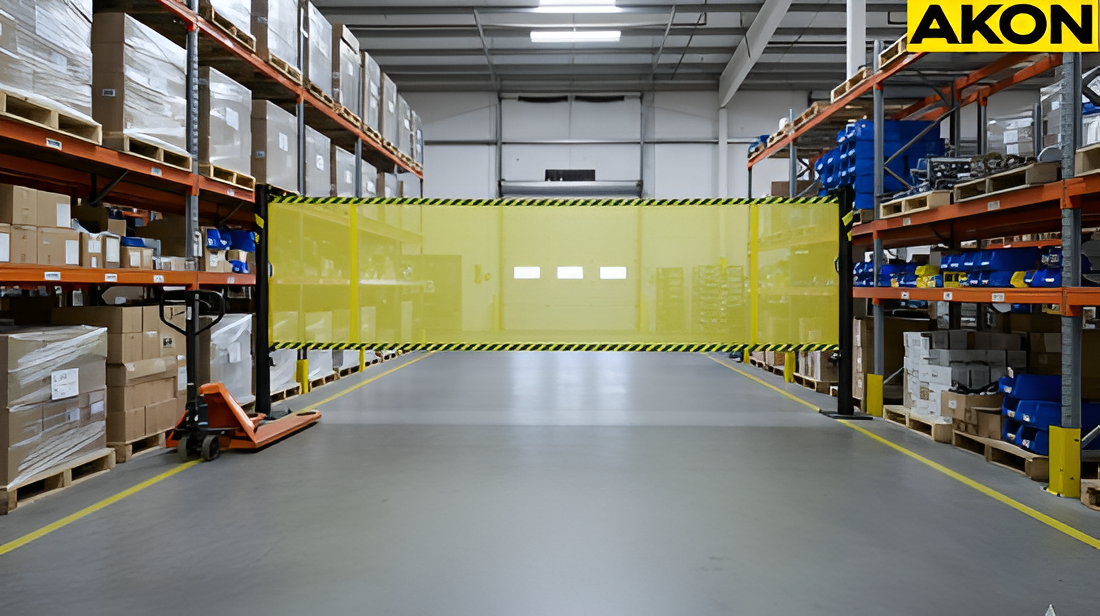
Why Industrial Warehouse Retractable Fence Barriers Work So Well
These barriers are designed to solve real warehouse safety problems quickly, without slowing down daily operations. Their effectiveness comes from how well they control access at the moment risk appears.
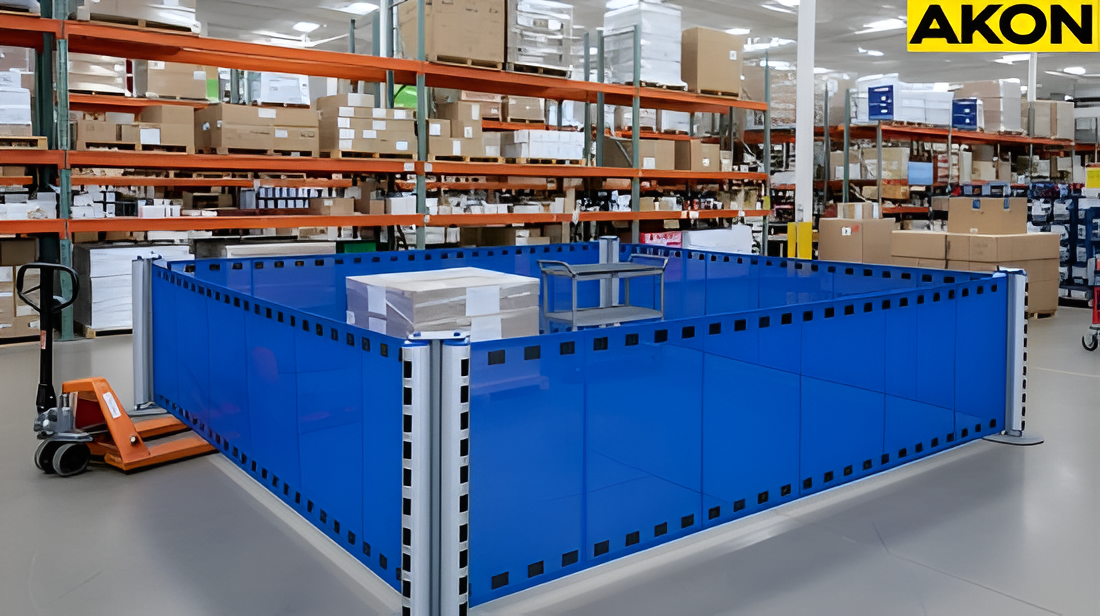
• Improves response time during daily changes. When workflows shift, teams need safety controls that keep up without delays. Retractable barriers allow quick adjustments that support productivity instead of slowing it down.
• Reduces reliance on temporary stopgap solutions. Cones and tape are often overlooked or moved out of place. Retractable barriers provide a more dependable way to reinforce boundaries throughout the day.
• Supports consistent safety practices across teams. Clear barriers create shared expectations for where access is allowed or restricted. This consistency helps reduce guesswork and improves overall site awareness before incidents occur.
Fast Hazard Control
Retractable barriers let teams secure changing risk areas almost immediately as conditions shift.
Flexible Setup Options
The same barrier system can adapt to different layouts and risk levels as needs change.
Clear Visual Separation
High-visibility materials clearly indicate restricted access and reduce confusion in shared spaces.
Single vs Dual Retractable Barriers
The table below helps clarify how single and dual retractable barrier setups differ in practical use. A single barrier is typically suited for lower-risk areas where quick, simple access control is needed, while a dual barrier provides added separation for higher-traffic or higher-risk zones. Neither option is universally better. The right choice depends on how much control, coverage, and structure your specific environment requires.
| Feature | Single Retractable Barrier | Dual Retractable Barrier |
|---|---|---|
| Visual separation | Basic | Stronger, more defined |
| Best for | Low to moderate risk zones | Higher traffic or risk areas |
| Flexibility | Very high | High |
| Cost | Lower | Higher |
| Setup complexity | Simple | Slightly more involved |
With these differences in mind, the next step is understanding how specific barrier products support single and dual configurations in real industrial settings.
Recommended Barrier Solutions for Industrial Use
Selecting the right retractable barrier depends on your facility’s unique needs. Below are examples of barrier solutions that support both single and dual setups, helping you make practical, on-site decisions for maintaining safety and control.
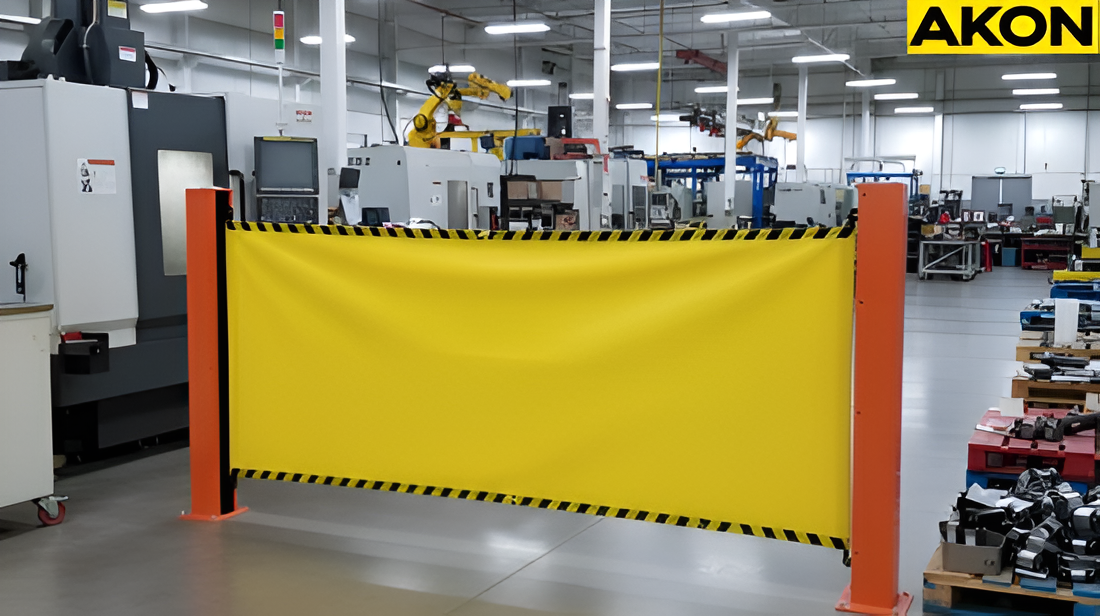
Industrial Roll Up Barricade – SB2000
The SB2000 is a fixed-post roll-up barricade designed for controlled access in defined industrial zones. It suits facilities that need a dependable barrier solution that stays in place while allowing flexible deployment.
• Designed for consistent access control in moderate-risk areas. It provides a clear boundary without requiring permanent fencing. This makes it suitable for zones that change periodically but not constantly.
• Works well as a single barrier or paired to create a dual configuration. This allows added separation in higher-traffic areas without redesigning the space. It supports scalable safety planning.
• Best suited for warehouses, production areas, and staging zones. Its fixed-post design keeps the barrier predictable and easy for teams to recognize. This helps maintain orderly movement throughout the day.
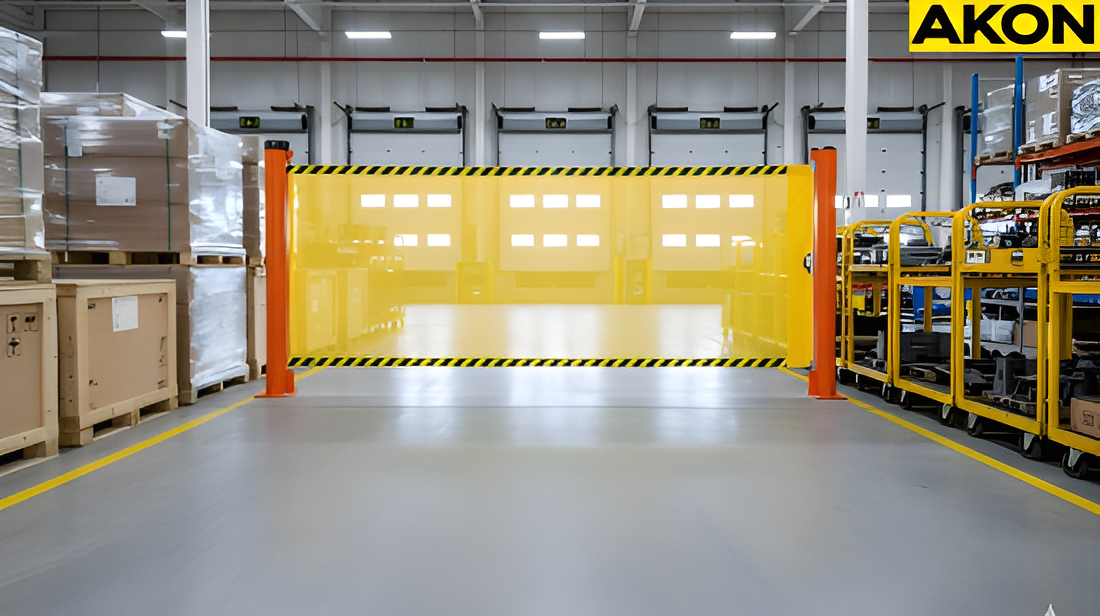
Industrial Retractable Barrier – SB3000
The SB3000 is a manually operated retractable barrier built for straightforward, everyday access control. It offers a simpler alternative for facilities that need reliable separation without added complexity.
• Ideal for routine access control in low to moderate risk zones. It allows teams to establish boundaries only when needed. This keeps work areas open and flexible the rest of the time.
• Supports both single and dual barrier layouts. Facilities can start with one unit and expand coverage as conditions change. This makes it easier to adapt over time.
• Well suited for areas with frequent movement and short-term restrictions. Its simple operation helps teams respond without slowing workflow. Consistency remains easy to maintain.
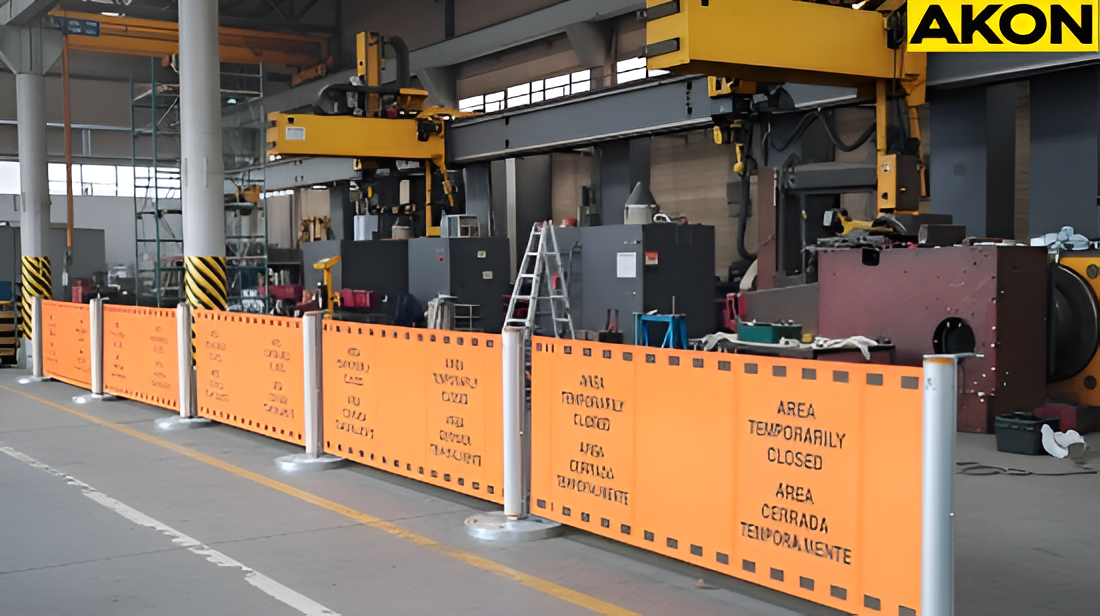
Portable Barrier – SB4000
The SB4000 is a fully portable roll-up barricade designed for fast placement wherever conditions change. It works especially well in environments where barrier locations shift throughout the day.
• Built for highly dynamic spaces where flexibility matters most. Teams can move it between locations without tools or downtime. This supports fast operational changes.
• Functions effectively as a single barrier or as part of a dual setup. Adding a second unit increases separation in busier zones. This allows quick scaling based on risk.
• Commonly used in warehouses, temporary keep-out areas, and maintenance zones. Its portability helps facilities respond to evolving conditions. Control stays consistent without permanent installation.
Frequently Asked Questions
FAQs: Choosing the Right Retractable Barrier Setup
What is the main difference between single and dual retractable barriers?
A single retractable barrier creates one clear boundary, while a dual setup uses two barriers to increase separation. The choice depends on how much control your area requires.
When should I choose a dual barrier instead of a single barrier?
Dual barriers are better when traffic is heavier or when access needs to be more clearly restricted. They help reinforce boundaries in areas with higher risk or more movement.
Are retractable barriers suitable for high-traffic industrial areas?
Yes, retractable barriers are commonly used in high-traffic zones because they can be adjusted as conditions change. Dual setups are often preferred in these areas for added structure.
Can retractable barriers be moved throughout the day?
Most retractable barriers are designed to be repositioned as needed. Portable options like the SB4000 support frequent changes without tools.
Are roll-up barricades like the SB4000 temporary or semi-permanent?
The SB4000 is considered a temporary barrier solution. It is meant to be deployed, moved, and stored as conditions change.
Which barrier works best for changing warehouse layouts?
Portable barriers such as the SB4000 work well in environments where layouts change often. They allow teams to adjust boundaries without downtime.
Is the SB2000 better suited for single or dual setups?
The SB2000 can support both configurations. It works as a single barrier in moderate-risk zones or as part of a dual setup in busier areas.
How does the SB3000 differ from the SB2000?
The SB3000 is a more economical retractable barrier option designed for everyday access control. The SB2000 offers a more robust roll-up barricade design.
Can multiple retractable barriers be linked together?
Yes, multiple barriers can be arranged to form longer or layered boundaries. This is common when creating dual barrier setups.
Are retractable barriers a replacement for permanent fencing?
Retractable barriers are best used where flexibility is needed. Permanent fencing may still be required for fixed or long-term enclosures.
Which barrier is best for temporary keep-out areas?
The SB4000 is well suited for temporary keep-out zones because it can be placed and removed quickly. It supports short-term access control needs.
Do retractable barriers require floor mounting or anchors?
Most retractable barriers do not require permanent anchoring. This allows them to be used without altering floors or structures.
Can retractable barriers be used indoors and outdoors?
Many industrial retractable barriers are designed for indoor use and protected outdoor environments. Always match the barrier type to site conditions.
How do I decide between the SB3000 and SB4000?
Choose the SB3000 for simple, fixed access points and the SB4000 when portability is important. The decision depends on how often the barrier needs to move.
Are retractable barriers suitable for staging and loading areas?
Yes, staging and loading zones often benefit from retractable barriers. They allow teams to control access during active operations.
Can retractable barriers support safety programs across multiple teams?
Clear, repeatable barrier setups help teams follow consistent access rules. This supports safer daily operations across shifts.
How quickly can retractable barriers be deployed?
Most retractable barriers can be deployed in seconds. This makes them practical when conditions change unexpectedly.
Are dual barrier setups required by safety regulations?
Regulations vary by industry and site conditions. Dual barriers are often used when additional separation is needed to meet internal safety standards.
Which product supports the widest range of layouts?
The SB4000 offers the most flexibility due to its portable design. It adapts easily to different layouts and workflows.
How do I choose the right retractable barrier for my facility?
Start by assessing traffic levels, risk areas, and how often boundaries change. Then select a barrier that supports either single or dual configurations based on those needs.
Photo Gallery
Choosing the Right Retractable Barrier Setup for Your Facility
Choosing between single and dual retractable barrier setups comes down to understanding your risk level, traffic flow, and how often conditions change throughout the day. Single barriers work well where access control needs are simple, while dual setups add structure in busier or higher-risk areas. The right choice improves safety without slowing operations, helping teams stay efficient as layouts and demands shift. If you are ready to apply this approach, exploring the available barrier solutions can help you find the setup that fits your facility best.
Controlled Work Zones