
Retractable Barriers for Warehouse Forklift Safety
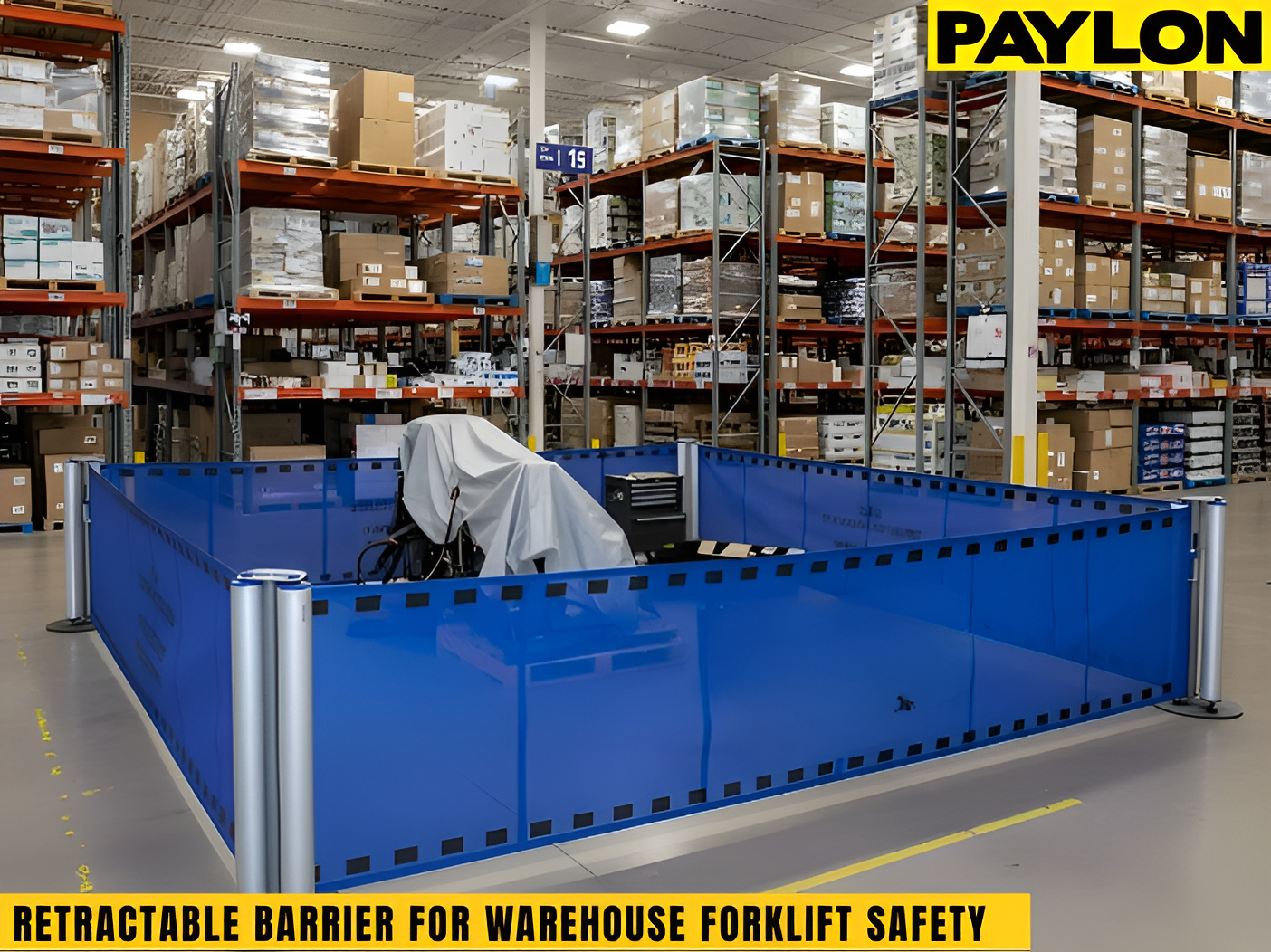
Forklifts and pedestrians often operate in the same warehouse space, creating safety risks. Physical separation using retractable barriers helps control movement and reduce accidents. This article explains why separation is critical, how retractable barriers improve safety, how barrier options differ, and how they support safer warehouse operations.
Why Forklift and Pedestrian Separation Is a Safety Priority
Warehouses depend on constant movement, but shared spaces between people and forklifts increase risk. Understanding where conflicts occur and why basic warnings fall short helps explain why separation remains a safety priority.
Where Forklift and Pedestrian Conflicts Commonly Occur
Conflicts most often happen in shared aisles, pedestrian crossings, and dock or staging areas. These spaces have steady traffic, changing routes, and limited visibility.
Forklifts may block sightlines, while pedestrians move between tasks or work zones. When these interactions repeat throughout the day, small misjudgments can quickly create unsafe situations.
Why Visual Warnings and Training Alone Are Not Enough
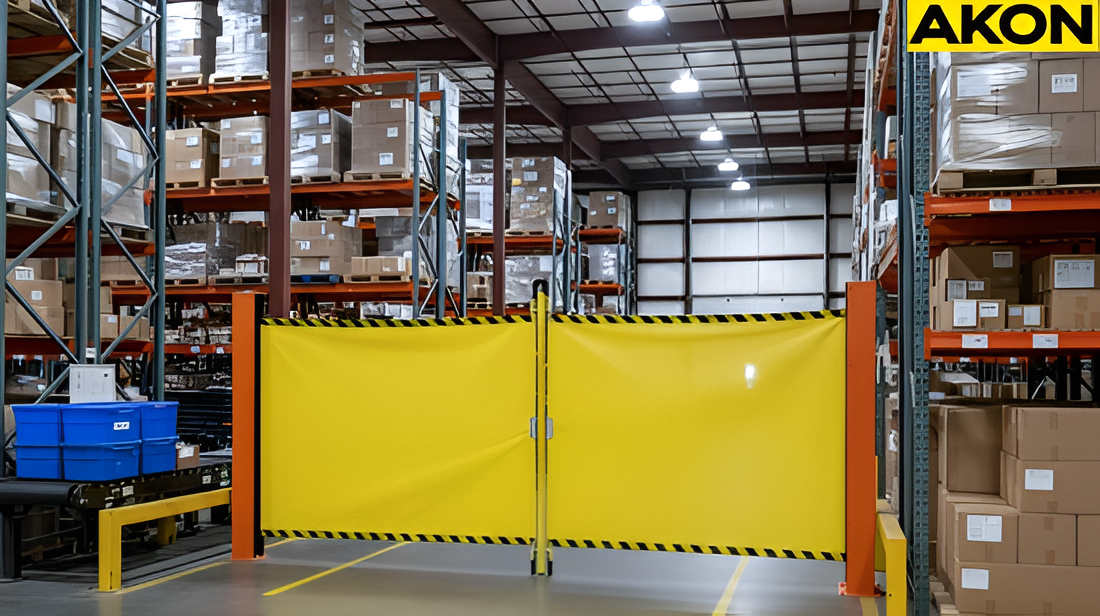
Floor tape, signs, and training rely on constant attention and consistent behavior. Over time, markings fade and warnings blend into the background.
In busy environments, pedestrians may assume operators see them, while operators expect walkways to stay clear. Without physical separation, near misses become more likely and often go unreported.
How Retractable Barriers Improve Forklift Safety
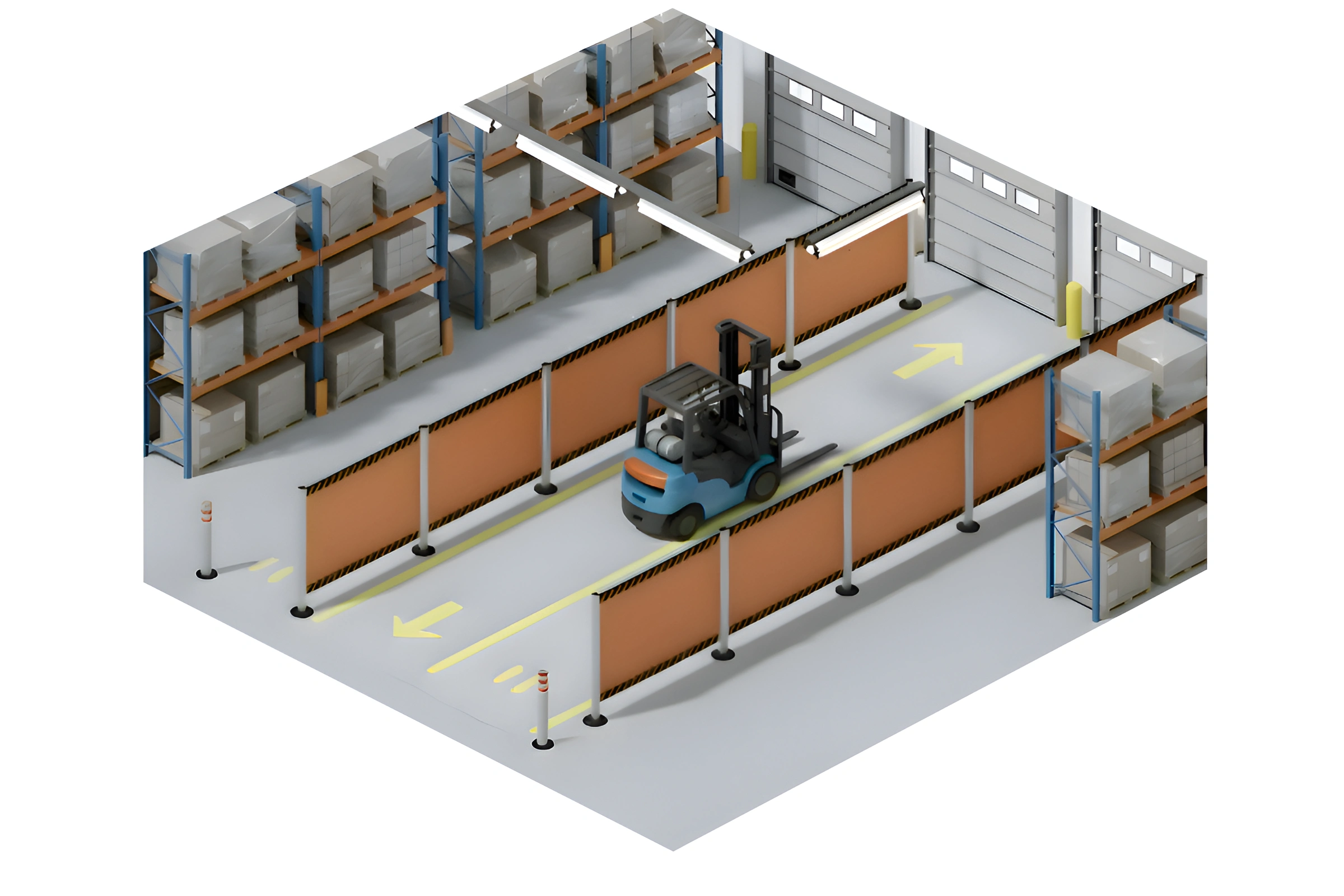
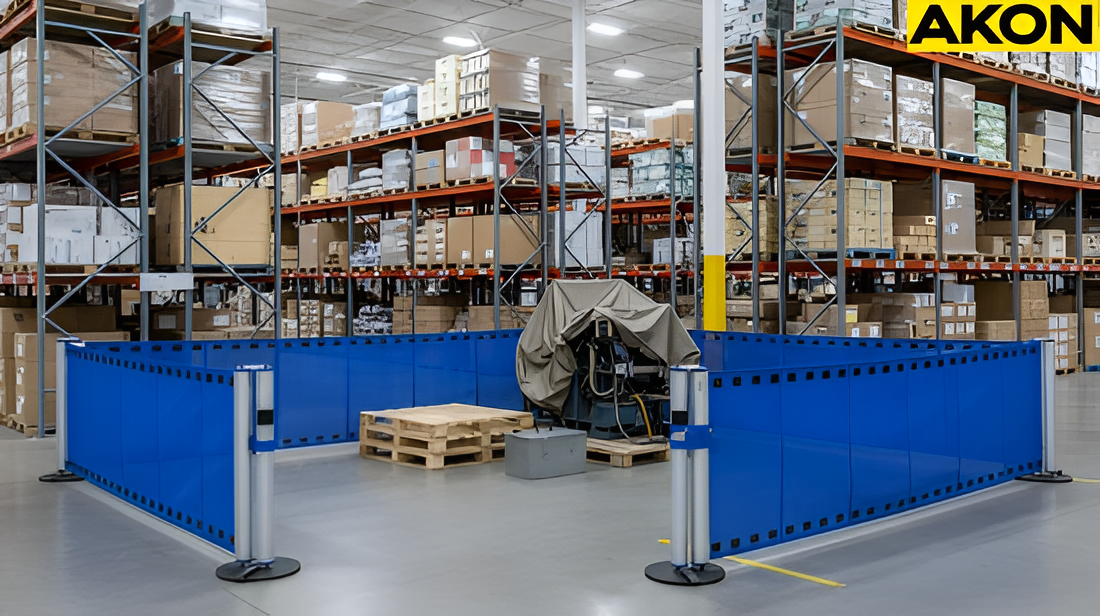
Once the risks of shared warehouse spaces are understood, the next step is controlling how people and equipment move through those areas. Retractable barriers improve forklift safety by creating clear, visible, and adaptable separation between pedestrian walkways and forklift routes, helping prevent unintended access to active traffic zones.
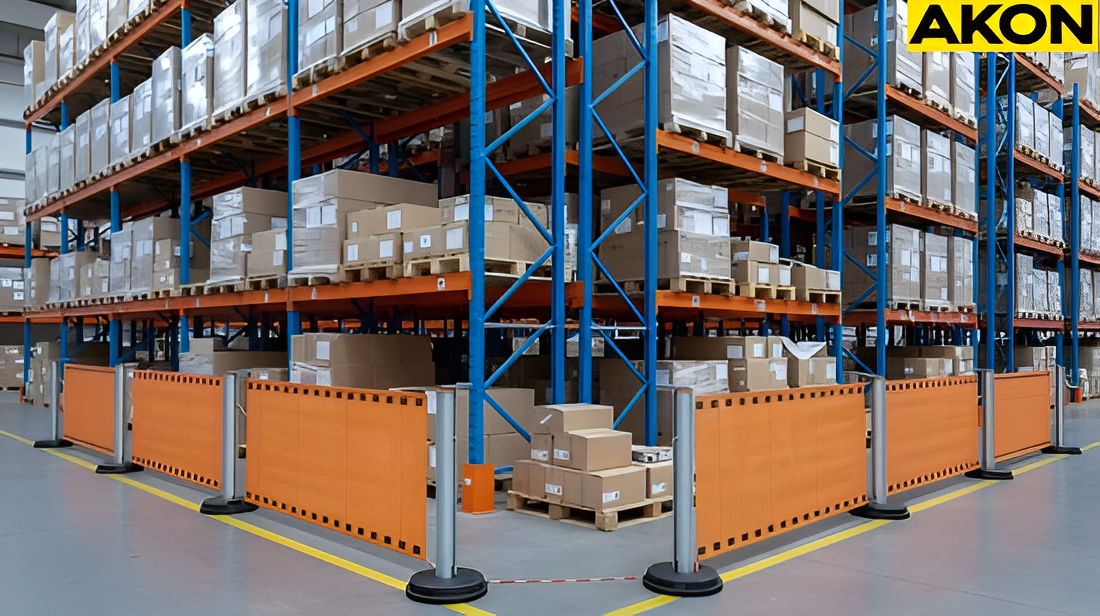
• Creates consistency across daily operations. Pedestrian routes stay defined as shifts change and activity levels increase. This consistency helps workers move with confidence and reduces uncertainty throughout the day.
• Improves safety for visitors and non-operators. Clear boundaries guide people who are unfamiliar with warehouse traffic patterns. This reduces hesitation, wrong turns, and accidental entry into forklift paths.
• Reinforces safe behavior through routine use. Visible separation encourages workers to follow designated paths without reminders. Over time, this helps safe movement become a normal habit rather than a conscious effort.
Physical Separation
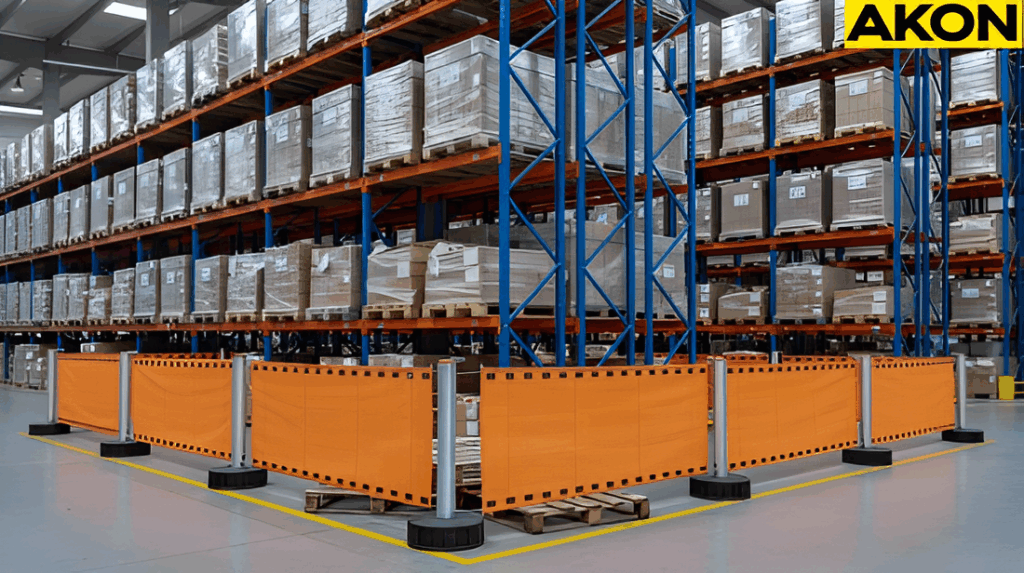
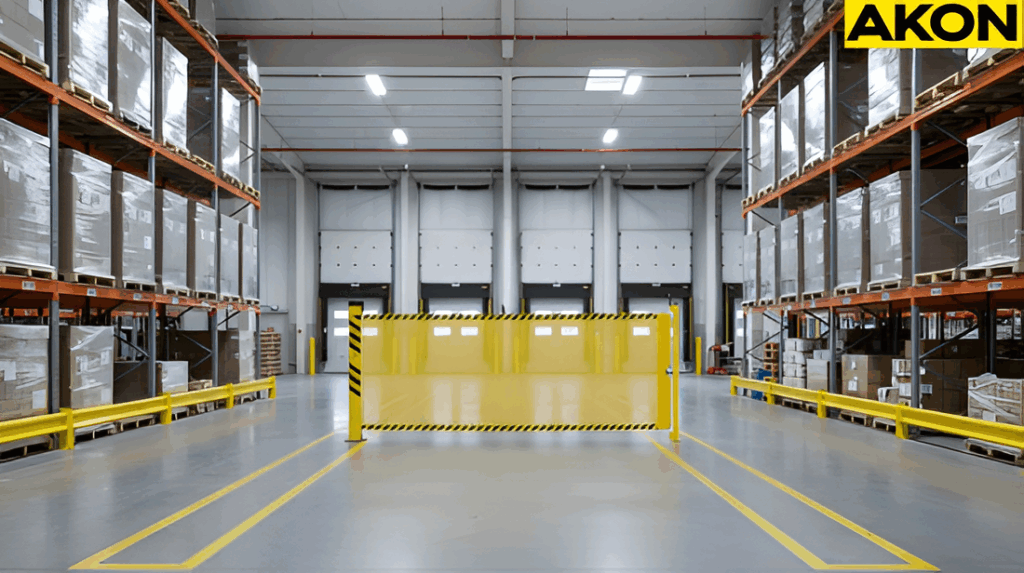
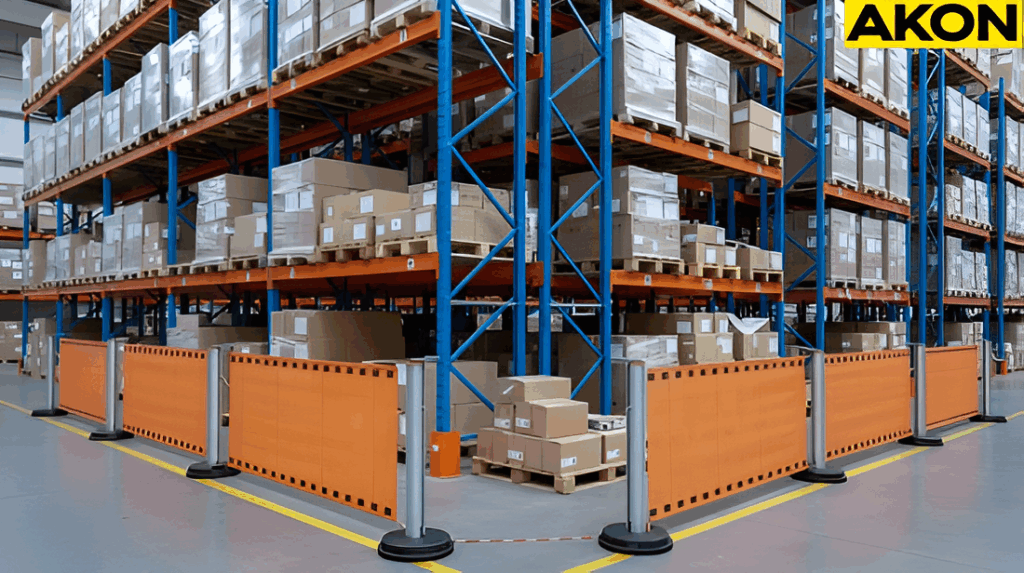
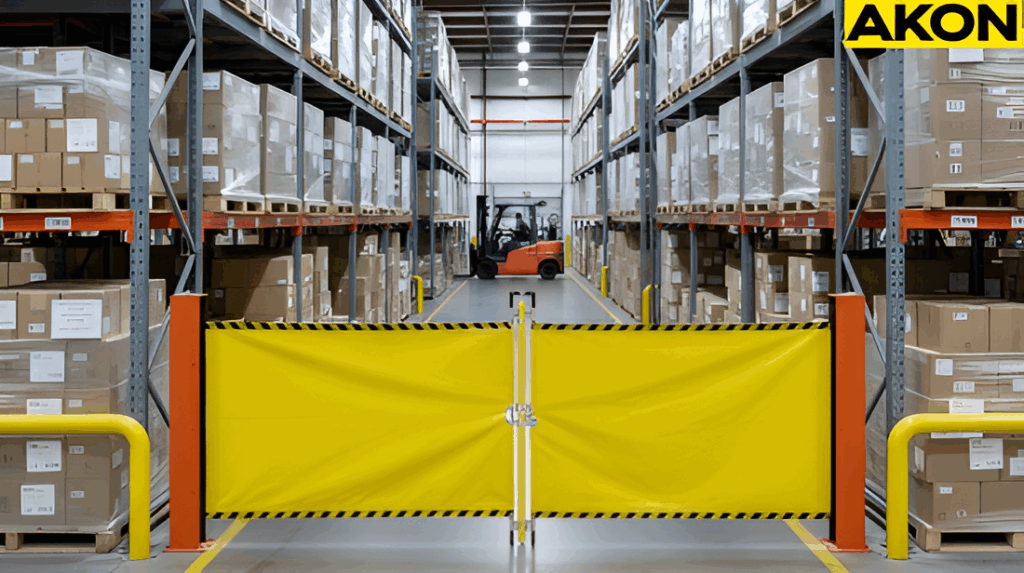
Retractable barriers create a physical boundary that prevents pedestrians from entering active forklift lanes.
High Visibility Guidance
The barrier clearly shows where pedestrian movement is allowed, even in busy or changing warehouse environments.
Flexible Safety Control
Access can be restricted or reopened quickly to match current workflows and traffic conditions.
Safety Barriers for Forklift and Pedestrian Control
Different warehouse areas call for different levels of control. Some safety barriers are meant to guide movement, while others are designed to restrict access more firmly. Comparing barrier types by separation level, visibility, flexibility, and use case helps safety teams apply the right control in the right place.
| Barrier Type | Level of Physical Separation | Visibility | Flexibility | Best Use Cases in Forklift Areas |
|---|---|---|---|---|
| Floor Tape and Paint | Low | Moderate at first | Low | General walkways where traffic patterns rarely change |
| Safety Signs and Cones | Low | Moderate | High | Short-term alerts and temporary warnings |
| Fixed Guardrails | High | High | Very Low | Permanent separation in high-traffic forklift zones |
| Retractable Barriers | Medium to High | High | High | Aisles, crossings, docks, and areas with changing workflows |
This comparison highlights why no single barrier fits every situation. Some options offer basic guidance, while others provide strong access control or adaptability. Evaluating barriers based on how they separate, how visible they are, and how easily they adjust helps create safer forklift environments without overcomplicating operations.
Retractable Barrier Solutions for Warehouse Forklift Safety
Selecting the right retractable barrier depends on how often access changes and where pedestrian control is needed. These solutions are designed to support safer movement by matching barrier type to real warehouse conditions.
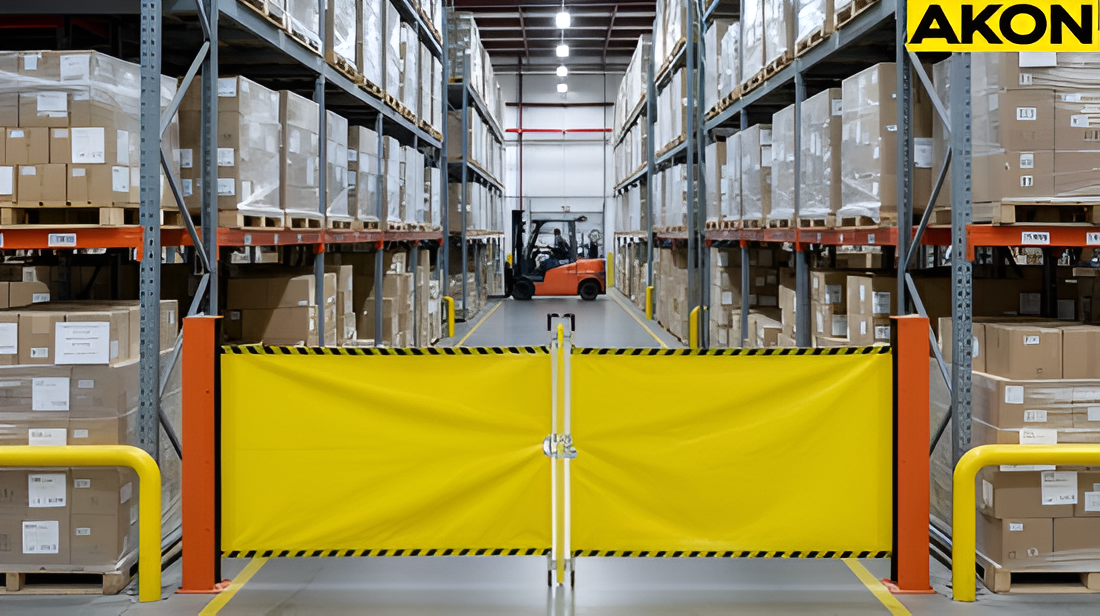
Industrial Roll Up Barricade – SB2000
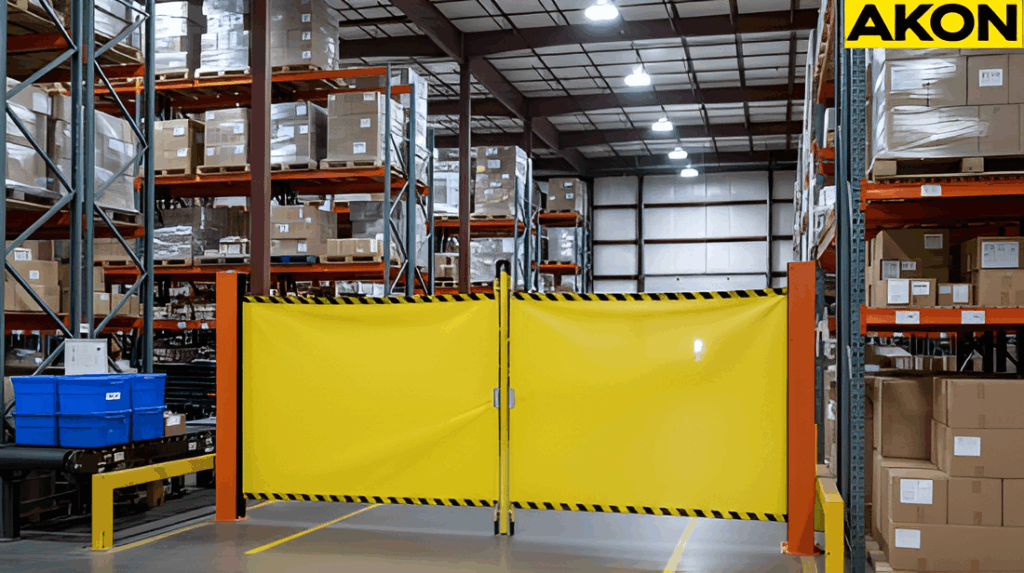
This barrier is designed for areas where access needs to be controlled regularly without being permanently blocked. It works well in locations that shift between open pedestrian use and restricted forklift activity.
• Ideal for walkways or zones that need to be closed and reopened throughout the day.
• Useful where pedestrian access is allowed at certain times but restricted during operations.
• Helps manage shared spaces without installing permanent barriers.
• Supports predictable traffic patterns that require routine access control.
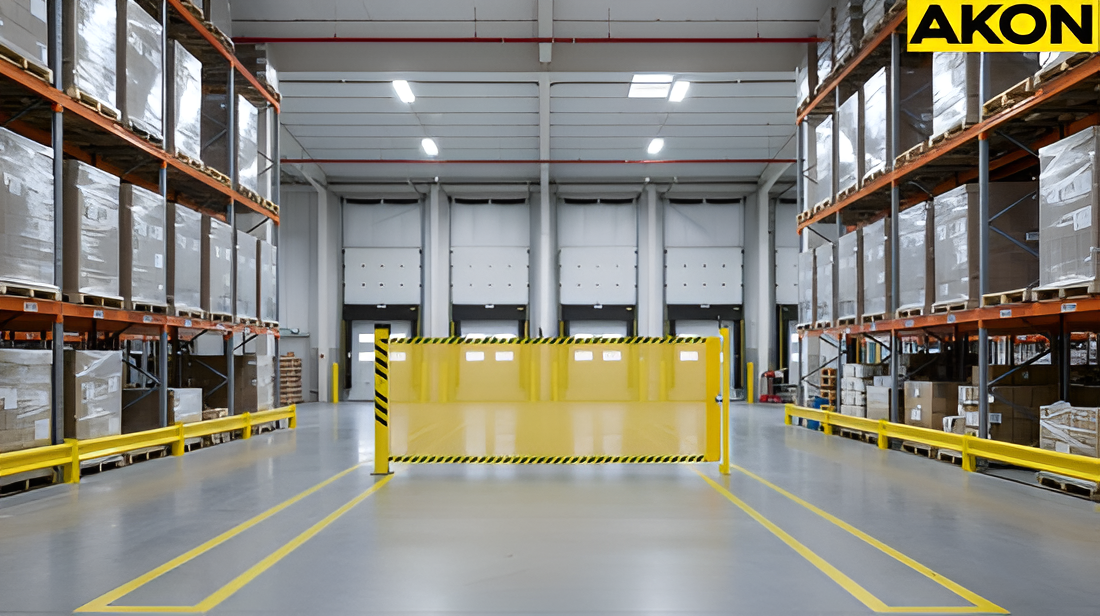
Industrial Retractable Barrier – SB3000
This option is suited for fixed locations where pedestrian access must be clearly defined and controlled. It fits well in areas that see steady forklift movement and ongoing operational activity.
• Well suited for dock edges, equipment zones, and restricted forklift paths.
• Provides a consistent boundary in areas that require regular access control.
• Works in locations that need structure without permanent construction.
• Helps guide pedestrian movement around active work areas.
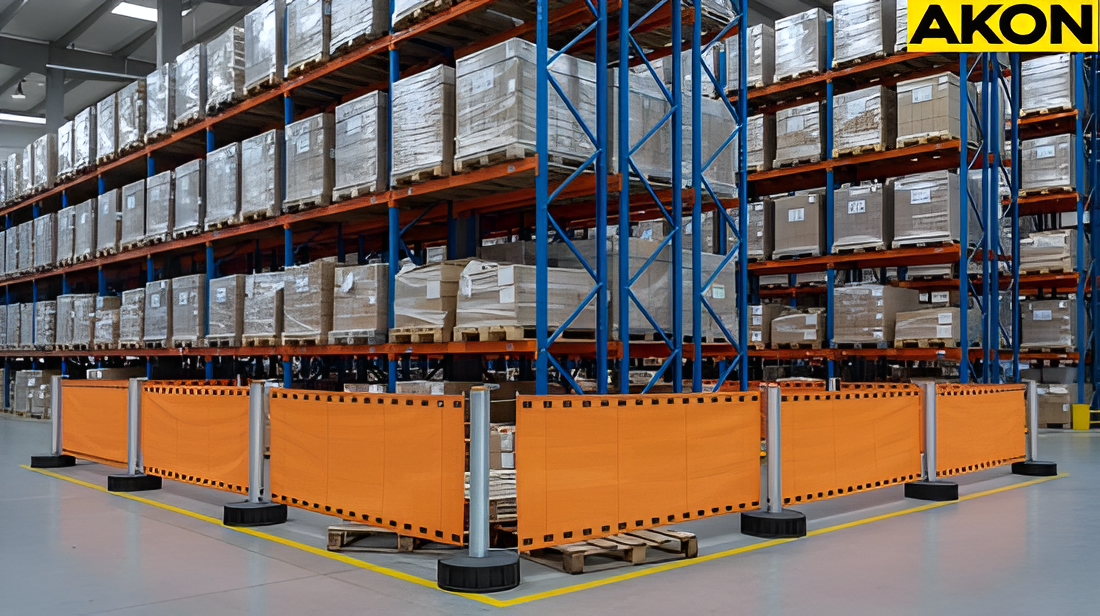
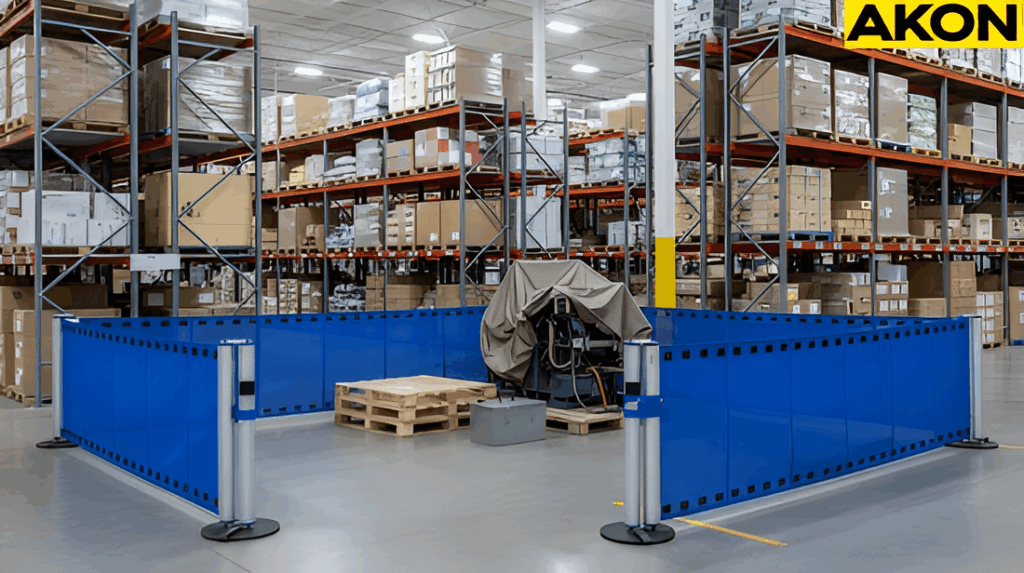
Portable Barrier – SB4000
This barrier is built for flexibility in fast-changing warehouse environments. It supports temporary control where pedestrian routes or forklift paths change throughout the day.
• Designed for quick deployment in shifting traffic layouts.
• Useful during maintenance, staging, or short-term operational changes.
• Can be repositioned as workflows evolve.
• Supports adaptable safety control in dynamic warehouse settings.
Frequently Asked Questions
FAQs About Warehouse Forklift Safety
How do retractable barriers reduce forklift accidents?
They limit pedestrian access to active forklift areas, reducing unexpected interactions. This helps lower the chance of near misses caused by people entering traffic zones.
Are retractable barriers better than fixed guardrails?
They are better when access needs to change throughout the day. Fixed guardrails are more suitable for permanent separation where layouts stay the same.
Where should retractable barriers be placed in a warehouse?
They work best in shared aisles, pedestrian crossings, dock approaches, and transition points. These are areas where foot traffic and forklift routes intersect.
Can retractable barriers be used temporarily?
Yes. Portable and roll-up barrier systems are commonly used for temporary access control during active operations.
Can retractable barriers be moved as layouts change?
Many warehouse barrier solutions are designed to be repositioned when workflows shift. This allows safety controls to adapt without permanent installation.
Do retractable barriers work in high-traffic forklift environments?
Yes. They are often used in busy areas where access needs to be controlled without stopping movement.
Are retractable barriers suitable for visitor safety?
They help guide visitors along approved walking paths. This reduces confusion and accidental entry into restricted forklift zones.
Can retractable barriers be used during maintenance or staging work?
They are commonly used to block off temporary work areas. This helps keep pedestrians clear while tasks are being completed.
Do retractable barriers replace floor tape or safety signs?
No. They are typically used alongside visual markings to add stronger access control.
Are retractable barriers difficult for staff to use?
Most systems are designed for simple deployment and retraction. Basic instruction is usually enough for daily use.
How quickly can retractable barriers be set up?
Many roll-up and portable barriers can be deployed in minutes. This allows teams to respond quickly to changing conditions.
Can retractable barriers support warehouse safety audits?
Yes. Clearly defined pedestrian and restricted areas help demonstrate controlled traffic flow during audits.
Do retractable barriers slow down warehouse operations?
When placed correctly, they help organize movement rather than slow it down. Clear routes often improve efficiency.
Are retractable barriers suitable for narrow aisles?
They can be used in narrow spaces depending on access needs. Placement should consider forklift clearance and pedestrian flow.
Can retractable barriers be used indoors and outdoors?
Some barrier systems are suitable for indoor use, while others can be used in covered outdoor areas. Environmental conditions should always be considered.
Do retractable barriers require special training?
They typically require minimal training. Staff only need to understand when and where barriers should be deployed.
How long do retractable barriers last in warehouse settings?
Their lifespan depends on usage and environment. They are built for repeated daily use in active facilities.
Can retractable barriers help reduce near misses?
Yes. By limiting unintended access, they help reduce close calls that often go unreported.
Are retractable barriers adaptable to different warehouse layouts?
Many systems can be adjusted to fit various aisle widths and access points. This supports flexible safety planning.
When should a warehouse consider adding retractable barriers?
They are worth considering when pedestrian routes overlap with forklift traffic. They are also useful when layouts or workflows change frequently.
Photo Gallery
Creating Safer Movement in Active Warehouses
Keeping pedestrians separated from forklift traffic is a key part of maintaining a safer warehouse environment. When clear boundaries are in place, the risk of near misses and injuries is reduced while daily operations continue to move efficiently. Retractable barriers offer a practical and flexible way to manage access as workflows change, helping keep pedestrian routes defined without disrupting movement. A good next step is to review where foot traffic and forklift paths intersect in your facility and explore barrier solutions that support safer operations.
Temporary Forklift Access Control