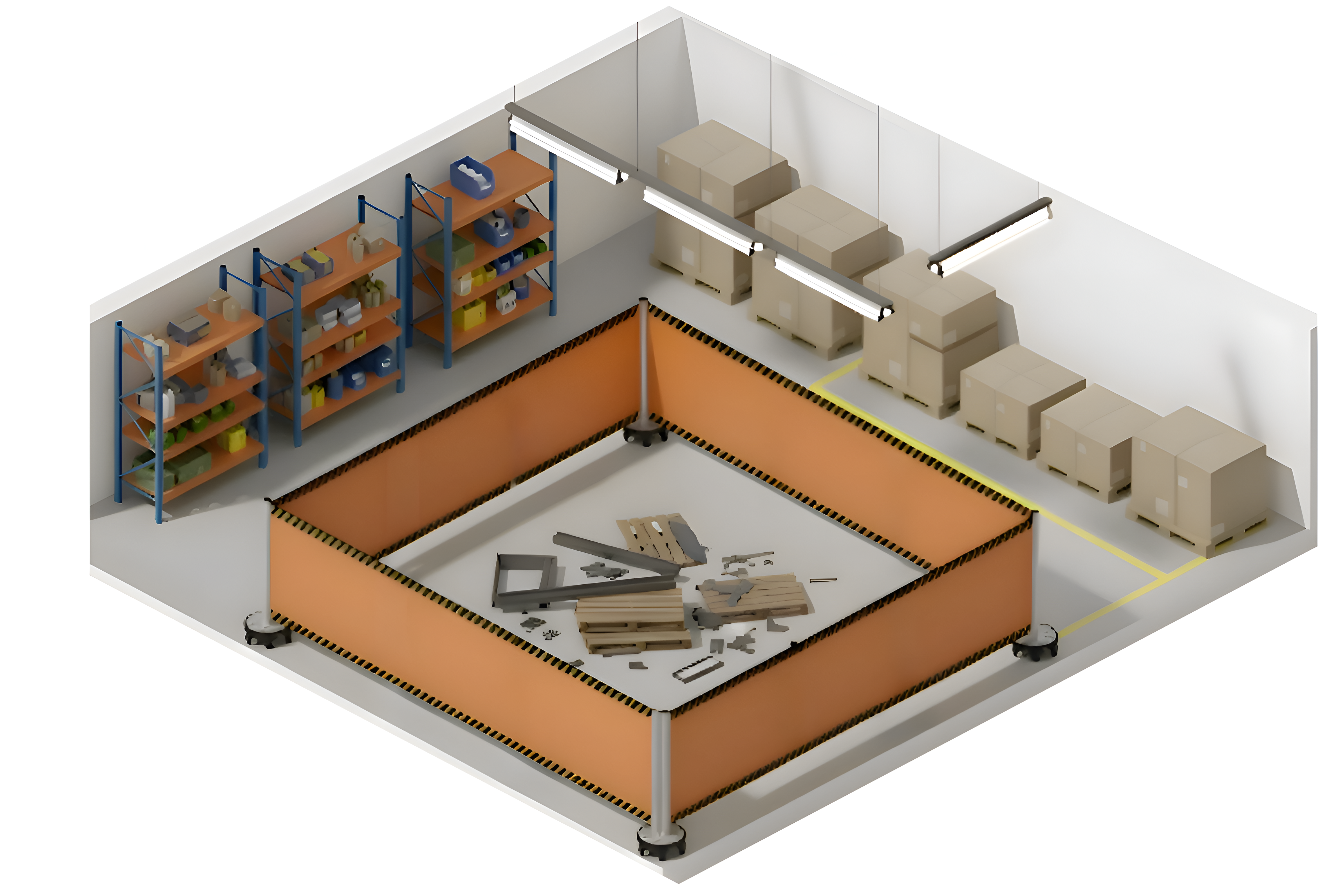
Retractable Barriers for Warehouse Pallet Racking Safety
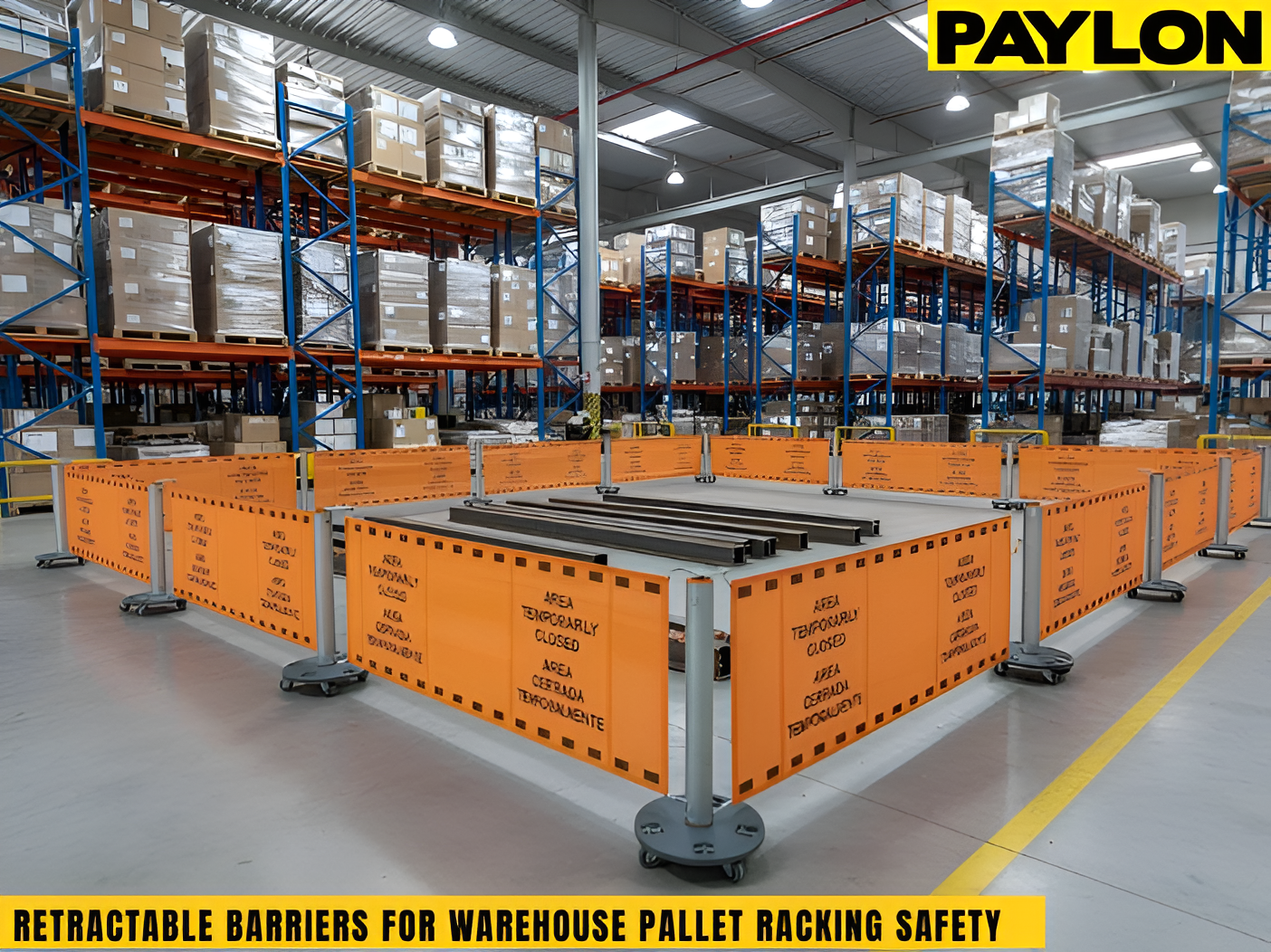
In warehouse operations, pallet rack damage from forklift impacts is a common issue that creates immediate safety risks. Retractable fence barriers provide a fast, temporary way to secure damaged rack rows. This article explains the risks, key benefits, barrier comparisons, recommended solutions, and FAQs to help teams respond safely and quickly.
Why Damaged Pallet Rack Rows Are a Safety Hazard
When pallet rack damage occurs, the concern extends beyond the visible impact. A compromised rack row can affect how loads are supported and how people move through the area. Understanding these risks helps explain why damaged racks require immediate attention.
How Rack Damage Affects Stability and Load Safety
Damage to rack uprights or beams can change how weight is carried across a rack row. Loads may sit unevenly or place stress on areas not designed to support it.
Over time, this can lead to shifting pallets or structural failure during routine loading and unloading. Even normal forklift movement nearby can add stress to an already weakened rack.
Why Basic Warnings Often Fail in Busy Warehouses
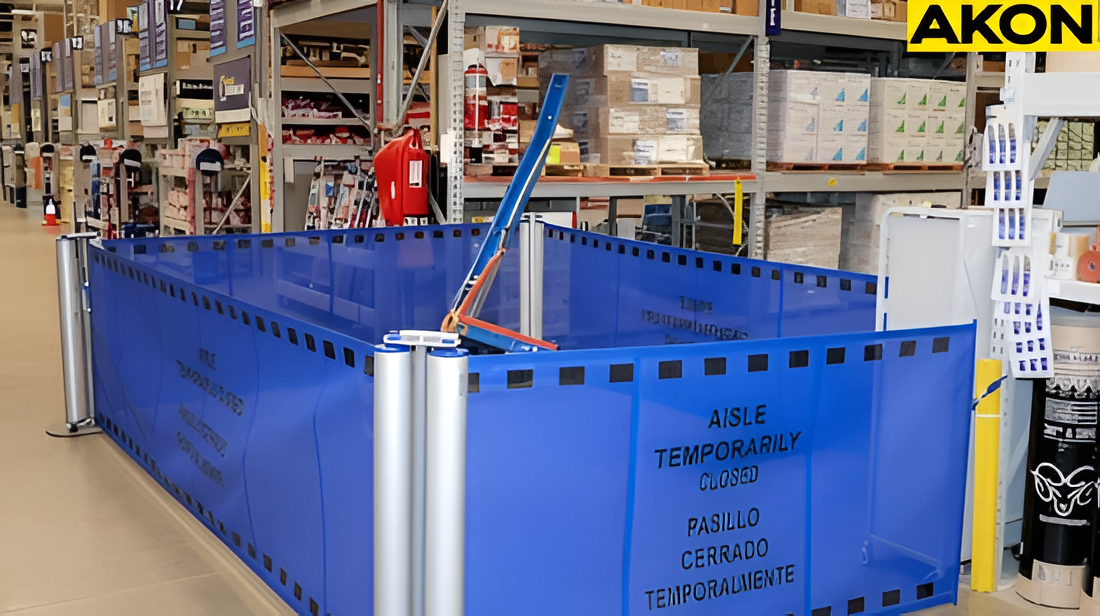
In active warehouse environments, cones, tape, or warning signs are easy to overlook or move. Forklift operators may continue using the aisle, and pedestrians may pass too close without recognizing the risk.
Without a clear physical boundary, damaged rack rows can remain accessible longer than they should. This increases the chance of secondary impacts or unplanned exposure to the hazard.
Key Safety Benefits of Retractable Fence Barriers for Damaged Rack Rows
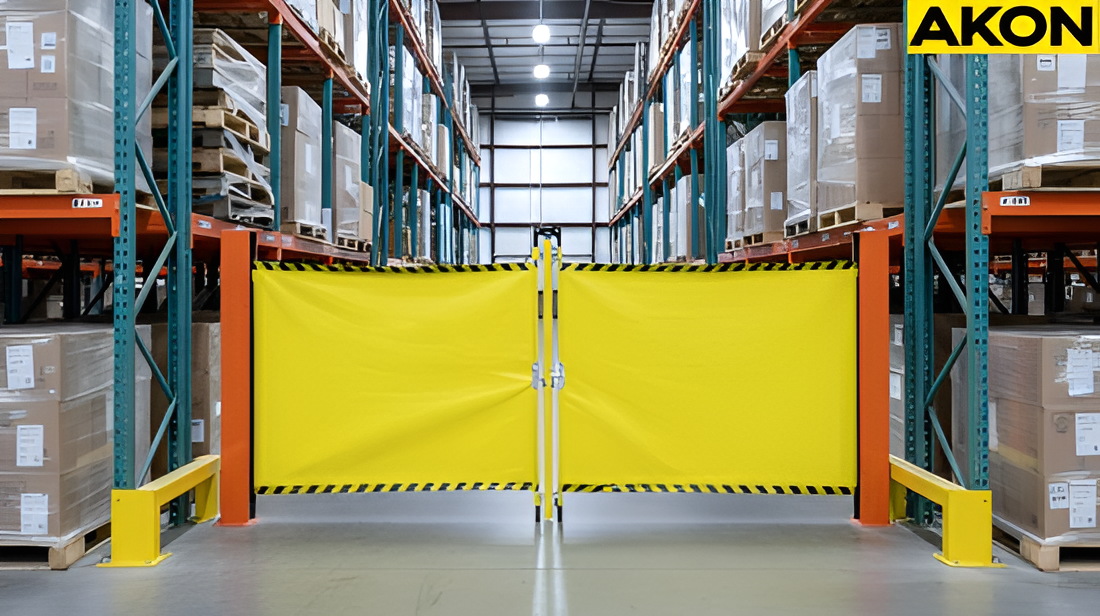
Once rack damage is identified, the next step is controlling access quickly and clearly. At this stage, the goal is to reduce exposure while inspections or repairs are planned. Retractable fence barriers provide practical benefits that support fast, controlled responses on the warehouse floor.
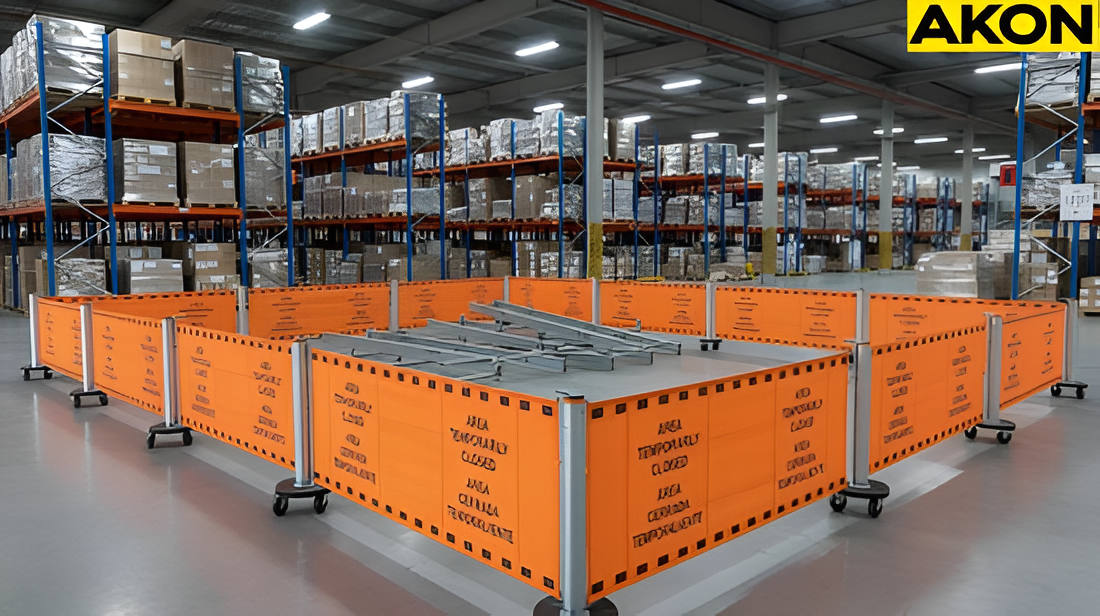
• Reduces response time. Teams can secure a damaged rack row as soon as it is noticed. This helps prevent delays while next steps are coordinated.
• Limits operational disruption. Barriers allow nearby work to continue safely without closing entire aisles. This supports productivity while managing risk.
• Reinforces safety expectations. Physical barriers make restricted areas clear and consistent. Over time, this improves awareness and compliance across the warehouse.
• Supports safer inspection and repair work. By clearly defining the restricted area, barriers give maintenance teams space to inspect or repair damaged racks without interruptions. This helps reduce secondary risks while work is being completed.
High Visibility Warning
Creates a clear visual boundary that signals restricted areas at a glance.
Immediate Hazard Isolation
Blocks access to damaged rack rows right away to prevent unintended entry.
Fast, Flexible Deployment
Can be deployed or moved quickly without permanent installation.
Barrier Options for Damaged Rack Rows
After knowing the safety benefits, the next step is understanding how different barrier options perform when a rack row needs to be secured. Not all barriers are designed for the same purpose. Some are meant only to signal caution, while others provide clearer control over access. This comparison helps teams quickly identify which option fits their situation.
| Barrier Type | Best For | Mobility | Visibility | Temporary Control |
|---|---|---|---|---|
| Retractable Fence Barriers (e.g., SB-4000) | Damaged rack rows and defined hazard zones | High | High | Excellent |
| Cones and Tape | Basic hazard marking | Very High | Low | Minimal |
| Fixed Barriers or Bollards | Permanent protection | Low | Medium | Not temporary |
| Portable Barricade Kits | Small or short-term zones | Medium | Medium | Good |
This table shows why retractable fence barriers are often preferred when rack damage needs to be addressed quickly. They provide stronger visual control than cones or tape, without committing to permanent installations that may not suit temporary rack repair situations.
Recommended Retractable Barrier Solutions for Warehouse Rack Safety
After comparing barrier options, the next step is selecting a solution that fits how your warehouse responds to rack damage. These retractable barrier products are designed to secure damaged rack rows quickly while adapting to different layouts and response needs.
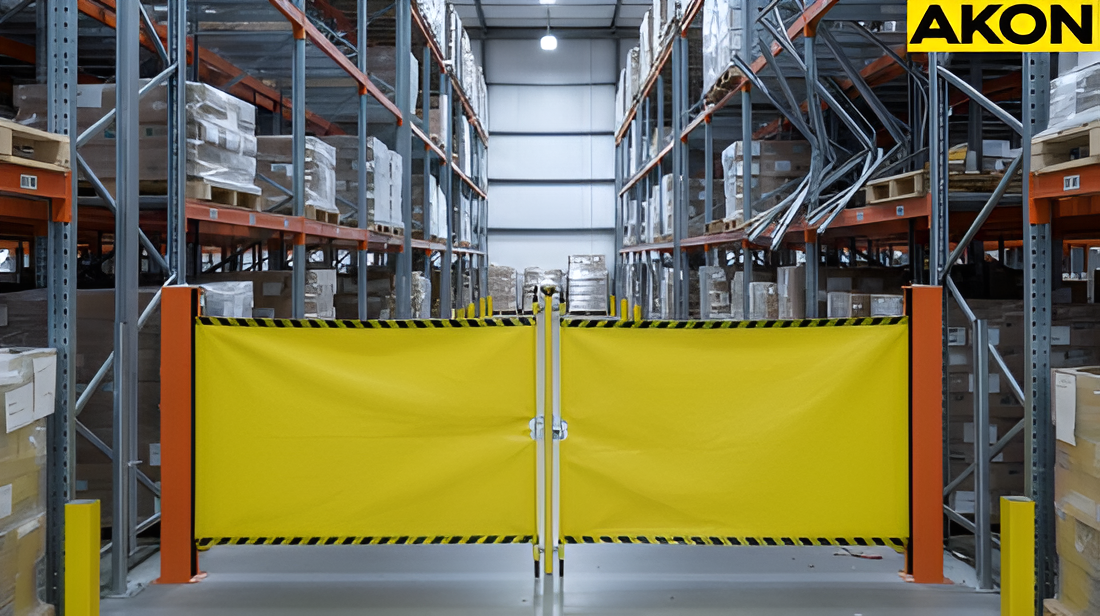
Industrial Roll Up Barricade – SB2000
The SB2000 is a fixed-post roll-up barricade built for repeated use in industrial environments. It is well suited for locations where damaged rack rows are likely to occur in the same areas.
• Designed for frequent deployment in high-traffic warehouse zones
• Rolls out quickly from a mounted post to secure access
• Provides clear visual separation around damaged rack rows
• Best for facilities that want a durable, repeatable safety setup
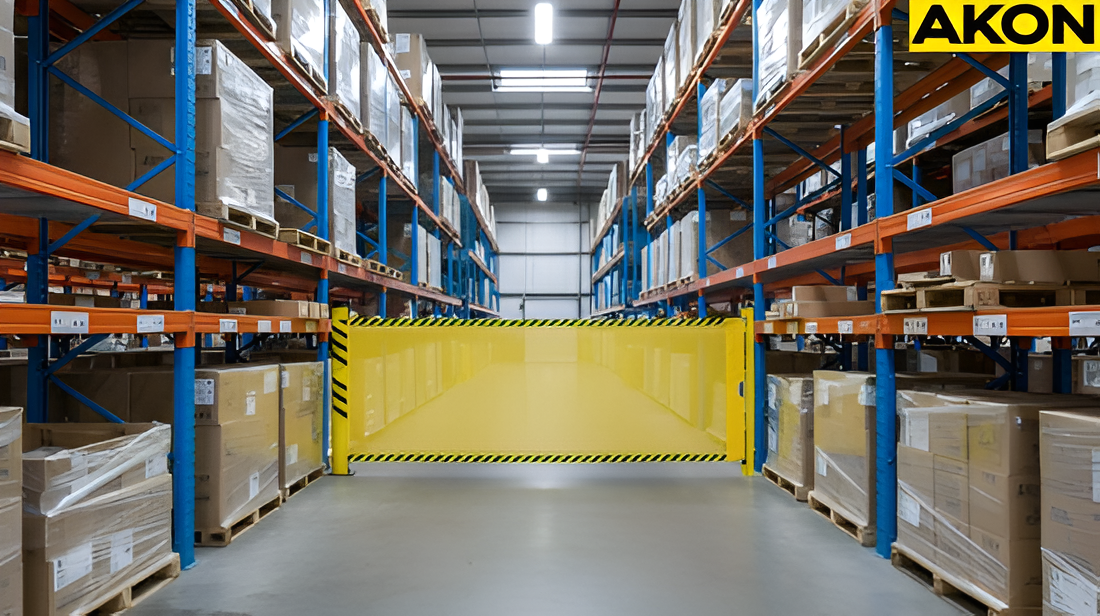
Industrial Retractable Barrier – SB3000
The SB-3000 offers a simpler retractable barrier option for temporary access control. It works well in areas where fast setup is needed without installing a larger system.
• Ideal for shorter rack sections or narrower aisles
• Easy to deploy and retract as conditions change
• Supports quick response without permanent modifications
• Good fit for warehouses with occasional rack damage
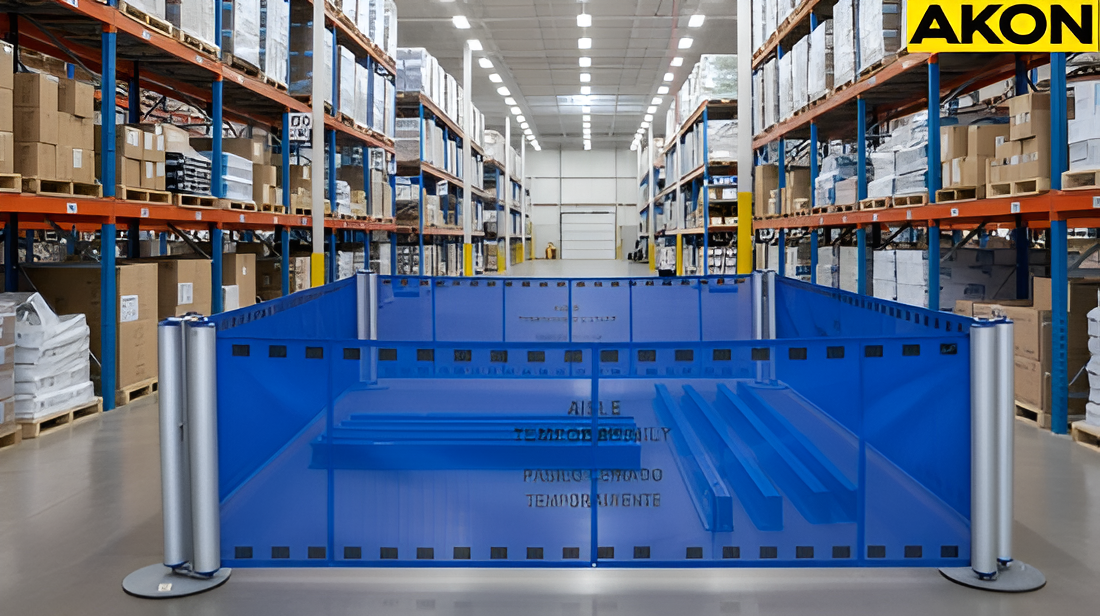
Portable Barrier – SB4000
The SB4000 is a portable retractable barrier designed for flexibility across the warehouse floor. It allows teams to create a defined hazard zone wherever rack damage is identified.
• Easy to move and position around damaged rack rows
• Creates a more complete visual boundary for larger areas
• Adapts well to changing layouts or temporary repair zones
• Best for facilities that need mobility and coverage
Frequently Asked Questions
FAQs About Pallet Racking Safety Barriers
What should I do if a pallet rack row is damaged?
Restrict access to the damaged rack row immediately. Many warehouses use solutions like the Portable Barrier SB4000 to secure the area while inspections or repairs are arranged.
Are retractable fence barriers a permanent fix for rack damage?
No. Products such as the Industrial Roll Up Barricade SB2000 are temporary controls used until the rack is repaired or replaced.
How fast can retractable barriers be set up after damage is found?
Most retractable barriers can be deployed within minutes. This allows teams to act quickly without waiting for specialized installation.
Do roll-up barricades stop forklifts if they hit them?
No. Barriers like the Industrial Retractable Barrier SB-3000 are designed to control access and visibility, not absorb vehicle impact.
Where should barriers be placed around damaged rack rows?
Barriers are typically placed at aisle entry points and along the damaged rack face. This clearly defines the restricted zone from multiple directions.
Which retractable barrier is best for repeated use in the same area?
The Industrial Roll Up Barricade SB2000 is often chosen for repeated use in fixed locations where rack damage tends to occur.
What barrier works best if rack damage happens in different areas?
The Portable Barrier SB4000 is a good option when barriers need to move frequently across the warehouse floor.
Are retractable barriers suitable for narrow aisles?
Yes. The Industrial Retractable Barrier SB-3000 works well in shorter spans and tighter spaces where wider systems are not practical.
Do these barriers require drilling or permanent mounting?
Some models are mounted, while others are portable. The right choice depends on how often the barrier needs to be relocated.
Can retractable barriers be reused after repairs are completed?
Yes. Once the rack is cleared for use, the barrier can be retracted or moved to another location.
Should loads be removed before placing a barrier?
If it can be done safely, removing loads is recommended. Barriers help control access during that process.
Can barriers be used during rack inspections?
Yes. Many facilities use retractable barriers to block access while inspections are underway.
Are retractable barriers visible in busy warehouse environments?
Yes. Products like the SB2000 and SB4000 are designed to stand out visually in industrial settings.
How wide of an area can these barriers secure?
Coverage varies by product. Portable systems typically cover larger or flexible areas, while fixed systems suit shorter spans.
Can multiple barriers be used together?
Yes. Warehouses often combine multiple barriers to secure longer or irregular rack sections.
Do retractable barriers replace safety training?
No. They support existing safety programs but do not replace training or proper rack maintenance.
How long should a damaged rack area stay blocked?
The area should remain restricted until the rack is inspected and confirmed safe for use.
Are these barriers suitable for both forklift and pedestrian areas?
Yes. They help clearly define restricted zones for anyone moving through the warehouse.
How do I choose between SB2000, SB-3000, and SB4000?
Choose based on how often the barrier will move, the width of the area, and how quickly access needs to be controlled.
When should a warehouse consider upgrading its barrier setup?
Facilities often upgrade when rack damage becomes frequent or when temporary warnings no longer provide enough control.
Photo Gallery
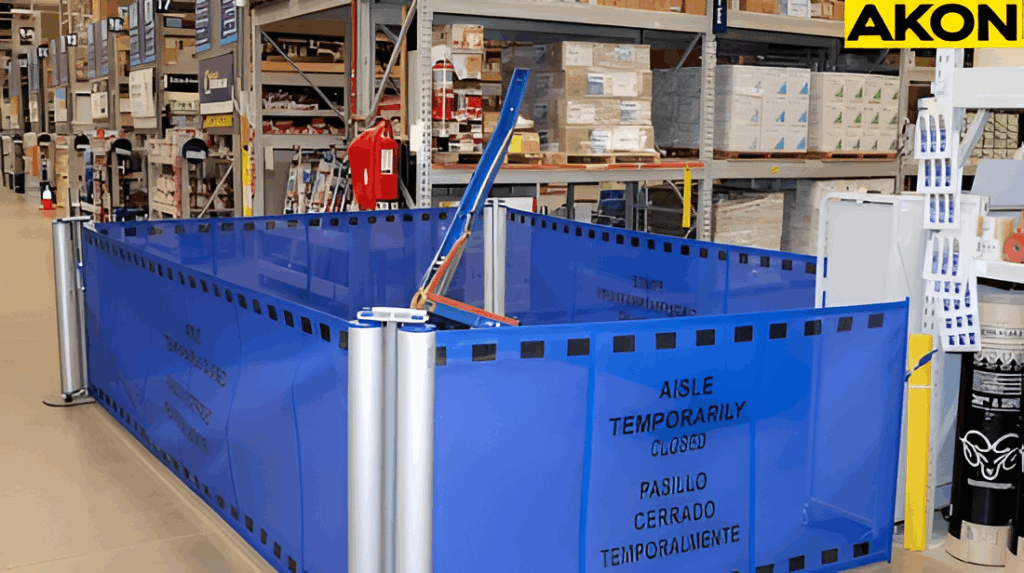
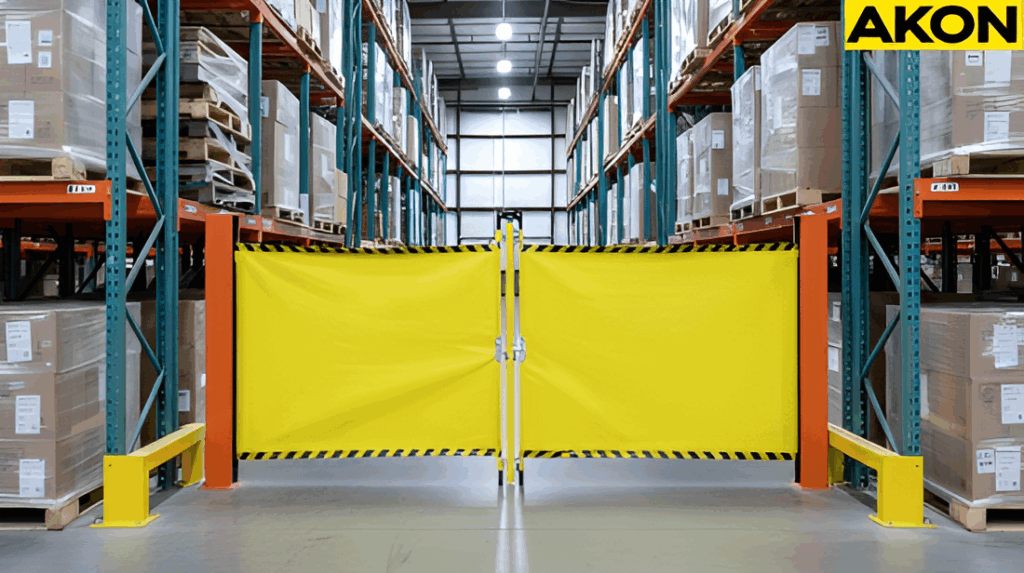
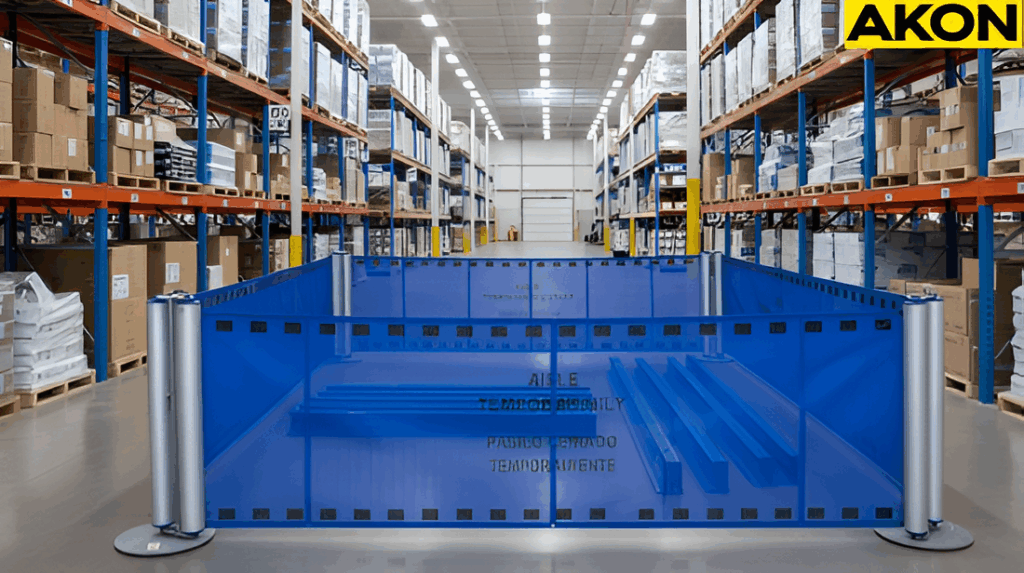
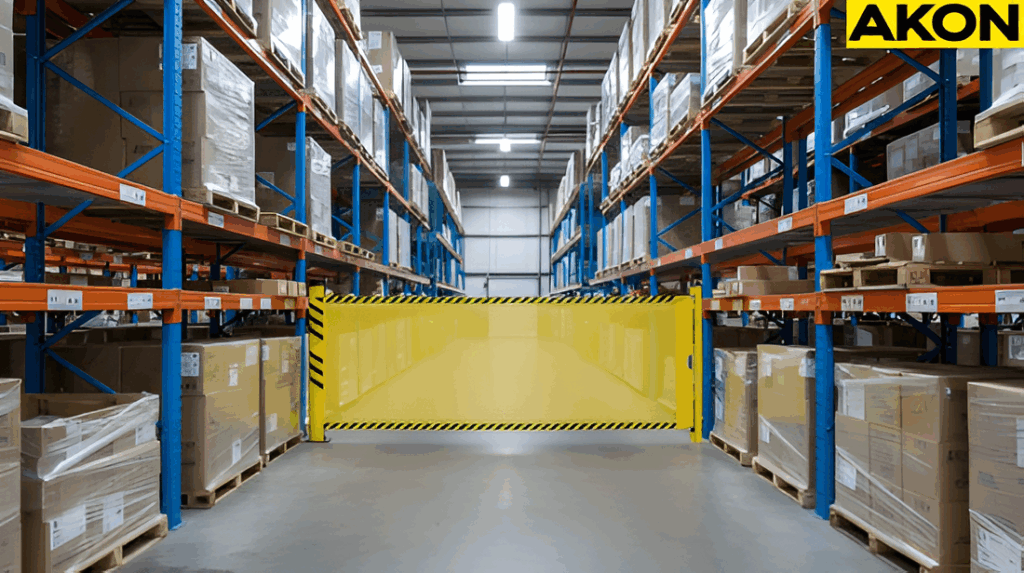
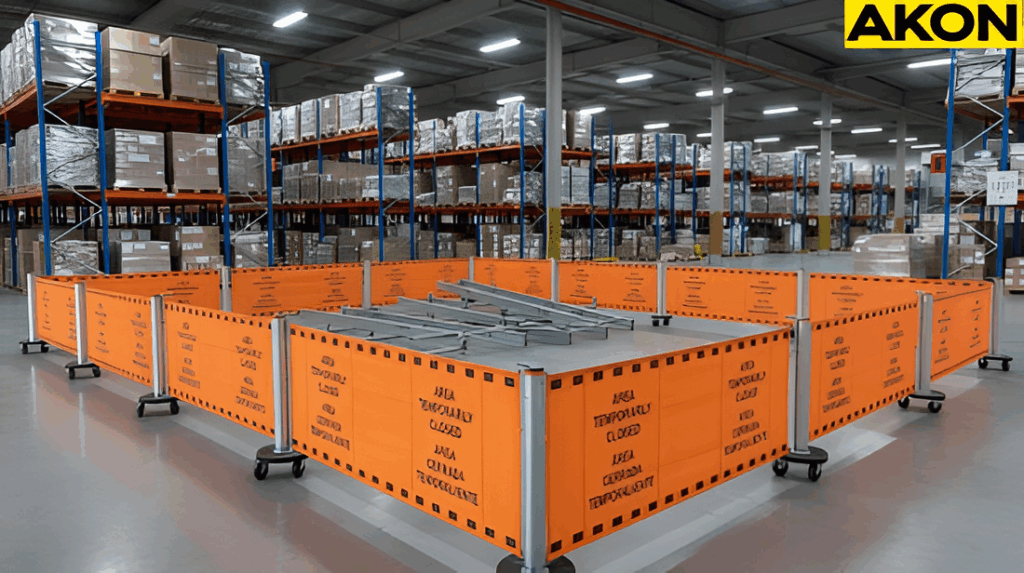
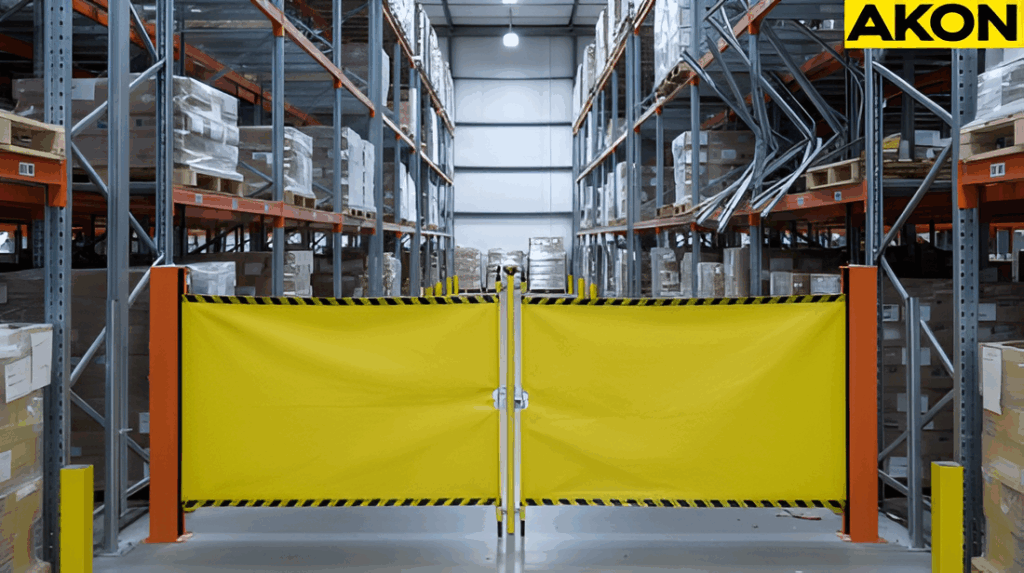
Securing Damaged Rack Rows Before Risks Escalate
Damaged pallet rack rows require immediate attention to protect workers and keep warehouse operations running safely. Retractable fence barriers provide a fast and highly visible way to control access while inspections or repairs are scheduled, without disrupting nearby activity or committing to permanent changes. Reviewing your rack layout and response process in advance helps ensure the right barrier solution is ready, allowing your team to act quickly, confidently, and safely when rack damage occurs.
Controlled Access After Pallet Rack Damage