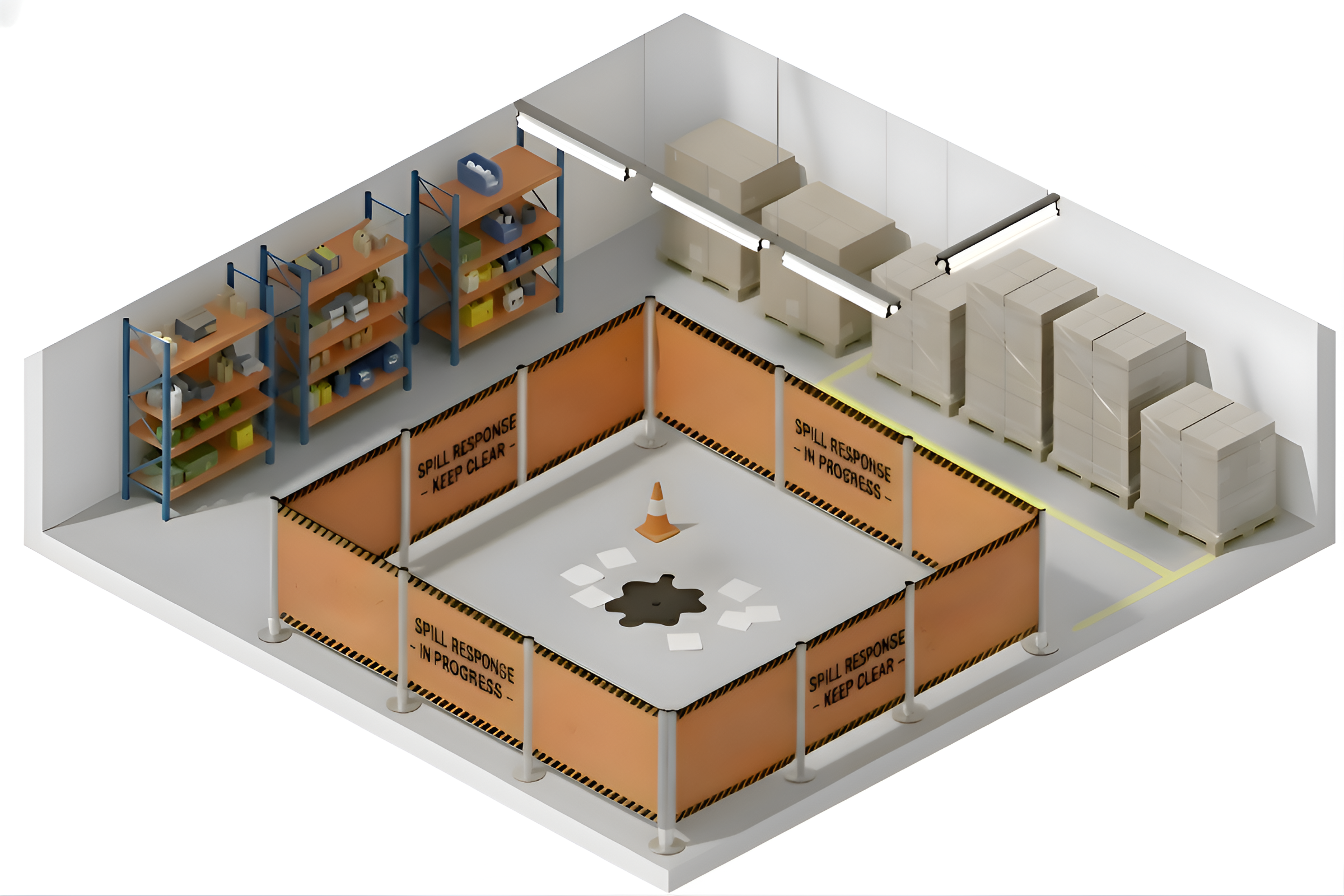
Retractable Barriers for Warehouse Safety Messaging
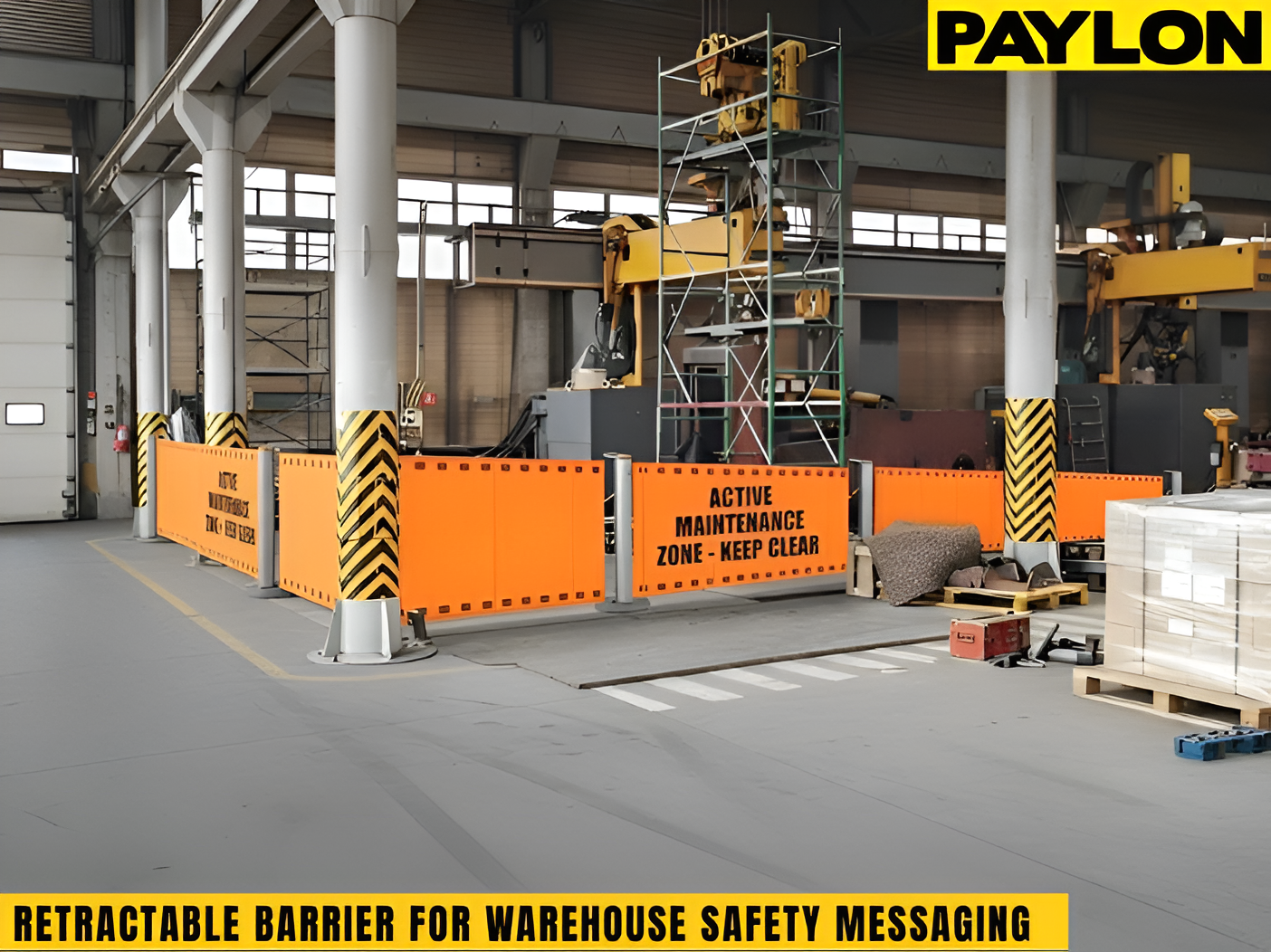
Warehouse safety messages are often missed in fast-moving environments. This article explains why traditional safety communication falls short, how custom printed retractable barriers help improve visibility and control, and how they compare to other options. You will also see where these barriers work best, review practical solutions, and find answers to common safety questions for real warehouse conditions.
Why Traditional Warehouse Safety Messaging Often Fails
Even with clear safety policies in place, communication can break down when warning methods do not match the pace of daily warehouse activity. Many facilities rely on familiar tools that slowly lose effectiveness as conditions change and workers see the same messages over and over.
Safety Warnings Blend Into the Background
Wall signs and posted notices are often installed once and left unchanged. As workers follow the same routes each shift, these messages become easy to overlook.
Repeated exposure reduces urgency, especially in busy areas where attention is divided between tasks, equipment, and foot traffic. Over time, important warnings stop standing out because nothing about them feels new or immediate.
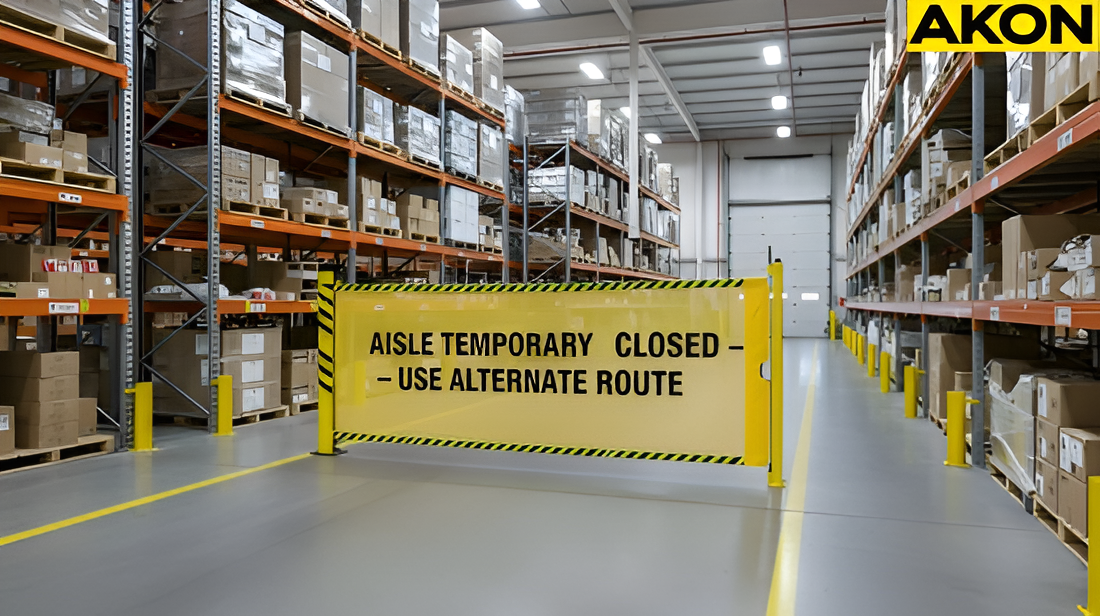
Static Warnings Do Not Match Changing Hazards
Tape and cones can restrict movement, but they rarely explain the risk behind the restriction. Without clear context, workers may hesitate or choose to move around the warning. This issue becomes more common when hazards are temporary.
Dock activity, maintenance work, and floor conditions can shift quickly, while traditional signage remains unchanged. As a result, safety messaging often lags behind real conditions on the warehouse floor.
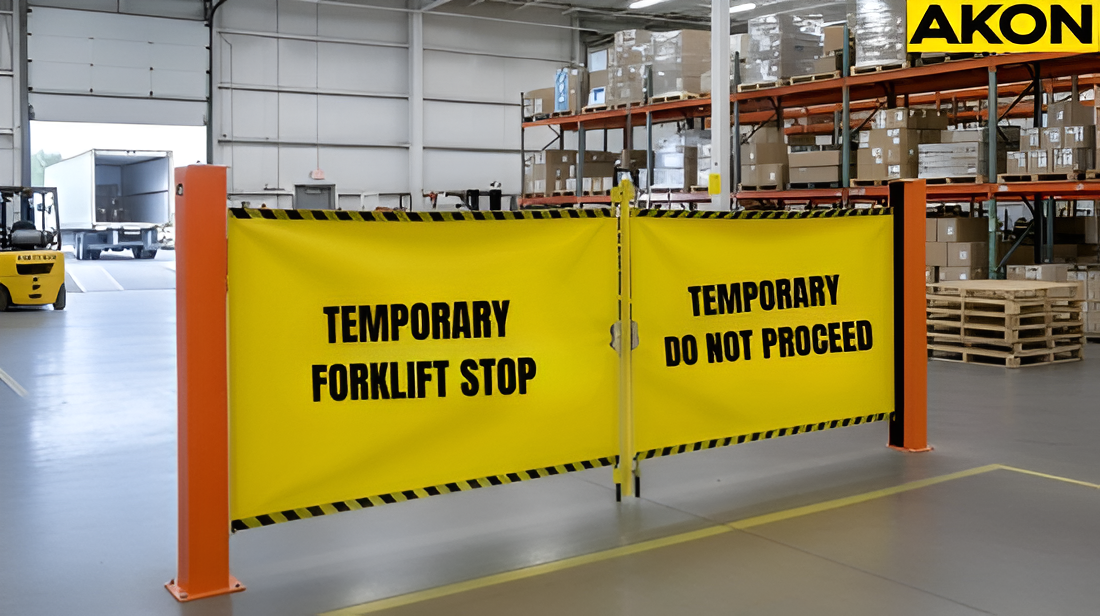
How Custom Printed Retractable Barriers Improve Worker Awareness
After knowing how easily traditional warnings fade or fall behind changing conditions, it becomes clear that safety messaging needs to meet workers where decisions are actually made. Custom printed retractable barriers do this by placing clear instructions directly in active work areas, helping workers recognize hazards and respond without hesitation as they move through the warehouse.
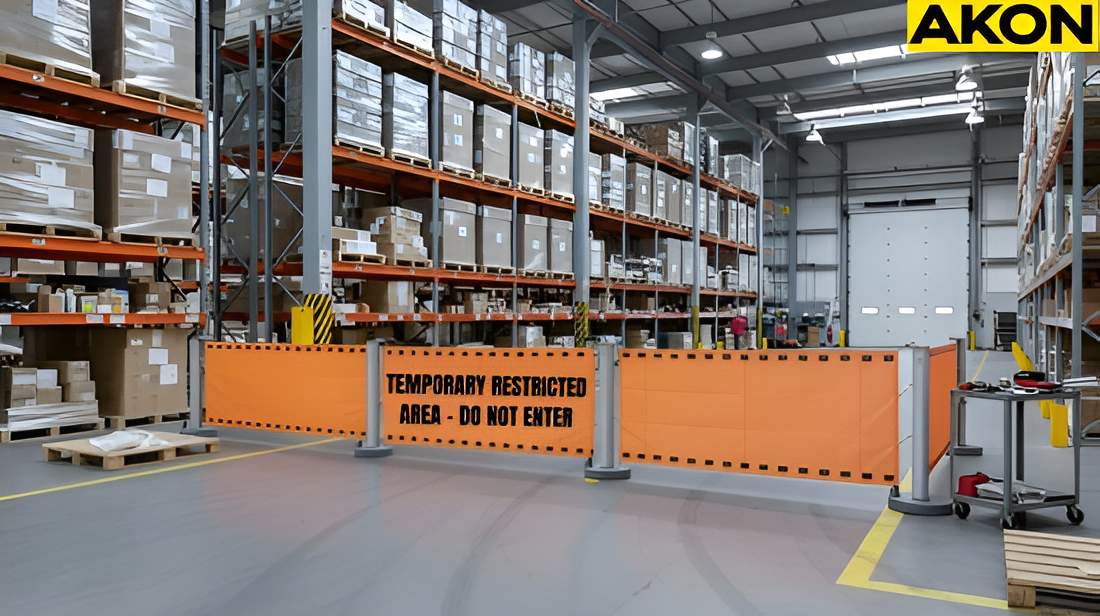
• Clear decisions at the right moment. Workers see the message exactly where action is required. This reduces hesitation when moving through shared spaces. Clear placement helps prevent split-second mistakes.
• Less reliance on verbal enforcement. Visual messaging lowers the need for supervisors to repeat the same warnings. Workers can understand restrictions on their own. This keeps teams focused while maintaining safety standards.
• Consistent communication across shifts. Printed messages stay the same no matter who is on duty. This helps ensure every worker receives the same guidance. Consistency supports safer habits over time.
Harder to Miss
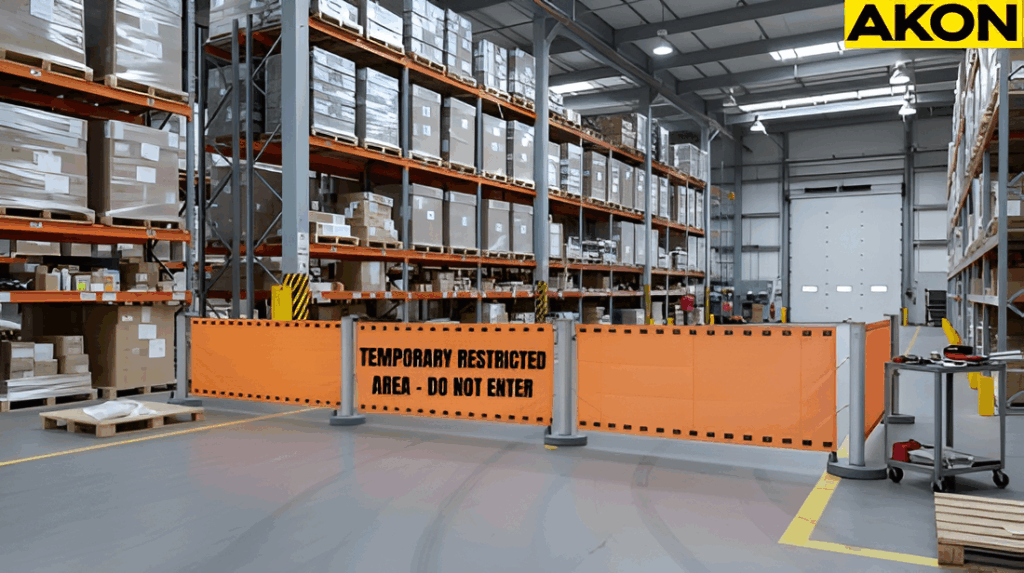
Printed warnings are integrated into the barrier itself, placing the message directly in front of workers at the exact point where movement needs to slow, stop, or change.
Improves Worker Compliance
A physical barrier paired with clear wording removes uncertainty and helps workers understand expectations without relying on constant reminders.
Adapts to Changing Conditions
Retractable barriers allow safety messages to appear or be removed as conditions change, keeping warnings aligned with dock activity, maintenance tasks, or layout adjustments.
Safety Messaging Options in Warehouse Environments
After understanding how worker awareness improves when messaging is placed directly in active areas, it helps to look at how common safety communication methods perform side by side. Each option can signal caution, but they differ in how clearly they communicate risk and how well they adapt to daily warehouse conditions. The table below provides a quick comparison based on factors that matter most on the floor.
| Safety Messaging Option | Visibility in Busy Environments | Flexibility for Temporary Hazards | Clarity of Messaging | Worker Response and Compliance |
|---|---|---|---|---|
| Static Signs and Tape | Low. Easily overlooked after repeated exposure. | Low. Fixed placement limits quick updates. | Limited. Often lacks clear context at the hazard. | Inconsistent. Messages are frequently ignored over time. |
| Cones or Rope Barriers | Moderate. Visible but easy to step around. | Moderate. Can be moved but require manual effort. | Low. Restricts access without explaining risk. | Variable. Heavily dependent on supervision. |
| Custom Printed Retractable Barriers | High. Positioned directly in active pathways. | High. Deployed or removed as conditions change. | Clear. Messaging explains restrictions at the point of use. | Strong. Encourages faster understanding and safer decisions. |
This comparison makes it easier to see why some safety messaging methods struggle in fast-paced environments. By evaluating visibility, flexibility, and clarity together, safety teams can better identify which option aligns with areas where conditions change quickly and worker response matters most.
Recommended Retractable Barrier Solutions for Warehouse Safety
Once safety messaging options are compared, the next step is choosing solutions that match how different areas of a warehouse actually operate. The following retractable barriers support clear messaging, portability, and flexible use as conditions change throughout the day.
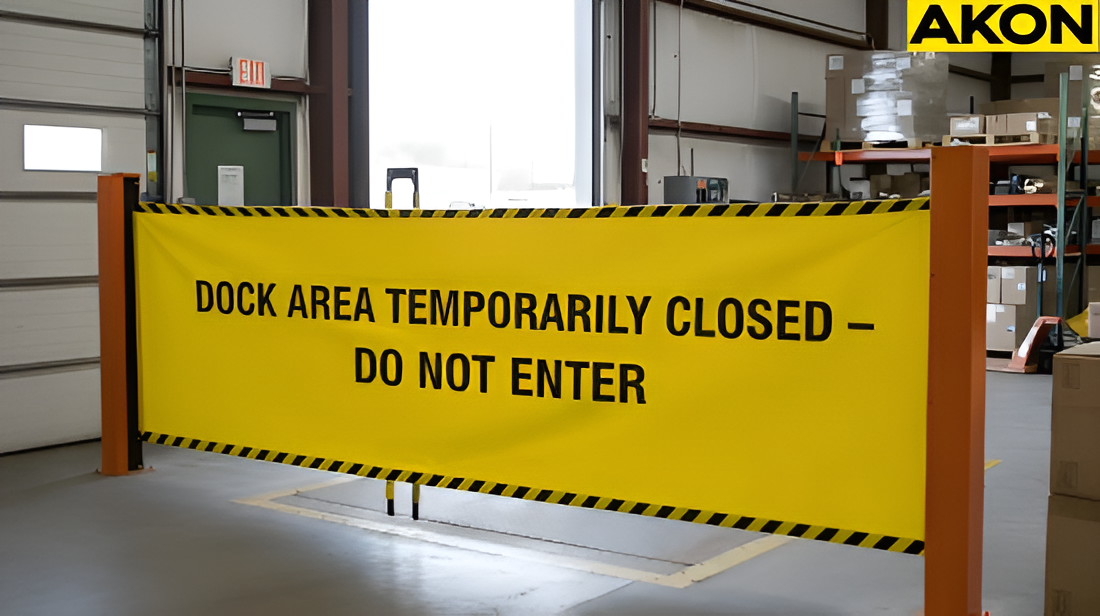
Industrial Roll Up Barricade – SB2000
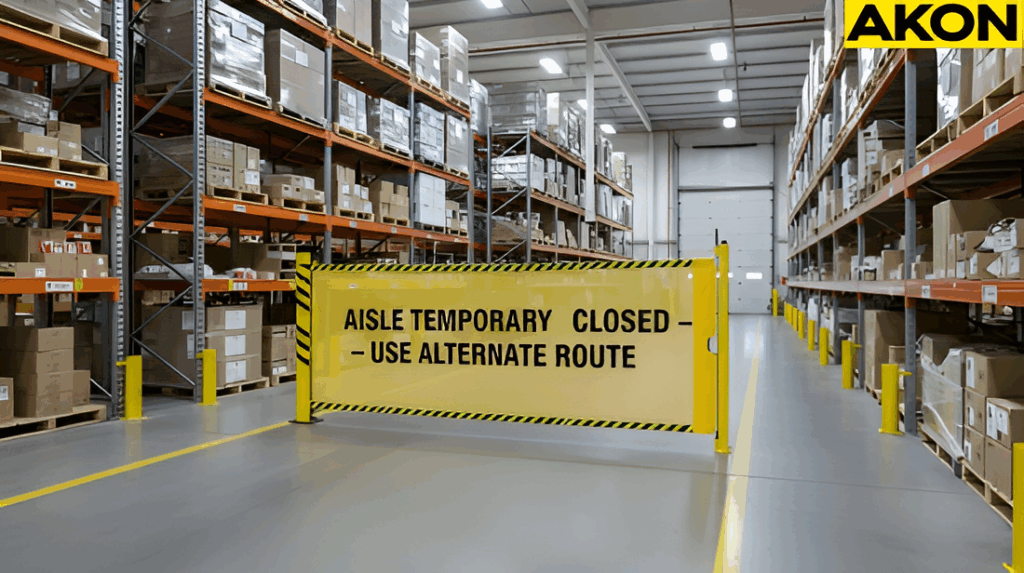
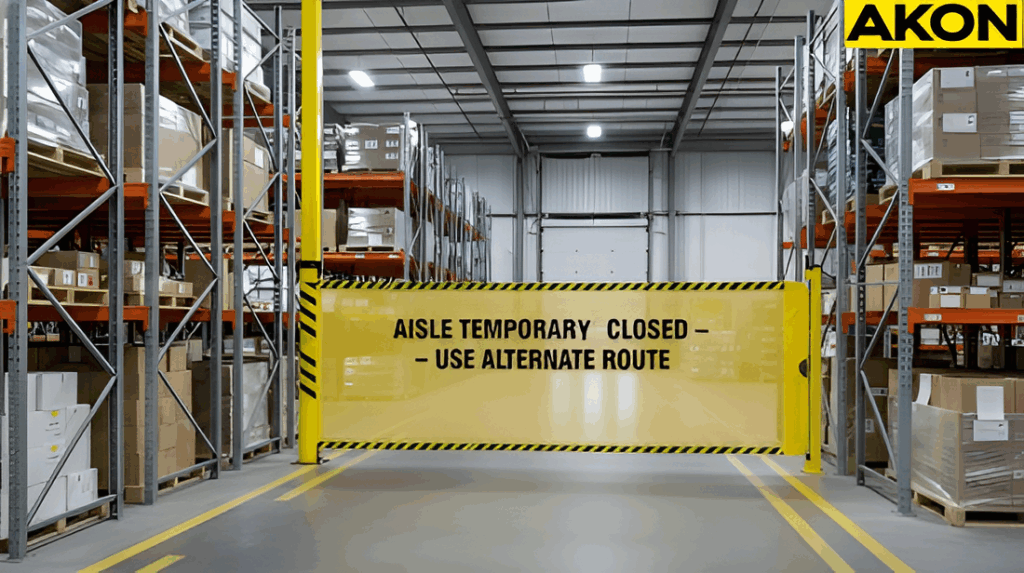
The SB2000 is designed for areas where access needs to be controlled temporarily without creating a permanent obstruction. It works well in spaces that open and close frequently and require clear visual separation during active periods.
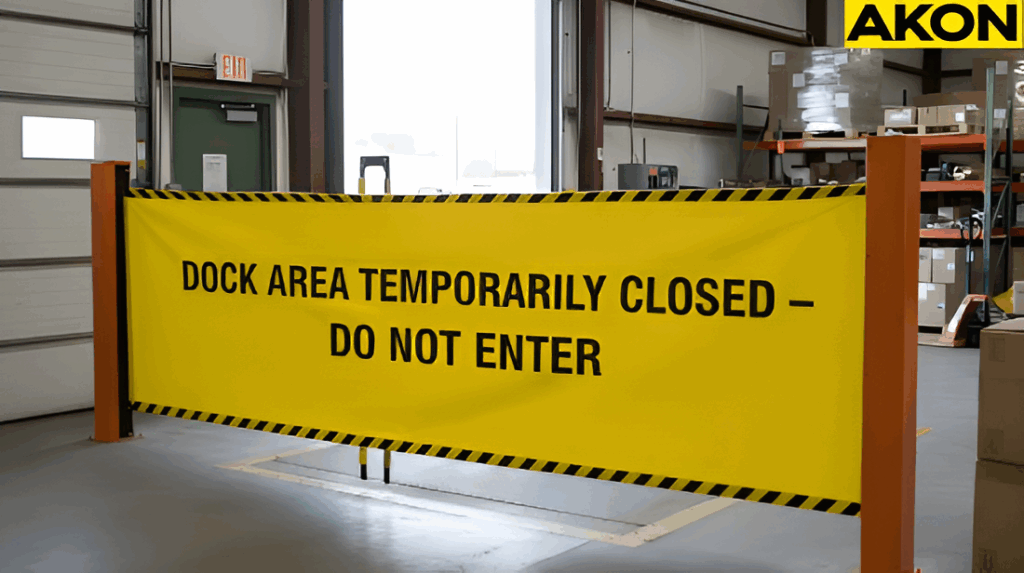
• Works well at dock edges and aisle openings. The barrier can be extended when access needs to stop and cleared when operations resume. This helps keep safety messaging aligned with changing dock activity.
• Supports clear messaging at entry points. Printed warnings are visible as workers approach the restricted area. This reduces hesitation and uncertainty.
• Fits spaces with frequent access changes. Areas with shifting traffic patterns benefit from a barrier that is only present when needed.
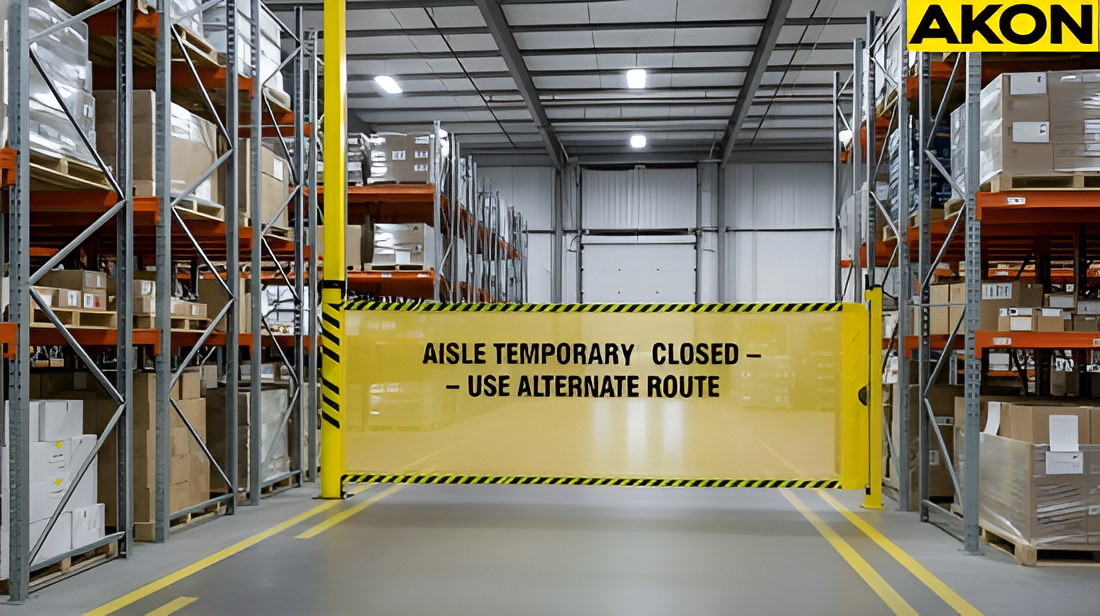
Industrial Retractable Barrier – SB3000
The SB-3000 is a strong option for controlled zones where visibility and straightforward operation are important. It allows teams to manage access during active work periods while keeping the space flexible when conditions return to normal.
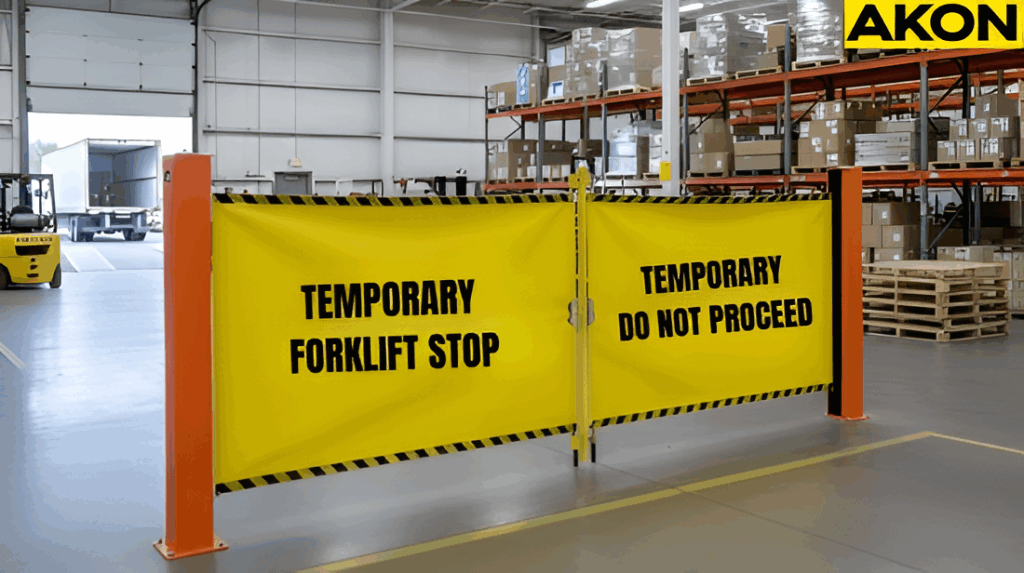
• Useful in forklift routes and shared traffic zones. The barrier helps signal when an area is restricted without permanently blocking workflow.
• Keeps messaging visible during active use. Safety messages are easy to see when the barrier is extended and are removed when access is restored.
• Adapts to daily operational shifts. This solution works well in areas that move between open and restricted states throughout the day.
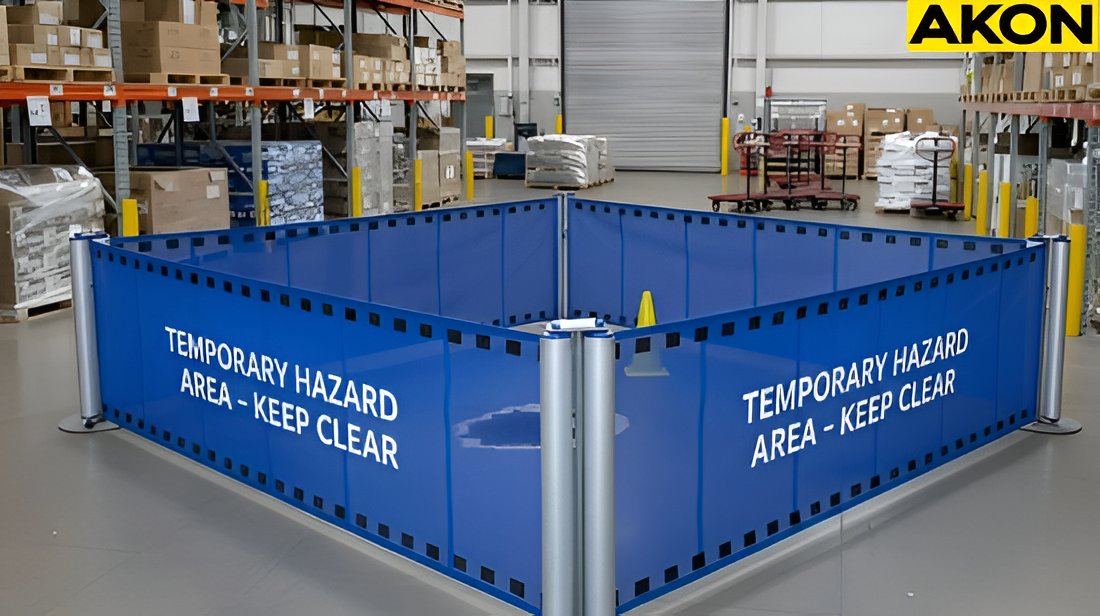
Portable Barrier – SB4000
The SB4000 is built for situations where hazards appear temporarily and need immediate attention. Its portable design makes it easy to bring safety messaging directly to the risk area and remove it once the hazard is gone.
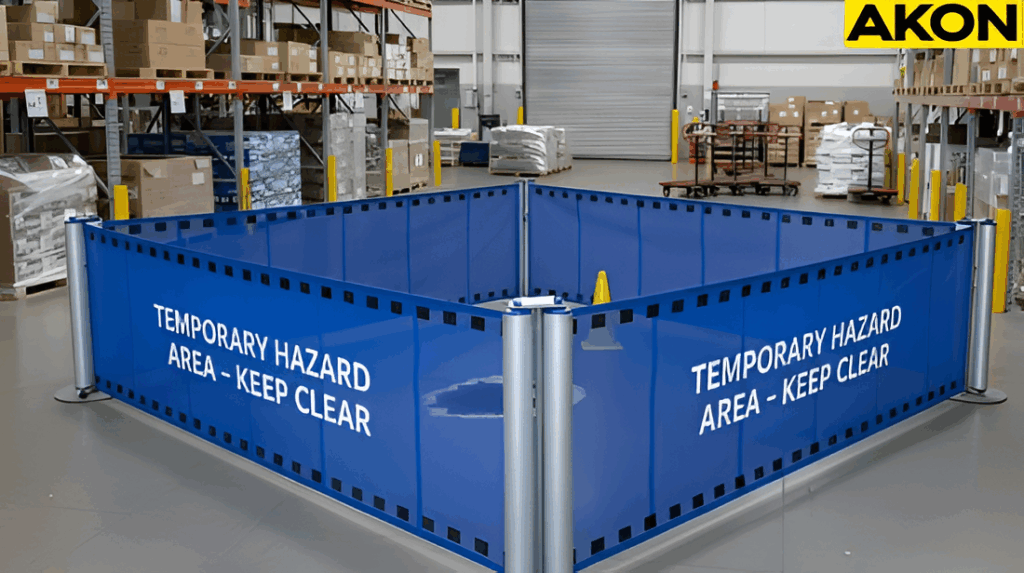
• Ideal for maintenance and short-term work zones. The barrier can be positioned quickly to block access during repairs or inspections.
• Easy to relocate as conditions change. Portability allows teams to move the barrier without disrupting surrounding operations.
• Keeps warnings aligned with real-time hazards. Once work is complete, the barrier can be removed so messaging does not remain longer than necessary.
Frequently Asked Questions
FAQs About Warehouse Safety Messaging
Do SB-2000, SB-3000, or SB4000 retractable barriers replace traditional safety signs?
No. These retractable barriers work alongside signs by reinforcing warnings at the exact point where access is restricted. Signs provide general guidance, while barriers place messaging directly in active work areas.
Can SB-2000, SB-3000, and SB4000 barriers be moved or repositioned easily?
Yes. All three barrier options are designed for temporary use and can be deployed or removed as conditions change. This makes them practical for warehouses with shifting traffic patterns.
What safety messages work best on printed retractable barriers?
Short and direct messages are most effective. Warnings such as “Authorized Personnel Only,” “Forklift Traffic,” or “Do Not Enter” are easy to understand at a glance.
Are SB4000 portable barriers suitable for warehouse dock edges?
Yes. The SB4000 is commonly used at dock edges where conditions change throughout the day. It helps signal when an edge is open and can be removed once the area is safe again.
Can SB-3000 barriers be used in forklift traffic areas?
They can. The SB-3000 is often used in shared spaces where pedestrian access needs to stop during active forklift movement.
Are SB-2000 and SB-3000 barriers meant for permanent installation?
No. These barriers are intended for temporary or changing conditions. They are best used when access needs to be controlled only during specific activities.
How durable are SB-2000, SB-3000, and SB4000 barriers for daily warehouse use?
They are built for regular use in industrial environments. When used as intended, they hold up well to frequent deployment throughout the day.
Do workers actually notice messages on retractable barriers?
Yes. Messaging placed directly in the path of movement is more likely to be seen than wall signs or posted notices away from the hazard.
Can safety messages be customized for different hazards?
They can. Printed messaging can be matched to specific risks such as open dock edges, restricted access, or active vehicle traffic.
Are SB-2000 and SB-3000 barriers only for large warehouses?
No. These barriers are used in facilities of many sizes. Any space with temporary hazards can benefit from clearer access control.
Do retractable barriers slow down warehouse workflow?
When used correctly, they help guide movement rather than interrupt it. Clear messaging reduces confusion and unnecessary stops.
Can SB4000 barriers be used during maintenance work?
Yes. The SB4000 is well suited for maintenance zones where hazards appear temporarily. It can be placed quickly and removed when work is complete.
How quickly can SB-2000 or SB-3000 barriers be set up?
Deployment is quick and straightforward. Most barriers can be put in place in seconds when a hazard appears.
Do retractable barriers require special training to use?
No. Operation is simple and intuitive. Basic instruction is usually enough for staff to use them correctly.
Are SB-2000, SB-3000, and SB4000 barriers effective across different shifts?
Yes. Consistent visual messaging helps ensure workers on all shifts see the same warnings, regardless of time or staffing changes.
Can retractable barriers help reduce the need for verbal warnings?
They can. Clear visual messaging reduces how often supervisors need to redirect workers verbally during busy periods.
Should SB4000 barriers stay in place all day?
No. Barriers should only be used when a hazard is present. Removing them when conditions are safe helps avoid warning fatigue.
Are retractable barriers suitable for both indoor and dock areas?
Yes. These barriers are commonly used inside warehouses and at dock doors where conditions change frequently.
Do SB-2000 and SB-3000 barriers support general warehouse safety practices?
They support common safety goals by improving visibility and access control. Final compliance depends on how they are integrated into your overall safety plan.
How do I choose between the SB-2000, SB-3000, and SB4000 for my warehouse?
The right choice depends on where hazards appear and how often conditions change. Dock edges, forklift routes, and maintenance zones each benefit from different barrier setups.
Photo Gallery
Making Safety Messages Count on the Warehouse Floor
Effective warehouse safety messaging only works when it is seen, understood, and respected at the moment action is required. Placing clear warnings directly within active work areas helps workers respond correctly and maintain safe behavior as conditions change. Custom printed retractable barriers support this approach by combining visible messaging with controlled access, allowing safety communication to stay aligned with real warehouse activity. Taking time to review where current safety messaging may be overlooked can help identify simple adjustments that strengthen awareness and safety across the warehouse floor.
Temporary Safety Zone