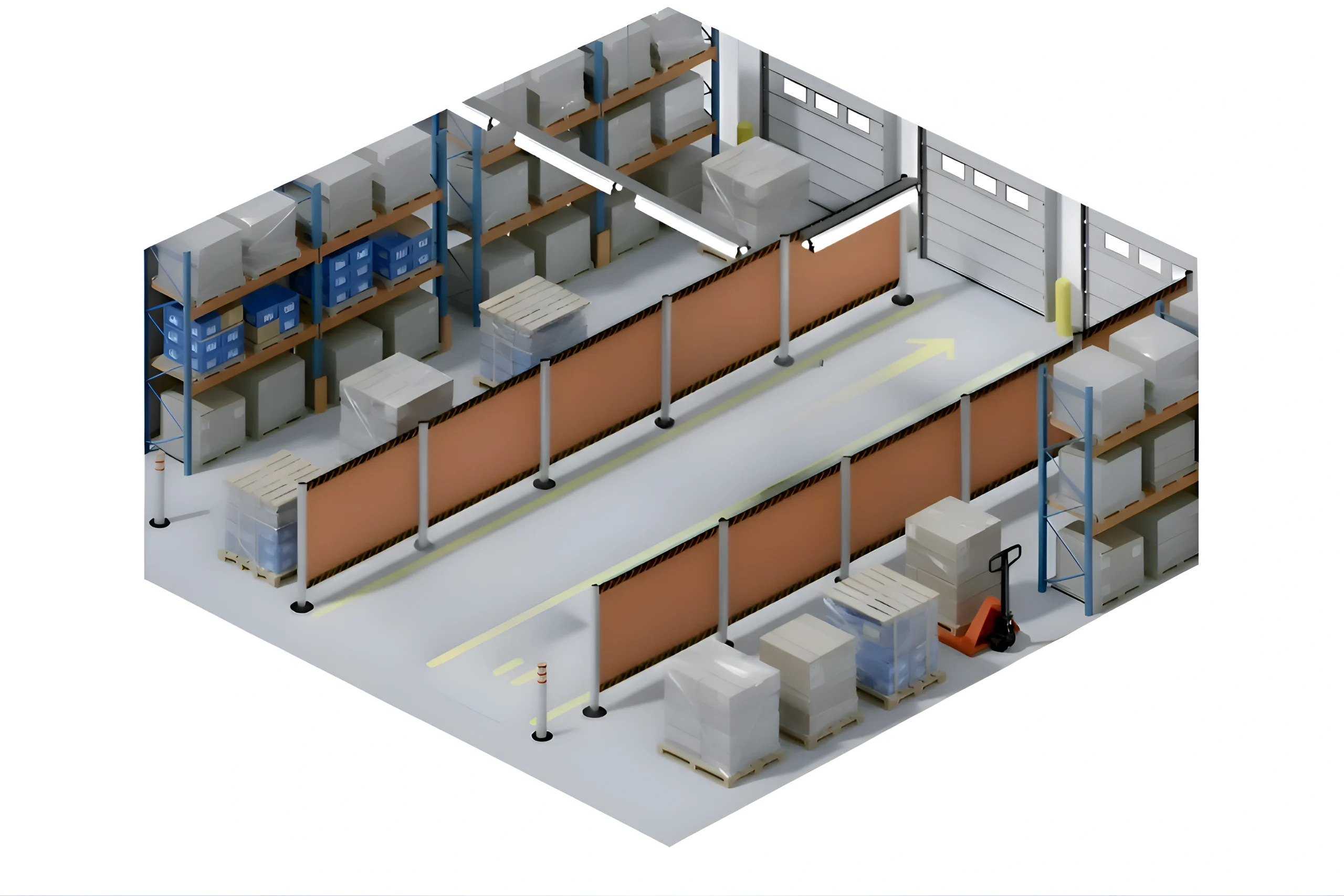
Retractable Barriers for Warehouse Staging Areas
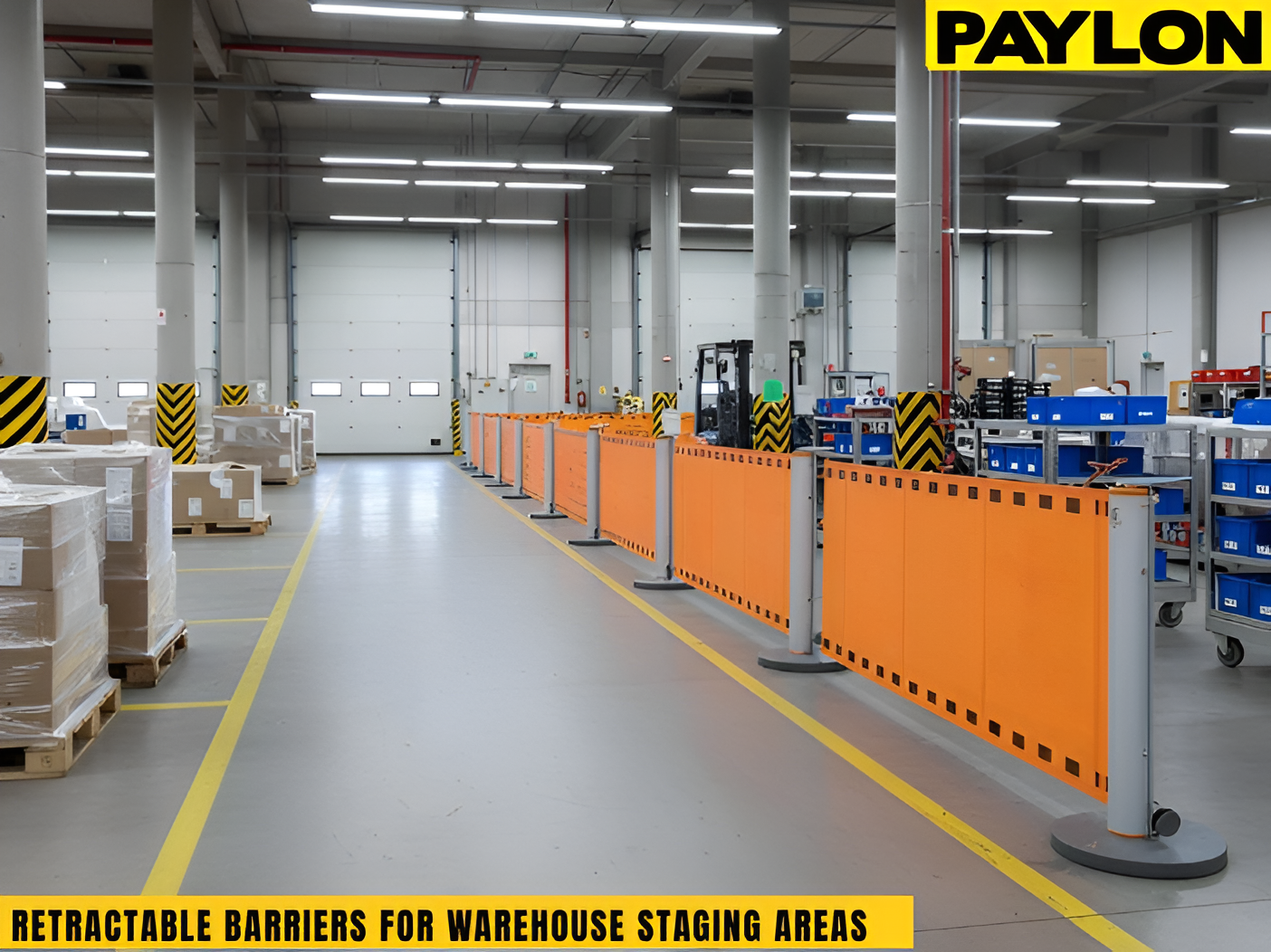
Warehouse staging areas often lead to unexpected aisle and exit obstructions, even during short term staging. This article explains why these issues occur, how retractable barriers help keep paths clear, where they work best in staging areas, and which barrier options support safer and more efficient warehouse operations.
Why Warehouse Staging Areas Create Aisle and Exit Issues
Aisle and exit issues rarely come from one big mistake. They develop gradually as staging activity increases and warehouse conditions change throughout the day. Understanding these patterns helps explain why clear paths are difficult to maintain in active staging areas.
Staging Activity and Shared Traffic Gradually Reduce Clear Space
Staging areas are intended for short term use, but volume builds quickly. Pallets placed briefly move closer to aisles as more materials arrive.
During peak shifts or inbound surges, available space tightens and walkways become convenient holding areas. When forklifts, pedestrians, and staging zones share the same floor space, movement overlaps and aisle boundaries become harder to recognize.
Static Visual Controls Do Not Keep Up With Daily Layout Changes
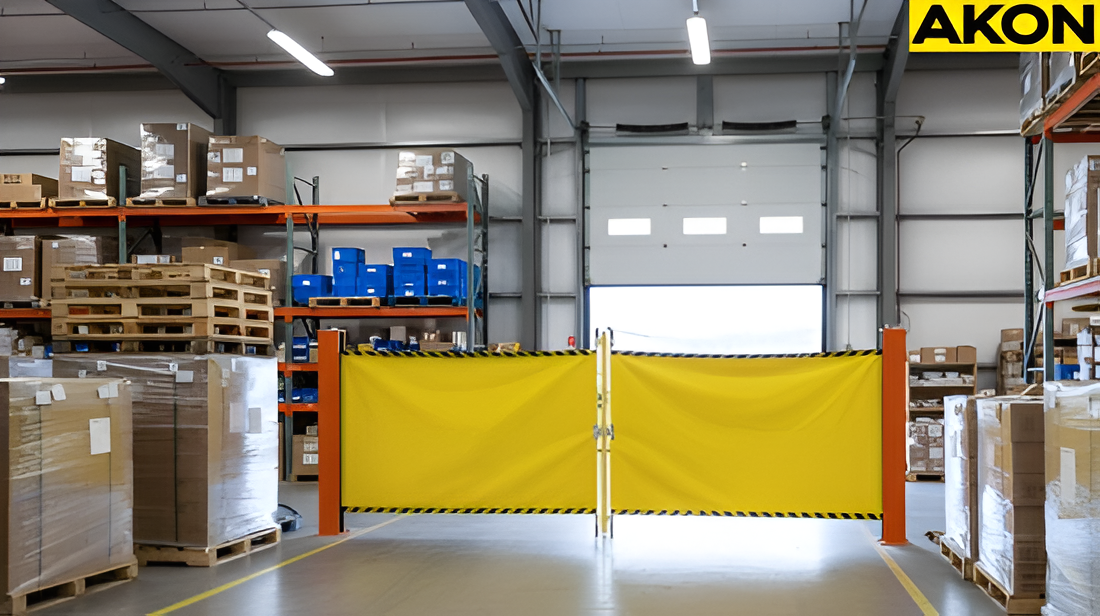
Visual controls struggle because warehouse layouts rarely stay the same. Floor tape, cones, and signs remain fixed while staging locations shift throughout the day.
As activity increases, these markers are moved, ignored, or blocked from view. In fast paced environments, workers focus on immediate surroundings, allowing aisle and exit issues to continue without clear signals.
Key Benefits of Using Retractable Barriers in Staging Areas
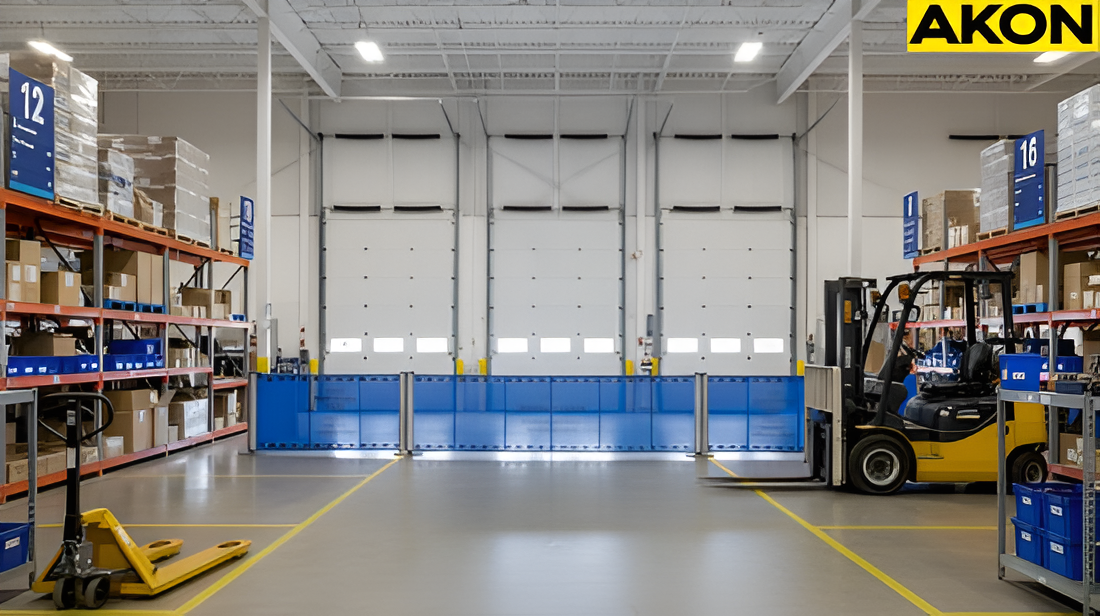
Once staging zones are clearly defined, warehouse teams gain better control over movement and space. Retractable barriers help maintain order by making boundaries visible, flexible, and easy to manage throughout daily operations.
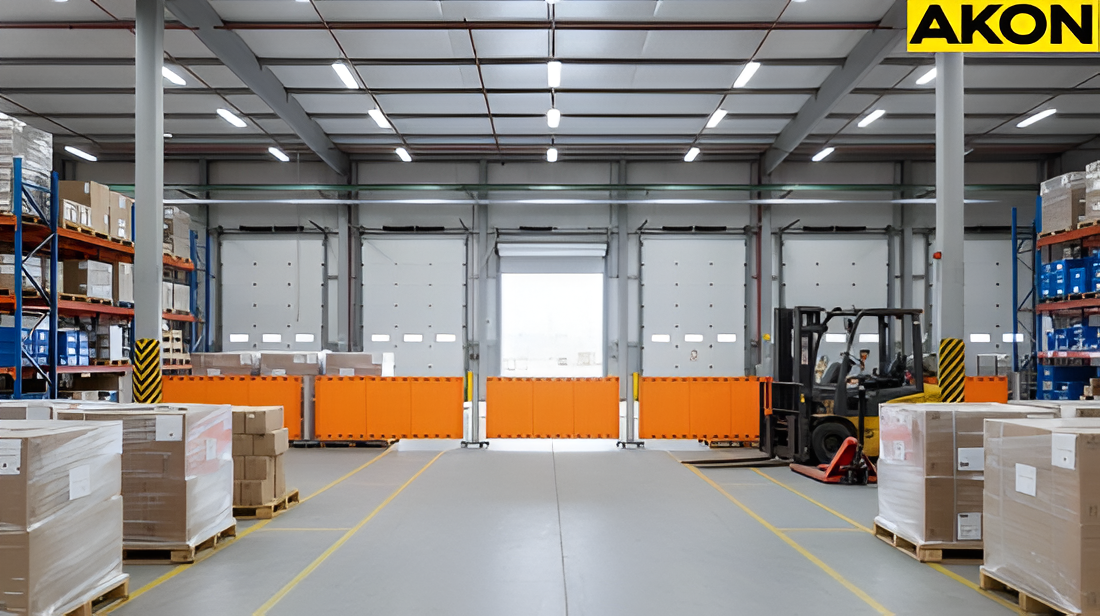
• Reduces hesitation on the warehouse floor. Clear boundaries remove guesswork for operators and pedestrians. Teams can move confidently through staging areas without stopping to assess what is restricted.
• Supports consistent safety expectations. Staging zones are marked the same way each time. This consistency helps workers recognize and respect boundaries as conditions change.
• Minimizes disruption during layout changes. Temporary barriers allow teams to control space while staging locations shift. Aisles remain usable without shutting down surrounding work areas.
Keeps Aisles and Exits Clearly Defined
Retractable barriers establish a clear boundary that separates staging areas from active aisles and exit paths.
Improves Visibility
High-visibility barriers make restricted areas easy to recognize at a glance in active warehouse environments.
Adapts Quickly
Retractable barriers deploy and retract easily, allowing teams to adjust layouts without permanent changes or downtime.
Common Staging Area Scenarios Where Retractable Barriers Help
With clear boundaries and visibility in place, the next question is where these improvements matter most on the warehouse floor. The following scenarios show how retractable barriers support day-to-day staging activity while keeping aisles and exits organized as conditions change.
| Staging Scenario | Common Issue | How Retractable Barriers Help |
|---|---|---|
| Peak shift overflow | Aisles become congested | Clearly marks restricted staging zones to prevent spillover into active paths |
| Temporary pallet staging | Exits get blocked | Keeps emergency paths visible during short term staging |
| Maintenance activity | Tools spread into walkways | Limits access to work areas until tasks are complete |
| High forklift traffic | Pedestrian confusion | Creates clear separation between vehicle routes and walking paths |
These examples reflect typical warehouse conditions where space must be managed without slowing operations. By defining staging boundaries only where and when they are needed, retractable barriers help teams respond to changing activity while maintaining clear, usable aisles and exits.
Recommended Retractable Barriers for Warehouse Staging Areas
Once staging scenarios are clearly understood, the next step is choosing a retractable barrier that fits how each space is actually used. These options are commonly selected based on how often staging zones shift, how much traffic is involved, and how much flexibility is required on the warehouse floor.
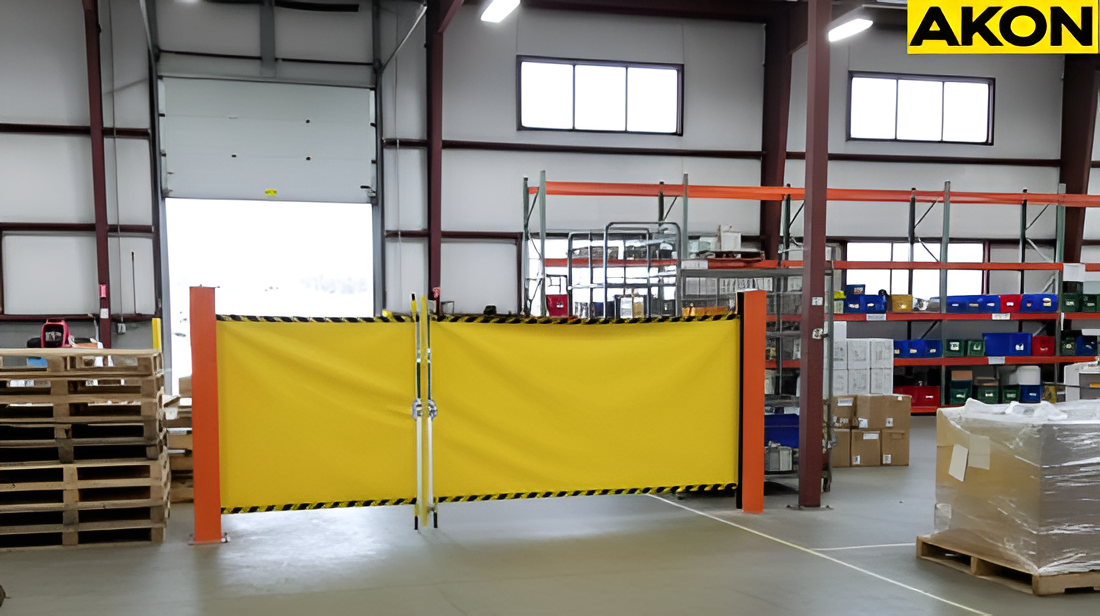
Industrial Roll Up Barricade – SB2000
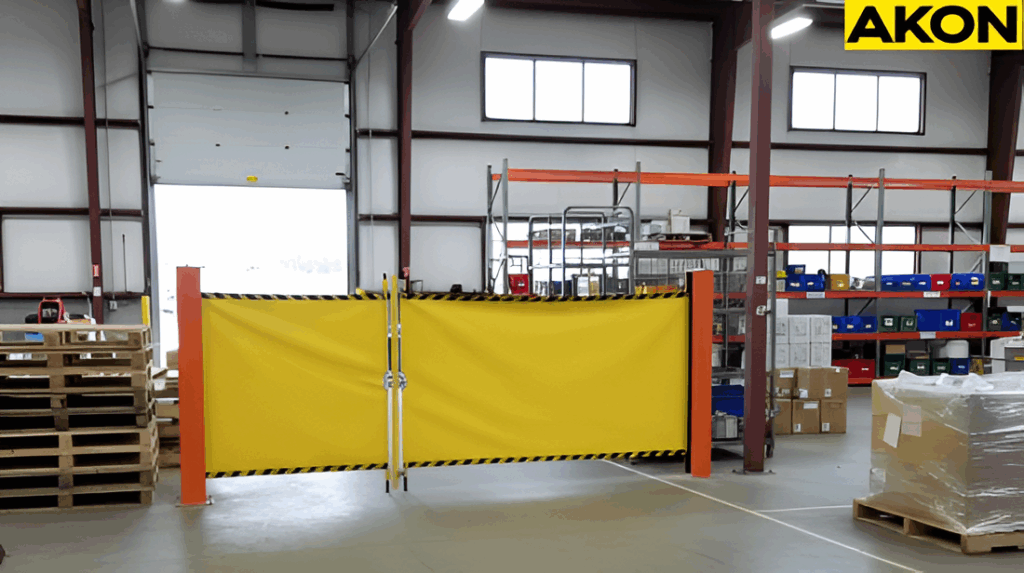
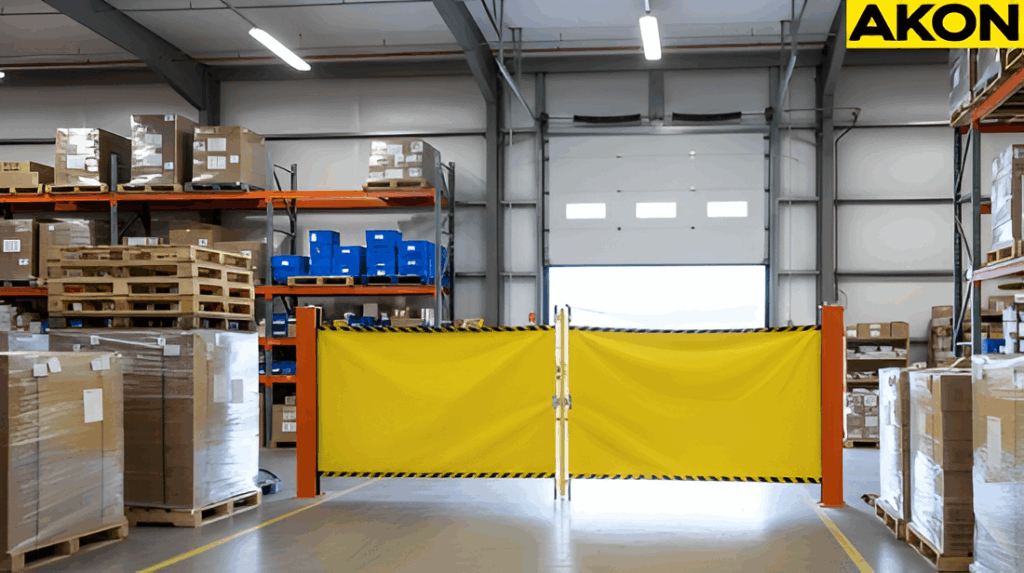
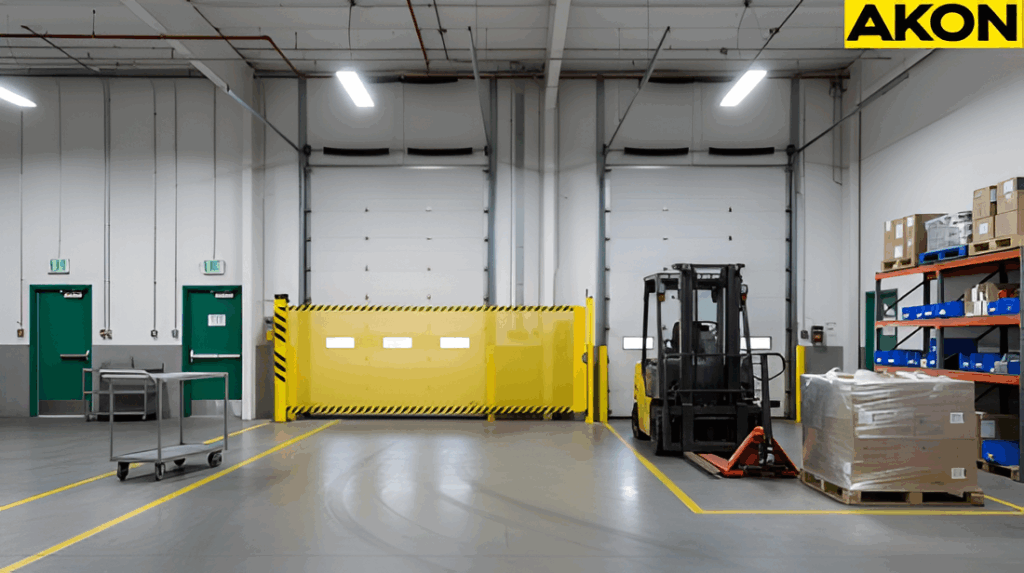
The SB2000 is designed for staging areas that remain active for longer periods while still needing clear boundaries. It works well in spaces where pallet placement and material flow change throughout the day but do not require constant repositioning.
• Helps define pallet staging zones during inbound and outbound surges.
• Maintains clear aisles while materials are staged for sorting or transfer.
• Supports temporary access control without permanent installation.
• Fits staging layouts that shift by workload or production schedule.
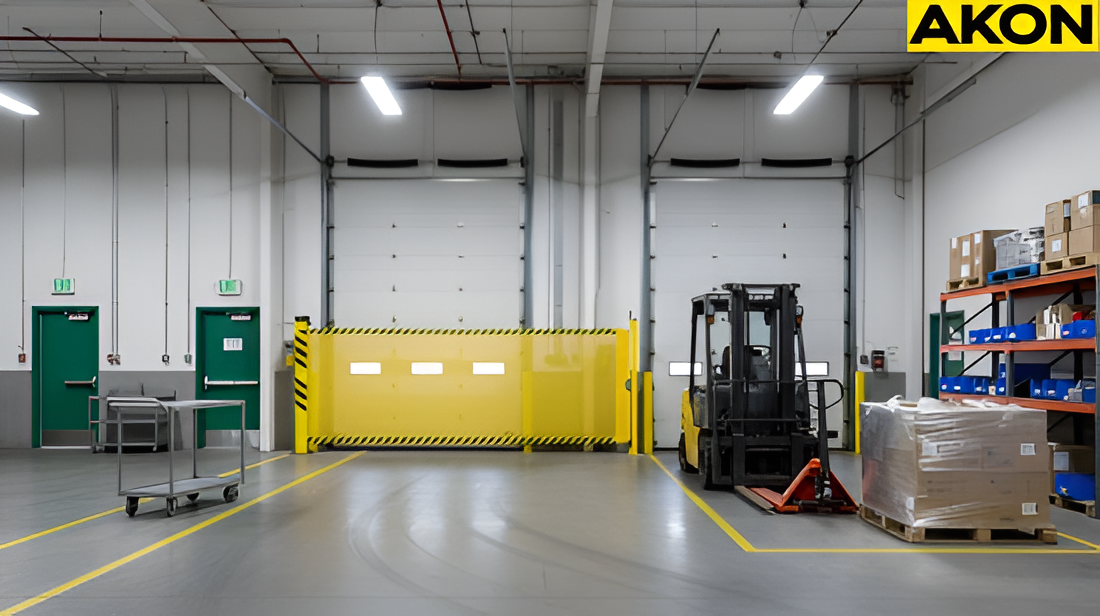
Industrial Retractable Barrier – SB3000
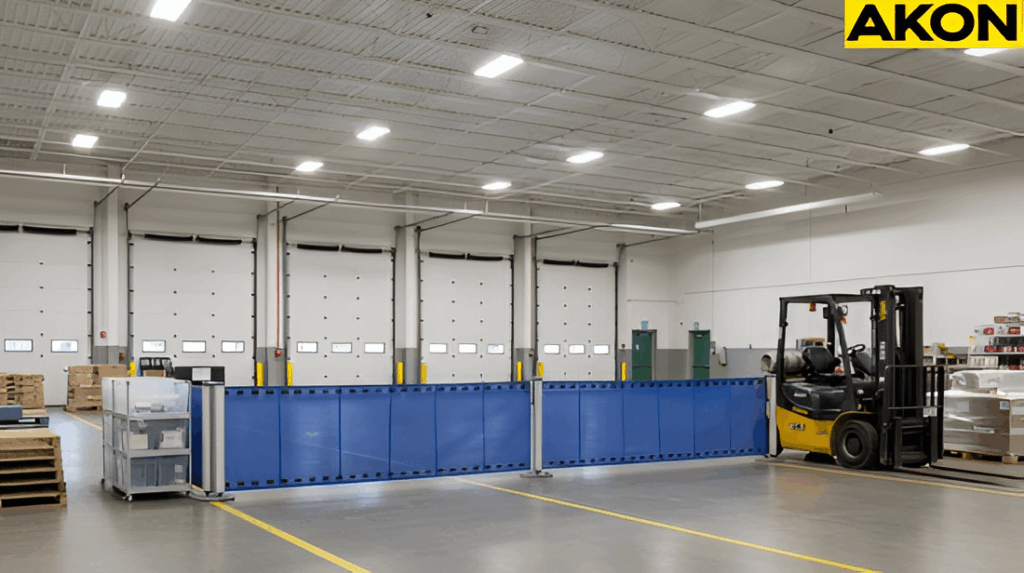
The SB-3000 is commonly used where staging activity overlaps with regular warehouse traffic. It provides controlled access and guidance in areas that experience steady movement throughout the day.
• Guides pedestrian and equipment traffic near active staging zones.
• Controls access at crossover points between aisles and staging areas.
• Provides consistent visual separation during high activity periods.
• Works well in locations that require repeated use without relocation.
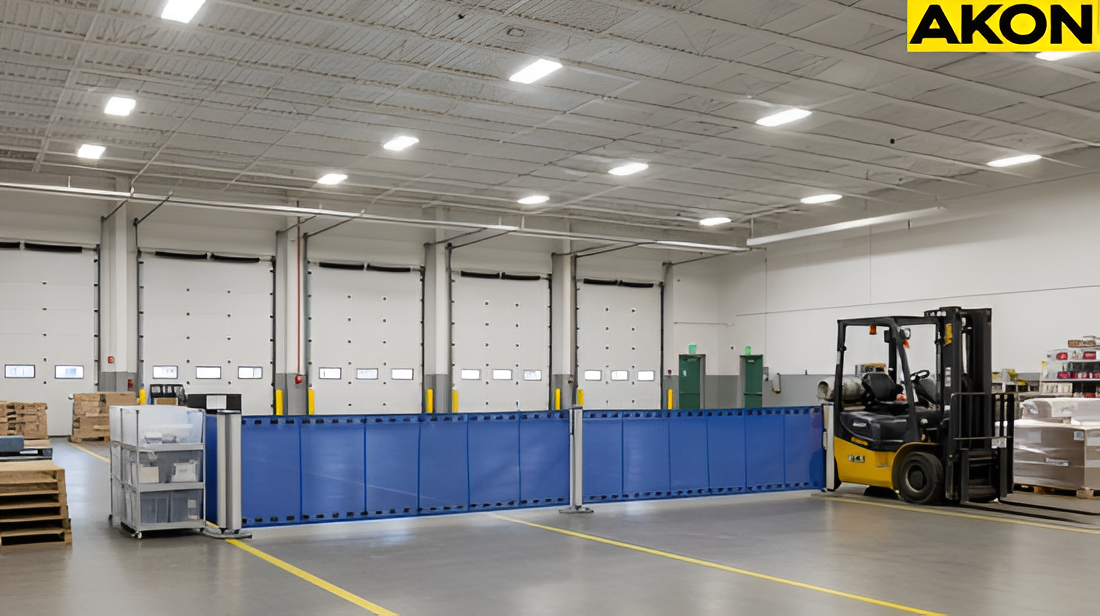
Portable Barrier – SB4000
The SB4000 is built for highly dynamic staging environments that require fast setup and repositioning. Its portable design makes it useful when staging locations change frequently or need to be created quickly.
• Creates temporary staging zones wherever they are needed.
• Supports rapid changes during maintenance, inspections, or layout adjustments.
• Helps manage foot and equipment traffic without fixed placement.
• Ideal for facilities that need flexible zone control across multiple areas.
Frequently Asked Questions
FAQs About Warehouse Staging Areas
How are retractable barriers different from cones or caution tape?
Retractable barriers create a continuous and visible boundary rather than a loose warning. Options like industrial roll up barricades are harder to ignore in active warehouse staging areas.
Can retractable barriers be moved as staging locations change?
Yes, many retractable barriers are designed to be repositioned as staging needs shift. Portable barrier systems like the SB4000 support flexible layouts without permanent installation.
Do retractable barriers block emergency exits?
No, retractable barriers are commonly used to prevent staging from blocking emergency exits. When placed correctly, they help keep exit paths clear and visible.
Where should retractable barriers be placed in staging areas?
They are typically placed along the edges of staging zones or near aisle boundaries. This placement helps control access without interrupting normal traffic flow.
Are retractable barriers suitable for high-traffic warehouses?
Yes, industrial retractable barriers such as the SB-3000 are often chosen for high-traffic environments. Their visibility helps guide movement in busy areas.
Can retractable barriers be used for pallet staging areas?
Yes, industrial roll up barricades like the SB2000 are commonly used around pallet staging zones. They help define space while inventory is being sorted or moved.
Do retractable barriers require permanent mounting?
Many retractable barriers do not require permanent installation. This makes them suitable for warehouses with changing layouts.
Are retractable barriers easy for workers to operate?
Most retractable barrier systems are simple to deploy and retract. Workers can adjust them quickly without special tools or training.
Can retractable barriers be used near forklift routes?
Yes, retractable barriers are often used near forklift routes to clarify boundaries. Industrial retractable barrier systems help separate vehicle movement from restricted areas.
How long can retractable barriers stay in place?
Retractable barriers can remain deployed as long as staging or access control is needed. They are designed for repeated daily use.
Are retractable barriers visible in busy warehouse environments?
Yes, these barriers are designed to stand out visually. High visibility helps workers recognize restricted zones from a distance.
Can retractable barriers help during maintenance or inspections?
Retractable barriers are commonly used to limit access during maintenance or inspection work. Portable barrier options allow quick setup and removal.
Do retractable barriers slow down warehouse operations?
When used correctly, they help reduce hesitation rather than slow movement. Clear boundaries support smoother traffic flow.
Are retractable barriers suitable for temporary access control?
Yes, retractable barriers are often selected for temporary access control. They allow areas to be restricted without permanent construction.
Can the same retractable barrier be used in multiple areas?
Some systems, such as portable barriers, can be moved between locations. This supports flexible use across different staging zones.
Do retractable barriers work with existing floor markings?
Yes, retractable barriers complement floor markings rather than replace them. Together, they provide clearer guidance in changing conditions.
Are retractable barriers appropriate for pedestrian safety?
Retractable barriers help clarify where pedestrians should and should not walk. This is especially useful near active staging and traffic areas.
Can retractable barriers be used during peak shifts?
They are commonly deployed during peak shifts to manage overflow staging. Clear boundaries help maintain order when activity increases.
How do warehouses choose between different retractable barrier types?
The choice depends on how often staging areas change and how much traffic is present. Industrial roll up barricades, industrial retractable barriers, and portable barriers each fit different use cases.
Are retractable barriers only for large warehouses?
No, retractable barriers are used in warehouses of many sizes. They are chosen based on workflow needs rather than facility size.
Photo Gallery
Keeping Staging Areas Safe and Accessible
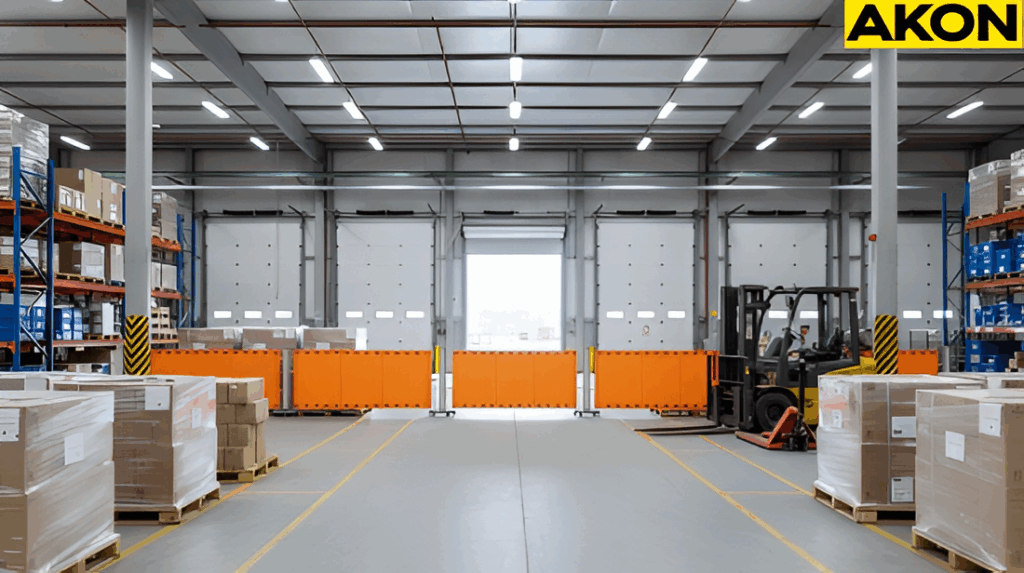
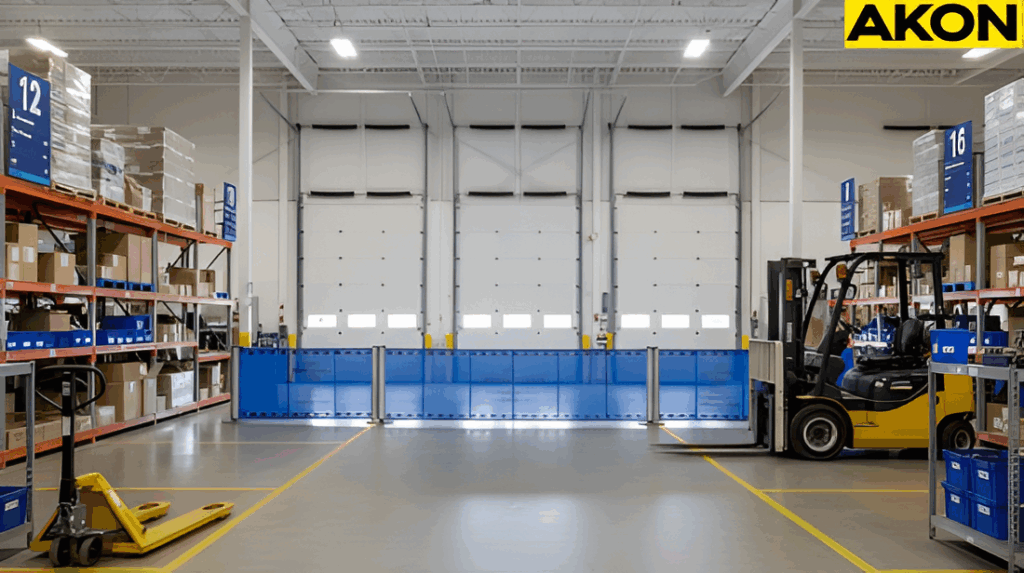
Warehouse staging areas may shift throughout the day, but aisles and exits still need to remain open and predictable. When temporary staging begins to affect movement, small issues can quickly turn into ongoing safety concerns. Retractable barriers provide a simple, flexible way to define space, maintain control, and keep critical paths clear without requiring permanent changes to the facility.
Clear Aisles in a Staging Area